
Key takeaways:
- About a third (36%) of Americans say they get health information from social media at least sometimes, and 22% say this about artificial intelligence (AI) chatbots.
- Younger Americans are more likely to use social media at least sometimes for health information than their older peers. These age differences are smaller for AI chatbots.
- Most social media and AI chatbot health information users do not rate the information they get from these sources as highly accurate or highly personalized. However, sizable shares see them as highly convenient, and for AI chatbots, extremely or very easy to understand.
- Americans without any form of health insurance are modestly more likely to get health information at least sometimes from these sources than those who do have health insurance.
In a world where health information can come from countless sources outside of a doctor’s visit, social media and AI chatbots offer newer, digital-first avenues to health news and advice for some Americans. But these always-available alternatives don’t necessarily include guarantees of accuracy or understandability, and some of that shows in how users evaluate them.
This analysis is part of a broader Pew Research Center survey on Americans’ health information sources and views on their personal health, conducted Oct. 20-26, 2025, among 5,111 U.S. adults. For more information, refer to these sections:
- Where do Americans get health information, and what do they trust?
- What do Americans want from their health information sources?
How often do Americans get health information from social media and chatbots?
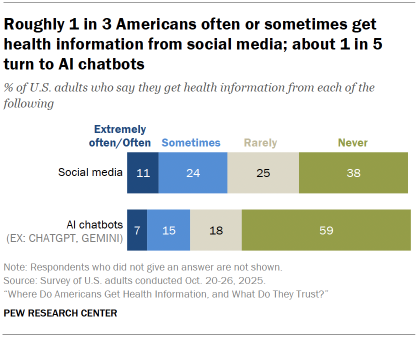
About a third (36%) of U.S. adults get health information from social media at least sometimes, while 22% say the same about AI chatbots. This is lower than the share of Americans who get health information at least sometimes from several other sources:
- Health care providers (85%)
- People who have a similar health issue as them (66%)
- Major health information websites (60%)
For more on how frequently Americans get health information from various sources, refer to “Where do Americans get health information, and what do they trust?”
There’s also a lot of overlap between those who get health information on social media and those getting it from AI chatbots. A majority (61%) of those who at least sometimes get health information from chatbots also say they get it from social media.
This analysis is a deep dive into who gets health information on each platform, and how they feel about the accuracy, personalization, convenience, and ease of understanding of that content.
Social media health information
Who gets health information on social media?
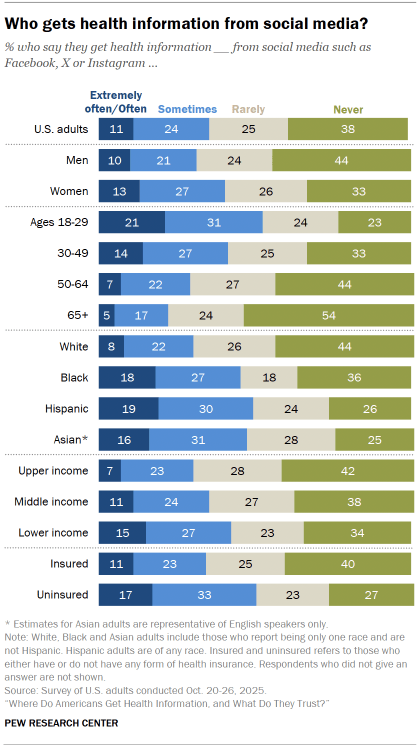
Social media offers platforms for a wide range of health messengers, from doctors explaining medical practices to government agencies posting emergency health notices to influencers offering health and wellness tips. But regardless of the messenger, Americans can get health information when scrolling through their feeds – and many do, particularly young adults.
Age: Younger Americans are much more likely than older Americans to get health information from social media. About half (52%) of adults under 30 say they get health information from social media at least sometimes, including about one-in-five who get it often or extremely often. By comparison, about one-in-five adults ages 65 and older (21%) get health information on social media at least sometimes.
Race and ethnicity: Compared with other racial and ethnic groups, White adults are notably less likely to say they get health information at least sometimes on social media.
Income and health insurance coverage: Getting health information on social media at least sometimes is more common among lower-income and uninsured Americans. (Uninsured Americans are also less likely to at least sometimes get health information from health care providers.)
What do users think of social media health information?
Social media is available at all hours and across devices, with content in a variety of formats, styles and depth of explanation. And algorithmic-driven feeds often allow users to find information without looking for it. But health experts have sounded alarms about social media as a vehicle for questionable health claims.
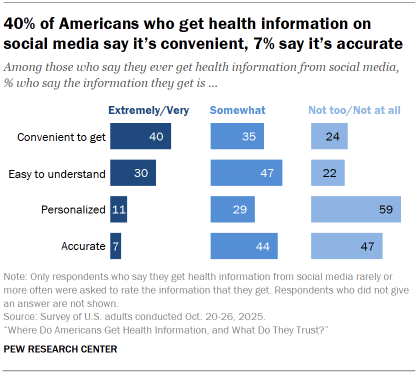
Americans who get health information from social media rate the information more negatively than positively when it comes to accuracy and personalization. But they do tilt more positively on its convenience and understandability:
- Convenient: Four-in-ten say the health information they get on social media is extremely or very convenient to get. Fewer (24%) say it is not too or not at all convenient to get.
- Easy to understand: Three-in-ten of those who get health information on social media say the information is extremely or very easy to understand, slightly more than the 22% who say it is not too or not at all easy to understand.
- Personalized: A majority (59%) of those who get health information on social media say that the information they get is not too or not at all personalized. This share is far larger than the 11% who say it is highly personalized.
- Accurate: About half (47%) say the information they get is not too or not at all accurate. Far fewer (7%) say that this content is highly accurate. In contrast, about two-thirds (65%) of those who get health information from health care providers say they are highly accurate, as do about half (48%) of those who get health information from major health websites.
For more on ratings of accuracy across seven health information sources, refer to “Where do Americans get health information, and what do they trust?”
Demographic differences
Age: Younger consumers of health information on social media have more positive views of many qualities of this content than older ones. For example, adults under 30 are more likely than those 65 and older to say that the information is highly convenient to get (46% vs. 31%) and easy to understand (39% vs. 15%).
And while there are slight age differences when it comes to accuracy, no more than 10% of any age group say the information they get is highly accurate.
Income and education: Americans with higher levels of income and formal education who get health information from social media are more likely than others to say that this information is not too or not at all accurate. But those with higher income and education levels are also more likely to say the information is highly convenient.
For further detail on views on social media health information by demographic characteristics, refer to the appendix.
Views of frequent consumers of social media health information
The most frequent users – those who get health information from social media often or extremely often – are a bit more positive about the information they get on these platforms. About two-thirds (68%) of these heavy users say the information is highly convenient to get, compared with 34% of those who get health information on social media less frequently. And about a quarter (24%) say it is highly accurate versus 3% of those who get health information on social media less frequently.
Americans tend to want medical expertise, transparency and understandability in their health information sources. But U.S. adults who frequently get health information from social media are a bit more likely than adults overall to value likeability (33% vs. 23%) and physical fitness (38% vs. 27%).
AI chatbot health information
Some AI companies now directly integrate health features into their products, and some young people have been experimenting with uses like getting mental health advice from chatbots. Overall, about two-in-ten (22%) Americans get health information from AI chatbots at least sometimes, including 7% who do so often or extremely often.
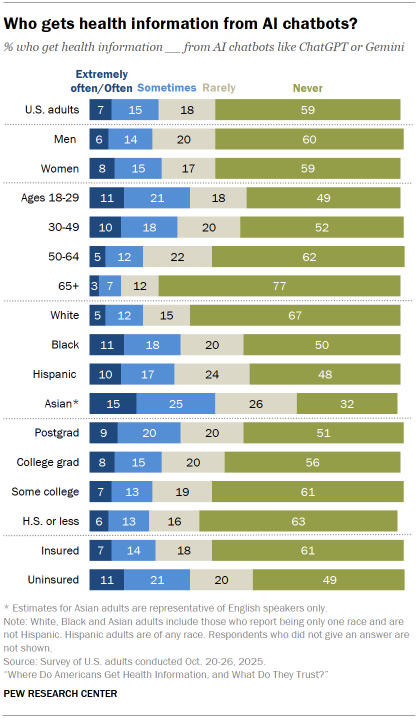
Who uses AI chatbots for health information?
Age: Similar to social media, getting health information from chatbots is more common among younger adults. About a third (32%) of adults ages 18 to 29 at least sometimes turn to AI chatbots for health information. This is higher than the share of adults ages 50 to 64 (16%) and those 65 and older (10%) who say the same. Previous Center research has found that younger Americans are also more likely to have heard a lot about AI and to have used ChatGPT for any reason.
Health insurance coverage: Americans who do not have health insurance are more likely to get chatbot health information than those who do have insurance even after accounting for age, income and other factors.
Race and ethnicity: Asian Americans are more likely than other racial and ethnic groups to say they get health information from AI chatbots at least sometimes. Black and Hispanic adults are also more likely than White adults to say they do this.
What do users think of using AI chatbots for health info?
AI chatbots promise conversation at any time, on nearly any topic, including health-related ones. And their interactive nature means that users can follow up with clarifying questions. But some experts have questioned the accuracy of the health information that chatbots provide.
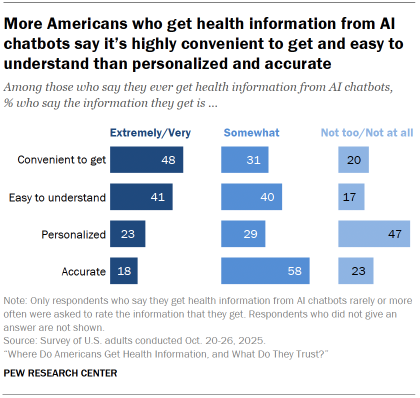
Americans who get health information from these chatbots tend to find them convenient and easy to understand but not very personalized. And they’re split on the accuracy of this emerging technology:
- Convenient: About half (48%) of chatbot health information users say it is highly convenient.
- Easy to understand: Among those who get health information from AI chatbots, 41% say it’s extremely or very easy to understand.
- Personalized: About a quarter (23%) of chatbot health users say the information is highly personalized, roughly half the share who say it’s not too or not at all personalized (47%).
- Accuracy: Slightly more chatbot health users say they’re not too or not at all accurate as say they’re highly accurate (23% vs. 18%). In contrast, about two-thirds (65%) of those who get health information from health care providers say they are highly accurate, as do about half (48%) of major health website users.
For more on ratings of accuracy across seven health information sources, refer to “Where do Americans get health information, and what do they trust?”
Demographic differences
Age: Among U.S. adults who get health information from AI chatbots, similar shares of older and younger people say the information is accurate and convenient to get. But adults under 50 are more likely than those ages 50 and older to say that this health information is highly personalized (30% vs. 10%) and easy to understand (47% vs. 31%).
Education: Adults with higher levels of formal education are more likely to say that health information from AI chatbots is convenient and easy to understand, similar to the pattern observed for social media.
For further details on views on chatbot health information by demographic characteristic, refer to the appendix.
How do frequent users view chatbot health information differently?
Those who frequently get health information from chatbots rate that information more highly than other users on these dimensions. For instance, among adults who use AI chatbots to get health information often or extremely often, 45% say that the information they get is highly accurate, compared with 13% of those who get health information from chatbots sometimes or rarely. Half of heavy users describe chatbot health information as highly personalized, compared with 17% of those who turn to chatbots less frequently.


