
Some 40% of U.S. adults say they ever get health and wellness information from social media influencers or podcasts. This analysis takes a deeper dive into these Americans’ experiences with these influencers – how much they trust them, what they learn, and how the information they get makes them feel about their health.
Some of the key takeaways:
- Those who get health and wellness information from these influencers are mixed on how much to trust it: 10% say they trust all or most of the information they get from these influencers, but 24% say they trust not too much or none of it. The largest share (65%) falls somewhere in the middle and says they trust some of it.
- Around half of these consumers say these influencers help them better understand how to be healthy. And young adults stand out as the age group most likely to say the information they get from these influencers makes them more worried about their overall health.
Other parts of this study look at the characteristics of health and wellness influencers themselves, why people follow these influencers and how they find them, and the topics they learn about from them.
How much people trust information from health and wellness influencers
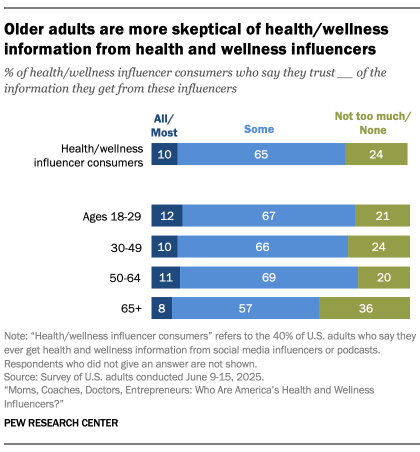
Just one-in-ten health and wellness influencer consumers say they trust all or most of the information they get from these influencers. More than twice that share (24%) say they trust not too much or none of it.
The largest share – around two-thirds – is in the middle, saying they trust some of this information.
Older adults express more skepticism of the information they get from these influencers than younger age groups. Some 36% of health and wellness influencer consumers ages 65 and older say they trust not too much or none of that information.
Other research by the Pew Research Center has found that those 65 and older are consistently less likely to trust the information they get on social media relative to younger age groups.
How information from health and wellness influencers makes people feel about their health
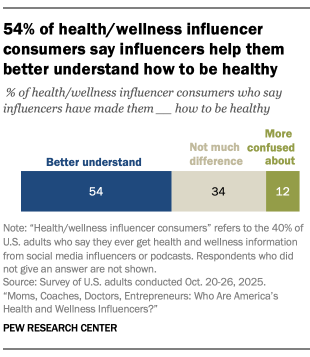
Many find these influencers to be helpful: 54% of those who get health and wellness information from social media influencers or podcasts say it has helped them better understand how to be healthy. Far fewer (12%) say it has made them more confused about how to be healthy, and 34% say it hasn’t made much difference either way. This pattern tends to show up across demographic groups.
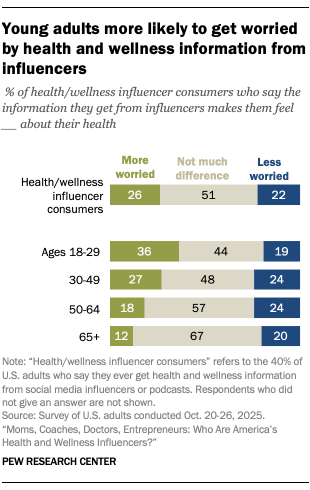
Meanwhile, 26% of these consumers say this information has made them more worried about their overall health. A similar share (22%) says it has made them less worried. About half say it hasn’t made much difference either way.
Younger adults are especially likely to say that information from these influencers makes them feel more worried about their overall health. Some 36% of health and wellness influencer consumers ages 18 to 29 say this.
For more information on demographic breaks, refer to Appendix A.


