
Some 40% of U.S. adults say they ever get health and wellness information from social media influencers or podcasts. This analysis takes a deeper dive into the reasons Americans do this, how they come across these influencers and how they view the information these influencers offer.
Some of the key takeaways:
- The desire to make a health or lifestyle change is a key motivating factor. Some 41% of Americans who get health and wellness information from influencers say this is a major reason for doing so.
- Young adults are particularly likely to tune in to health and wellness influencers for entertainment. One-third of these consumers ages 18 to 29 say that entertainment is a major factor for them.
- Most get this information because they happen to come across it. Two-thirds of these consumers say they mostly get information from health and wellness influencers because they happen to come across it, double the share who says they are usually looking for it.
- About one-in-five say the information they get from these influencers is extremely or very different than what they get from health care providers. About twice as many (38%) say it’s not too or not at all different.
Other parts of this study look at the characteristics of health and wellness influencers themselves, the topics people say they learn about from them and how much people trust the information they provide.
Why people get health and wellness information from influencers and podcasts
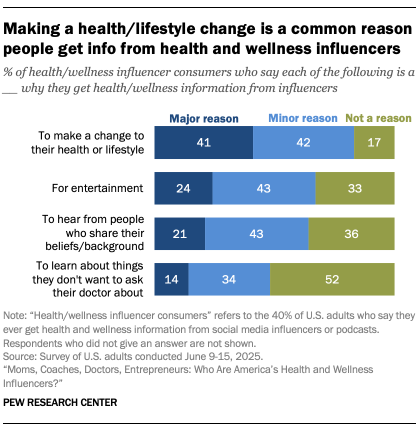
Our June survey asked about several reasons why people might get health and wellness information from social media influencers.
The desire to make a change in one’s health or lifestyle is the most prominent. Some 41% say this is a major reason why they turn to these influencers, and a similar share says it is a minor reason.
Around a quarter say entertainment is a major reason they get health information from these influencers, and around one-in-five say that hearing from someone who shares similar personal beliefs or background is a major reason.
Entertainment is especially relevant to younger adults. One-third of health and wellness influencer consumers ages 18 to 29 say this is a major reason for them. That share drops to 26% among those ages 30 to 49 and to 13% among those 50 and older.
Of those who get health and wellness information from these influencers, 14% say that learning about things they don’t want to ask their doctor about is a major reason they turn to influencers, which is the lowest share among the reasons we asked about. But this is not uniform across all groups. For example, around 20% of Black, Hispanic and Asian health and wellness influencer consumers each say this is a major reason for them, compared with 10% of White consumers.
Refer to Appendix A for detailed breakdowns of these demographic categories.
Do people seek out information from health and wellness influencers or just come across it?
Two-thirds of health and wellness influencer consumers (67%) say they mostly get that information because they happen to come across it. Fewer (33%) say they mostly get it because they are directly looking for it.
This reflects broader trends in the information environment. A recent study of news habits around news influencers found virtually the same share (69%) gets news from news influencers because they come across it, while 31% seek it out.
Do health and wellness influencers offer different information than health care providers?
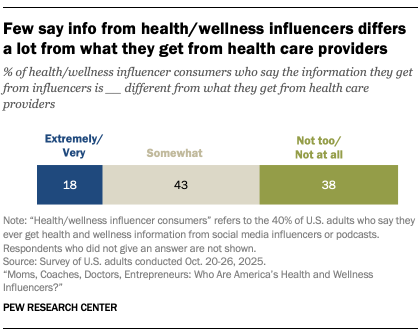
When they get health-related information from health or wellness influencers, consumers are more likely to say that information is similar to what they get from health care providers than to say it is different.
About one-in-five of these consumers (18%) say the information these influencers provide is extremely or very different from the information they get from health care providers. Around twice that share – 38% – say this information is not too or not at all different. Another 43% are in the middle and say this information is somewhat different.
Across demographic groups, few health and wellness influencer consumers say the information they get from these influencers is extremely or very different from what they get from traditional health care providers.
But a slightly larger share of Black health and wellness influencer consumers say this information is extremely or very different (24%) relative to White (16%) or Asian consumers (14%). And 23% of those with lower incomes say this, compared with 13% of upper-income consumers.
For more information on demographic breaks, refer to Appendix A.


