This is one of five detailed sections in a report on how Black Americans define and support their family networks. The report also includes an overview of key findings.
Family support systems can play a critical role in helping people navigate financial challenges, but giving money or other assistance may also create financial strain on those giving it.
Amid a rise in unemployment among Black workers and federal workforce cuts that disproportionately affected Black employees, we conducted a national survey of U.S. adults – including 4,271 Black adults – in June 2025 to understand the give and take of financial support within families, and how these exchanges impact respondents’ finances.
Most Black adults say they provided financial support to family in the year prior to the survey. The share who say this is higher than among other Americans, and up sharply since we last asked this question in 2021.
- 59% of Black adults gave financial support to family in the prior year, up from 39% in 2021.
- 42% of non-Black adults gave financial support to family, up slightly from 38% in 2021.
Among Black Americans who provided assistance, 25% say this had a significant negative impact on their own financial situation. Among other Americans who provided support, 12% say the same.
Meanwhile, Black adults are more likely to say they gave financial support to their families than to say they received it in the prior year. For those who did receive financial support, about half say it significantly helped their personal financial situation.
Most Black adults provide financial support to family
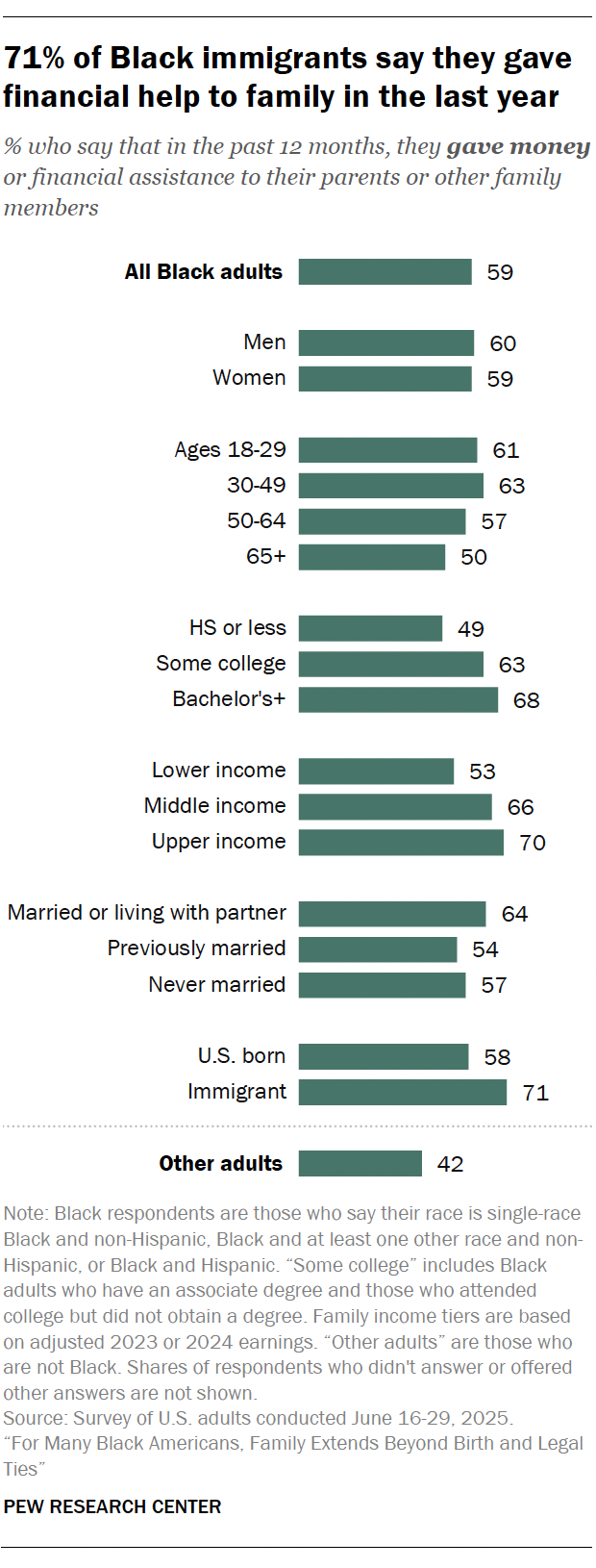
About six-in-ten Black adults gave money or financial assistance to family members in the year prior to the survey, though there are some differences among demographic groups.
- Nativity: Immigrants (71%) are more likely than adults born in the U.S. (58%) to say they gave financial support to family in the prior year.1
- Education: College graduates (68%) are more likely than those with some college experience (63%) or a high school diploma or less education (49%) to say they provided financial support to family.
- Income: Black adults with upper (70%) and middle (66%) incomes are more likely than those with lower incomes (53%) to say they gave financial support to family in the prior year.
- Marital status: Married or cohabitating adults (64%) are more likely to say they provided financial support than those who were previously married (54%) or who have never been married (57%).
- Age: Younger adults are more likely than older adults to say they gave financial support to family in the prior year. Some 61% of Black adults ages 18 to 29 and 63% of those ages 30 to 49 did so, compared with 57% of those ages 50 to 64 and 50% of those ages 65 and older. This pattern is reversed among non-Black adults, with those ages 65 and older the most likely to say they gave financial support to family.
Although a majority of Black adults gave financial assistance to family, fewer than half of other Americans (42%) did the same in the prior year.
Does giving financial support hurt personal finances?
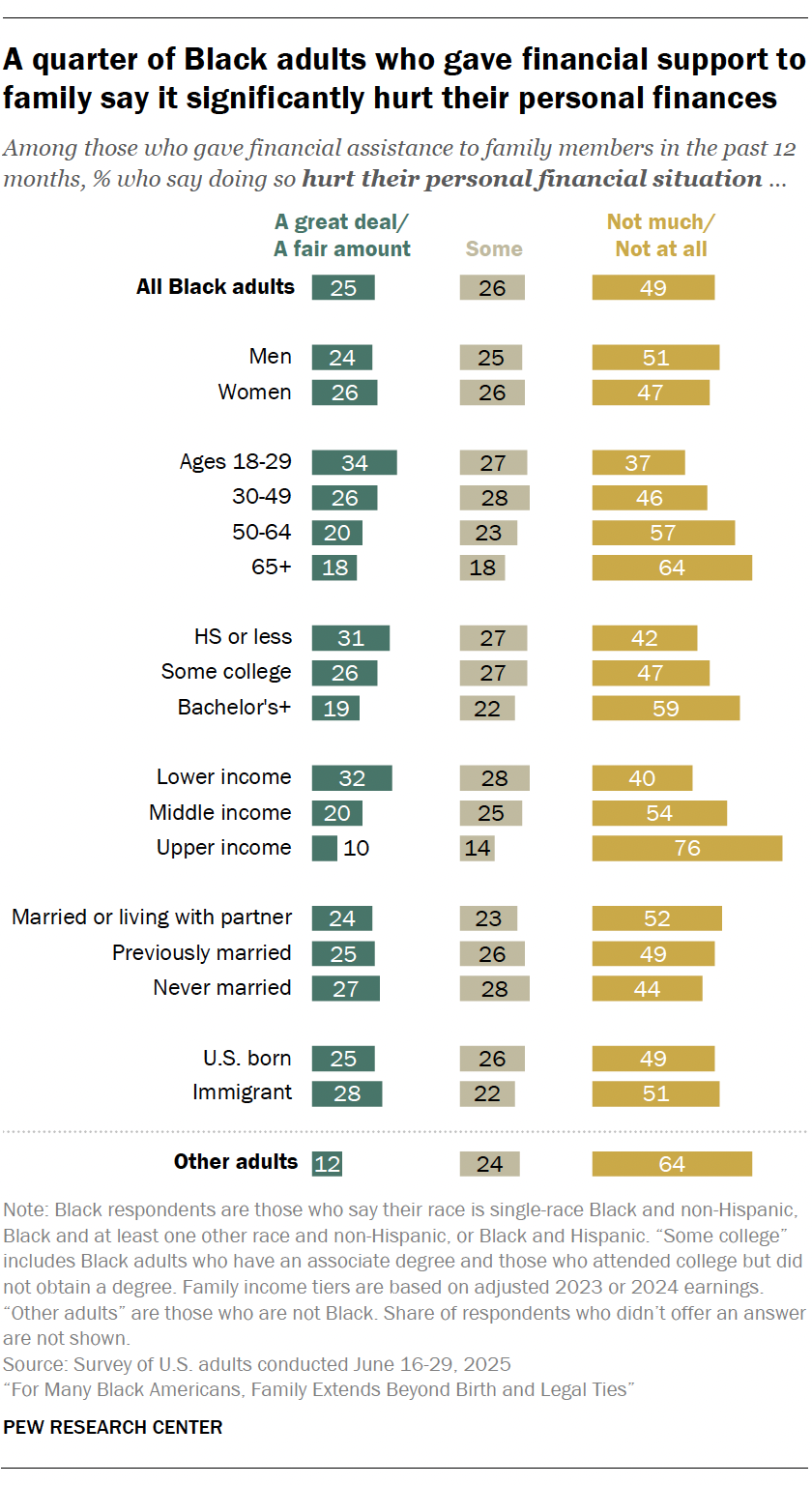
Among Black adults who gave financial help to family in the prior year, a quarter say doing so hurt their own finances a great deal or fair amount. About another quarter say it hurt their finances somewhat, while 49% say it didn’t hurt them much or at all.
Some Black adults are more likely than others to feel the strain:
- Age: Black adults under 30 are more likely than older adults to say that giving financial support to family hurt their personal finances.
- Education: Black adults with a high school diploma or less education (31%) are more likely than those with at least a bachelor’s degree (19%) to say this hurt their finances.
- Income: Black adults in the lower income tier (32%) are more likely than adults in the middle (20%) and upper (10%) tiers to say giving support hurt their finances.
Black adults are more likely than other Americans to say that assisting their family financially has hurt their own finances.
- 25% of Black adults who gave financial help to family members in the prior year say it negatively affected their personal financial situation a great deal or a fair amount.
- 12% of non-Black Americans who gave financial help to family say the same.
Roughly a third of Black adults have received financial support from family
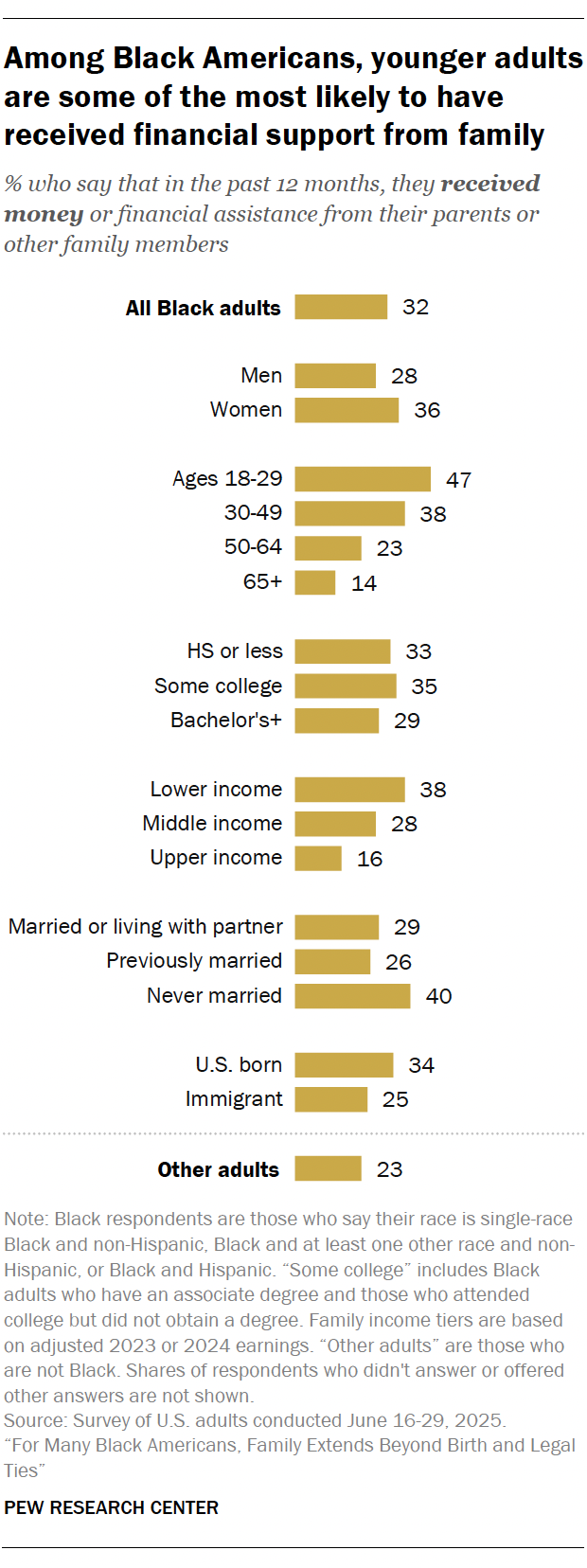
While most Black adults report giving financial help to family, fewer receive it. About one-third (32%) of Black Americans say they got financial assistance from their parents or other family members in the year prior to the survey.
- Age: Younger Black adults are more likely than older adults to say they received financial assistance from family. Nearly half of those ages 18 to 29 (47%) received assistance, compared with 38% of those ages 30 to 49, 23% of those 50 to 64 and 14% of those 65 and older.
- Gender: Black women (36%) are more likely than Black men (28%) to have received financial support from their families.2
- Nativity: Black adults born in the U.S. (34%) are more likely than Black immigrants (25%) to have received financial support from family.
- Income: Black adults with lower income (38%) are more likely than those with middle (28%) or upper incomes (16%) to have received financial assistance from family.
- Marital status: Black adults who have never been married (40%) are more likely than those who are currently married or cohabitating (29%) or previously married (26%) to have received this financial support.
Overall, Black Americans are more likely than other Americans to say they received financial support from family in the prior year (32% vs. 23%).
Does receiving financial support help personal finances?
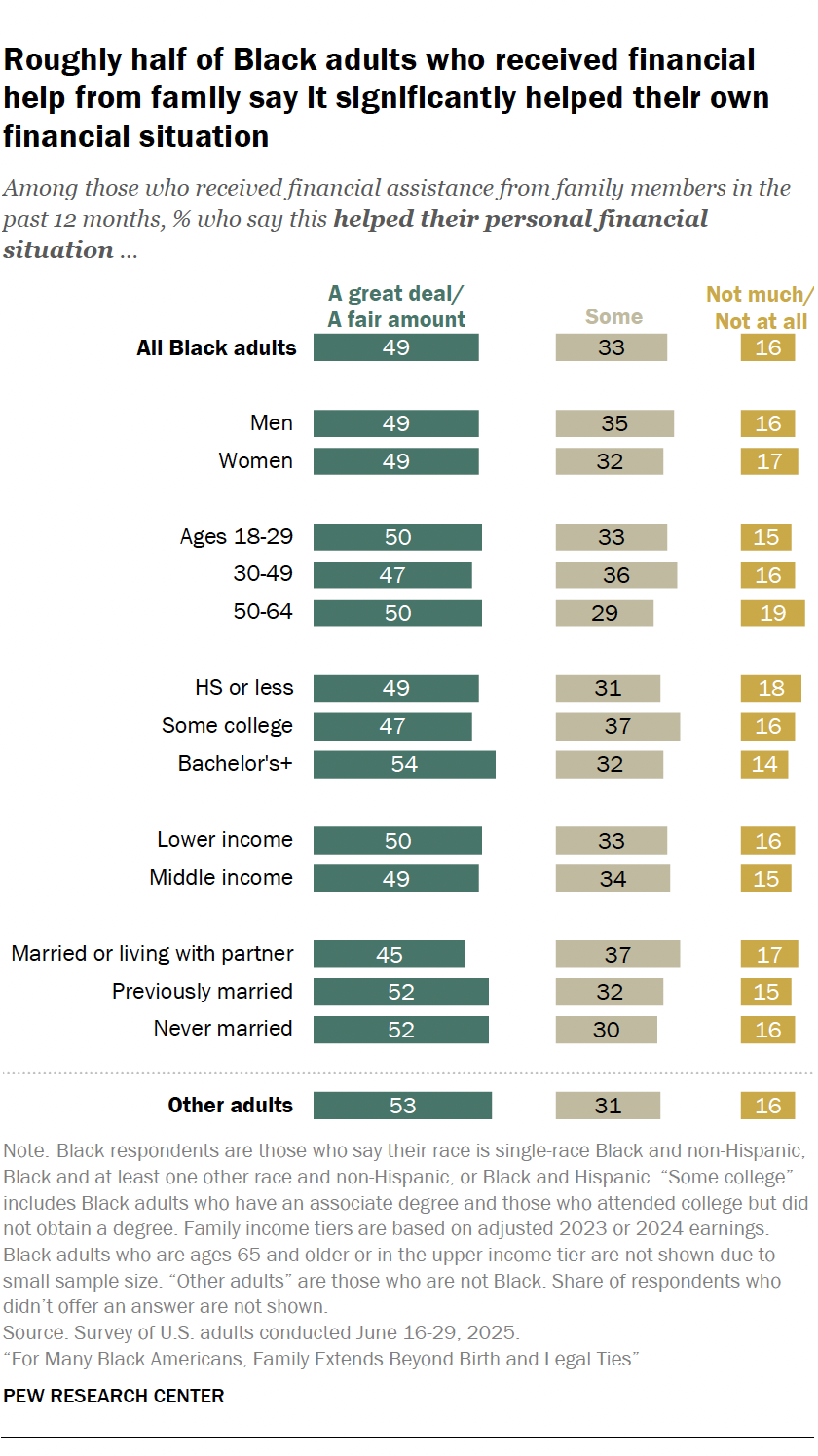
Roughly half of Black adults who received financial support from their family members say it helped their personal financial situation a great deal or fair amount (49%). Another 33% say it helped them somewhat, while 16% said it didn’t help them much or at all.
Across demographic groups, similar shares say that receiving financial assistance helped their situation.
There are no significant differences between Black adults and other adults on the extent to which this support helped their finances.