

Influencers are an important part of how Americans understand their own health and lifestyle. But what information are health and wellness influencers sharing with their audiences?
that …
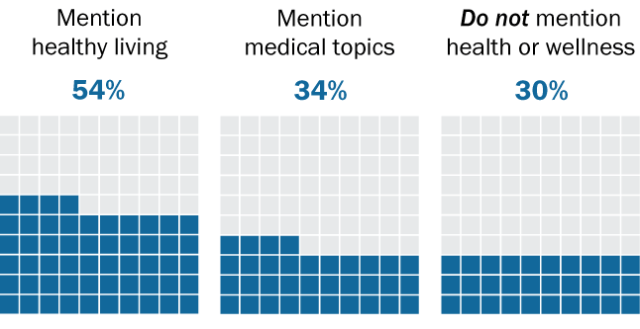
… and promote products or services in more than one-third of posts
% of posts that promote a product, service or subscription

“What Do Health and Wellness Influencers Post About?”
that …
| Share | |
|---|---|
| Mention healthy living | 54 |
| Mention medical topics | 34 |
| Do not mention healthy living or medical topics | 30 |
| Promote a product or service | 38 |
“What Do Health and Wellness Influencers Post About?”
To examine this question, Pew Research Center collected and analyzed more than half a million social media posts from more than 6,000 health and wellness influencers from February to April 2026.
Here are some of our key findings about what Americans might be hearing from health and wellness influencers on social media:
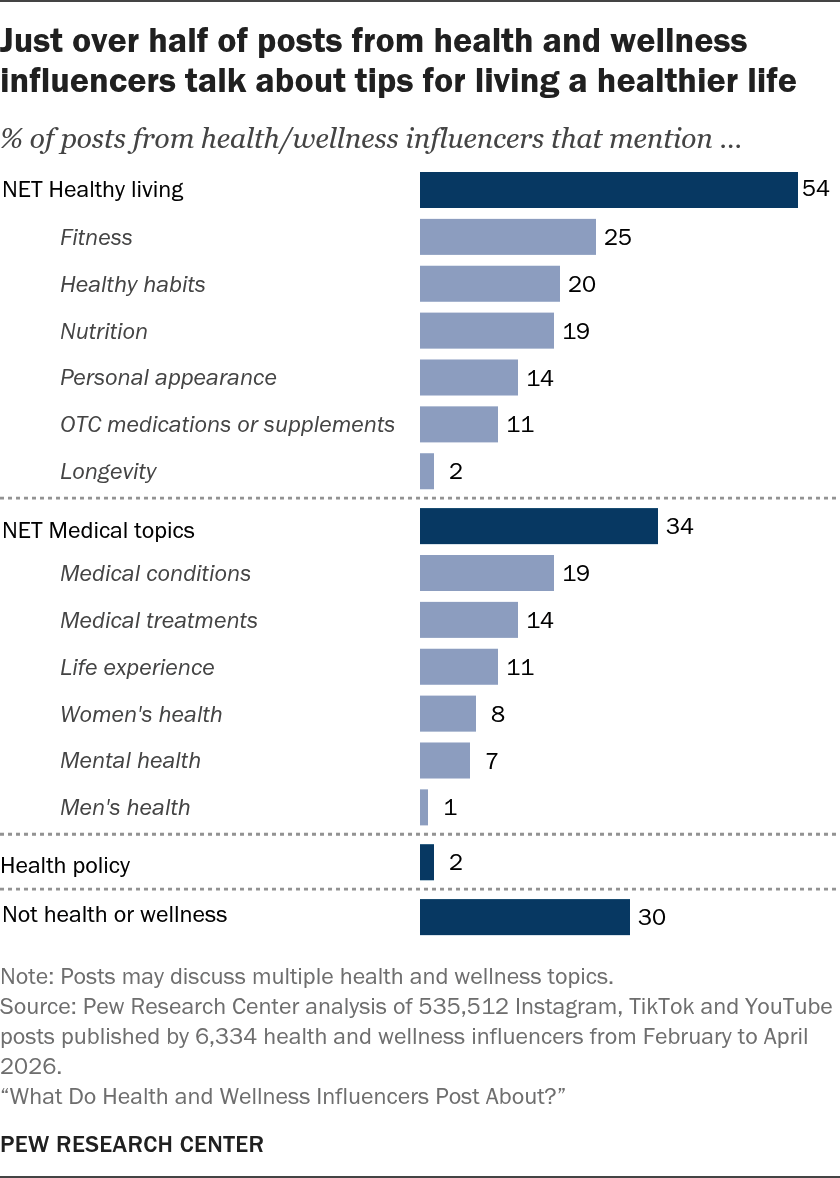
These influencers are more likely to post tips for healthy living than to discuss medical conditions or treatments. Just over half of these posts talk about healthy living, especially topics like fitness, nutrition and developing good health habits. About a third discuss medical topics.
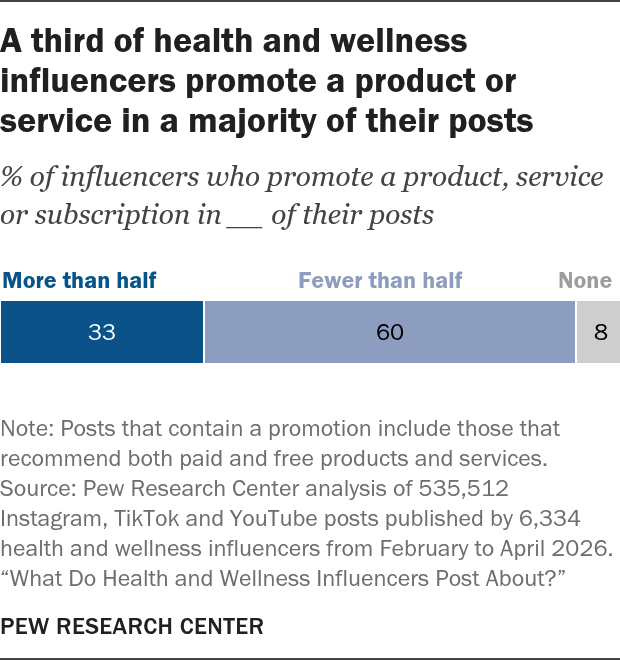
Product pitches and promotions are widespread. Some 38% of the posts we looked at contain a brand sponsorship or other appeal to use a product or service. Nearly every health and wellness influencer does this at least occasionally. Around a third of them include these appeals in a majority of their posts.
Influencers frequently touch on topics outside the world of health and wellness. Around a third of these posts don’t discuss health and wellness at all. Instead, they focus on the influencer’s personal life or their thoughts on unrelated issues.
The topics health and wellness influencers talk about
Health and wellness influencers discuss a wide range of topics and issues. But in general, slightly more than half of these posts talk about everyday tips for living a healthier life. This includes topics like:
“What Do Health and Wellness Influencers Post About?”
| Topic | Percent | group | index |
|---|---|---|---|
| NET Healthy living | 54 | lifestyle | 0 |
| Fitness | 25 | lifestyle | 1 |
| Healthy habits | 20 | lifestyle | 2 |
| Nutrition | 19 | lifestyle | 3 |
| Personal appearance | 14 | lifestyle | 4 |
| OTC medications or supplements | 11 | lifestyle | 5 |
| Longevity | 2 | lifestyle | 6 |
| NET Medical topics | 34 | medical | 7 |
| Medical conditions | 19 | medical | 8 |
| Medical treatments | 14 | medical | 9 |
| Life experience | 11 | medical | 10 |
| Women’s health | 8 | medical | 11 |
| Mental health | 7 | medical | 12 |
| Men’s health | 1 | medical | 13 |
| Health policy | 2 | 4 | 15 |
| Not health or wellness | 30 | 3 | 14 |
“What Do Health and Wellness Influencers Post About?”
- Fitness and exercise (25% of posts mention this): In our 2025 survey, more Americans said they often get fitness information from health and wellness influencers than any other topic.
- Tips for developing healthy habits, like sleeping better or regularly wearing sunscreen (20%): Our survey found that making a health or lifestyle change is a common reason people get wellness information from influencers.
- Nutrition (19%): Protein is a common subject in these posts: 42% of them mention protein directly.
- Ways to improve or maintain physical appearance as part of an overall focus on health and wellness (14%)
Meanwhile, one-third of these health and wellness influencer posts discuss medical issues. This includes topics like:
- Specific medical conditions (19% of posts)
- Treatments or interventions that require a prescription or the assistance of a medical professional (14%)
- Personal life experiences with a condition, a treatment or with the broader healthcare system (11%)
There is also a great deal of overlap between these topics. Some 45% of these posts mention multiple topics; for example, a post could discuss both healthy habits and nutrition or medical conditions and appearance. And 19% of them mention both a medical topic and a topic related to healthy living.
Additionally, 30% of these posts talk about topics other than health and wellness. This might include the influencers’ personal life, their day-to-day activities or any other subject that doesn’t relate directly to health or wellness. Virtually every influencer – 89% of them – posted at least one such post during the time period we looked at.
Which medical conditions do influencers post about?
“What Do Health and Wellness Influencers Post About?”
| Condition | Percent |
|---|---|
| Cancer | 8.5 |
| Anxiety & depression | 7.5 |
| Diabetes & prediabetes | 7.2 |
| Addiction & substance abuse | 5.4 |
| ADHD | 5.1 |
| Acne | 4.3 |
| Autism | 3.9 |
| Heart conditions | 3.5 |
| Insulin resistance | 3.2 |
| PCOS | 3.2 |
“What Do Health and Wellness Influencers Post About?”
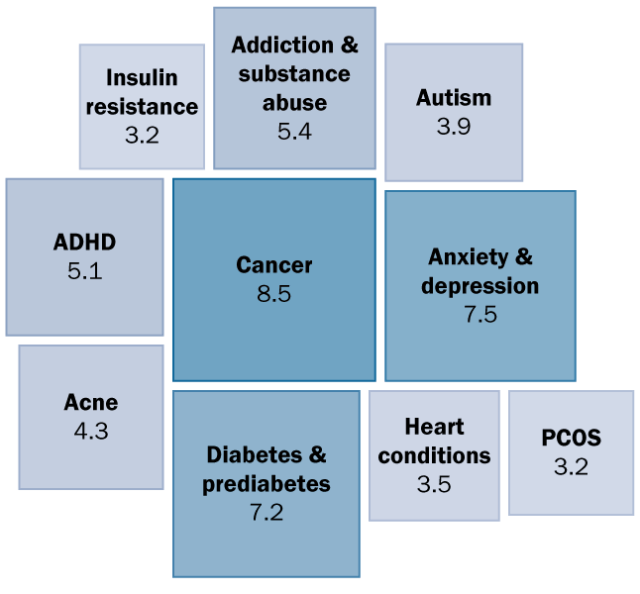
Around one-in-five of these posts mention a medical condition, often in the context of a person’s own experience with that condition or the medical system.
For each post mentioning this topic, we looked more closely at its content to see what specific conditions it discussed.
Cancer is one of the most discussed medical conditions: 8.5% of posts about medical conditions mention some type of cancer. Diabetes, anxiety and depression, substance abuse, and ADHD are each mentioned in 5% or more of these posts.
A majority of influencers have a go-to topic
Each influencer makes choices about what to post about, and many talk about a wide range of topics. But around six-in-ten influencers return to one topic more than any other.1 This is especially common for topics like fitness (25% of influencers post about this substantially more than any other topic) and nutrition (10%). And 5% of influencers make mental health the main focus of their posts.
Other topics come up regularly but are rarely the primary focus of any given influencer. For example, 19% of all the posts we looked at mention a medical condition. But just 4% of influencers post about this topic more than any other.
Certain topics regularly go together
In addition to looking at whether these influencers have a single topic that they post about much more than others, we also looked at their two most-mentioned topics – regardless of how big the difference between them is.
This analysis highlights combinations that make up the bread and butter of these influencers’ content. Some 17% of health and wellness influencers post frequently about both fitness and tips for building healthy habits. In other words, these influencers’ content goes beyond one-off workouts and encourages their audiences to develop long-lasting habits or routines. Nutrition is also a common pairing with content about healthy habits: 8% of influencers post about these two topics the most.
Other pairings are less intuitive, like the fact that 7% of these influencers most frequently post about ways to improve physical appearance and treatments requiring the involvement of a medical professional. Some accounts in our sample are plastic surgeons and other cosmetic medical professionals who discuss medical treatments to improve appearance, such as liposuction or face-lifts.
Promotion of products and services
Promotion of products and services – whether directly disclosed as a sponsorship or not – is widespread in the posts we examined. Some 38% of these posts – and nearly half of those that directly discuss health and wellness topics – disclose a sponsorship or encourage their audiences to use a product, service or subscription.2
These promotional appeals appear in many different types of posts. But they are especially common in posts that mention topics like:
- Non-prescription medications and supplements (66%)
- Men’s health (56%)
- Improving or maintaining physical appearance (56%)
- Nutrition (52%)
- Longevity (52%)
How often do influencers promote products or services?
“What Do Health and Wellness Influencers Post About?”
| None | Fewer than half | More than half | |
|---|---|---|---|
| Share of influencers | 8 | 60 | 33 |
“What Do Health and Wellness Influencers Post About?”
This practice isn’t limited to a few health and wellness influencers: 92% of them include promotions in their feeds at least occasionally. And around a third do so in half or more of their posts.
Influencers with certain backgrounds are more likely to include promotions in their posts. This includes dieticians and nutritionists; complementary, alternative, and integrative health professionals; authors; business owners; and coaches. By contrast, influencers who describe themselves as activists or athletes include promotions in a smaller share of their posts.
References to health harms, outside sources of expertise
Our previous research has found that around a quarter of Americans who get information from health and wellness influencers say this content makes them feel more worried about their overall health. We wanted to find out whether this content frequently warns of specific health harms, like risks from certain health practices or the perceived dangers of different drugs and treatments.
And in an environment where influencers’ own backgrounds and experiences serve as their credibility, we also wanted to know how often they cite outside sources to back up their claims – whether that source is a peer reviewed study or a more general appeal to science.
Across all the posts we examined:
- 11% warn about a direct health harm.
- 9% refer to an outside source while making a health claim.
Posts that do one of these things frequently do the other: Around four-in-ten posts that cite an outside source also warn of a health harm.
Whether a post cites a source or warns of a harm also can depend on what else is discussed in the post. For instance, half of posts that mention health policy cite an outside source of expertise, and 46% warn of a specific health harm. But these topics are quite rare in posts that mention non-medical topics, like fitness.

