Vice President JD Vance will soon publish a memoir documenting the religious journey that led to his conversion to Catholicism. Ahead of its release, here are key facts about converts to and from Catholicism in the United States, drawn primarily from Pew Research Center’s 2023-24 Religious Landscape Study.
Converts to Catholicism account for 1.5% of all U.S. adults. These are adults who say their current religion is Catholicism but that their childhood religion was something different. As of 2024, there were about 267 million adults in the U.S., which works out to roughly 4 million Catholic converts.
While Catholic converts account for a relatively small share of the country’s adult population, the number of converts to Catholicism is on par with or larger than the number of Americans who identify with some sizable Protestant groups, including Presbyterians, Episcopalians and Reformed Christians.
Converts make up 8% of U.S. Catholics. The remaining 92% of U.S. Catholics are “cradle Catholics,” meaning they were raised in the faith and still identify with it today.
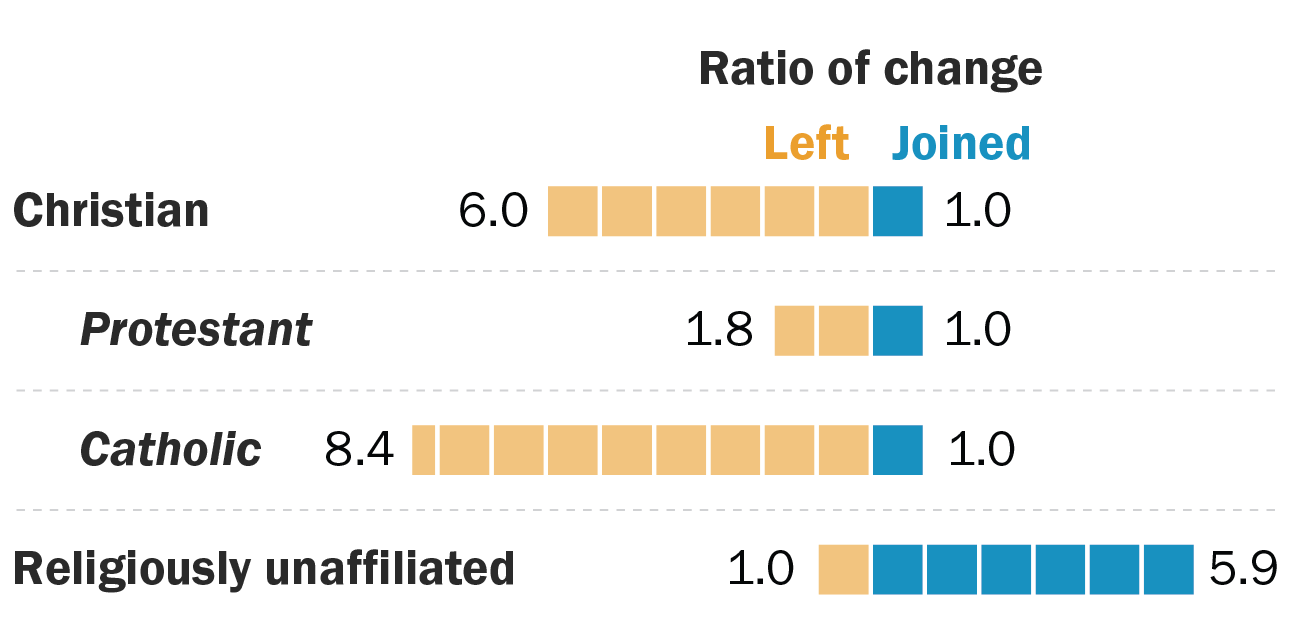
Catholicism in the U.S. loses more people than it gains from religious switching. For every adult who becomes a Catholic after having been raised something different, more than eight of those who were raised Catholic no longer identify that way. This same pattern appears in many of the other countries Pew Research Center has surveyed.
| Group | Left | Joined |
|---|---|---|
| Christian | 6.0 | 1.0 |
| Protestant | 1.8 | 1.0 |
| Catholic | 8.4 | 1.0 |
| Religiously unaffiliated | 1.0 | 5.9 |
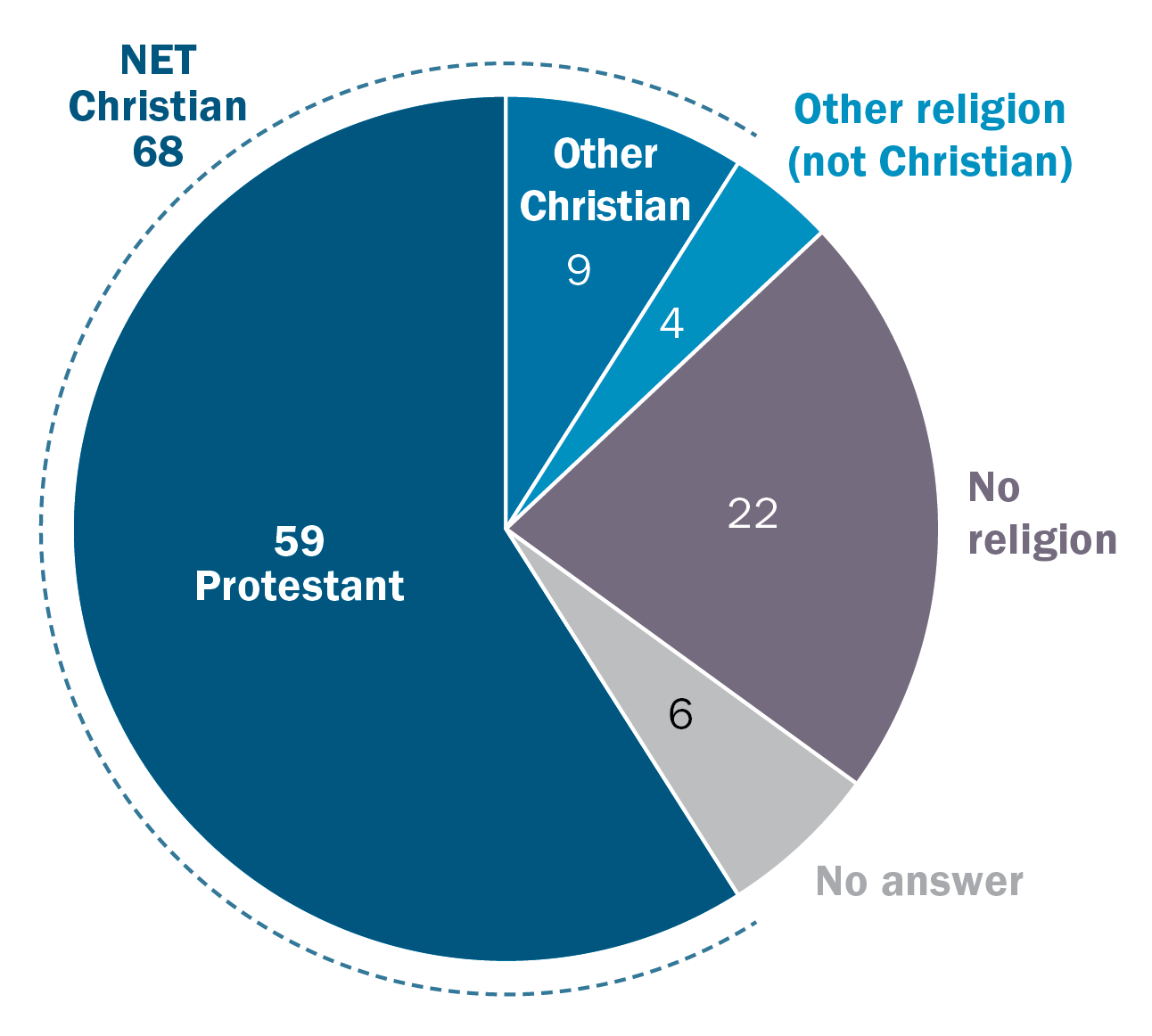
About two-thirds of Catholic converts come from a different Christian tradition. Around six-in-ten (59%) say they were raised Protestant, while an additional 9% were raised in another Christian tradition, such as Orthodox Christianity or the Church of Jesus Christ of Latter-day Saints. Around one-in-five converts to Catholicism (22%) did not have a religious affiliation as a child.
| Religion | Percent |
|---|---|
| Christian (Protestant) | 59 |
| Christian (other) | 9 |
| Other religion (not Christian) | 4 |
| No religion | 22 |
| No answer | 6 |
The most common reason Catholic converts cite for joining the church is a Catholic spouse or a desire to get married in the church. Nearly half of converts to Catholicism mentioned this in response to an open-ended question that asked, “Just in your own words, what is the main reason you became a Catholic?”
Converts to Catholicism attend Mass and receive Communion at higher rates than lifelong Catholics, but they don’t pray or go to confession more often. Some 38% of converts say they go to Mass at least weekly – significantly higher than the 28% of “cradle Catholics” who say the same. And 58% of converts say they receive Communion every time they go to Mass, compared with a much smaller share of Catholics who were raised in the faith (34%).
There are no statistically significant differences in how often converts and lifelong Catholics say they pray or go to confession.
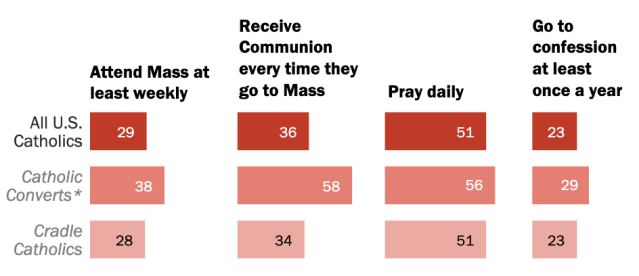
| Group | Attend Mass at least weekly | Receive Communion every time they go to Mass | Pray daily | Go to confession at least once a year |
|---|---|---|---|---|
| All U.S. Catholics | 29 | 36 | 51 | 23 |
| Catholic Converts* | 38 | 58 | 56 | 29 |
| Cradle Catholics | 28 | 34 | 51 | 23 |
Catholic converts are more likely than those raised in the faith to be Republican. Among Catholic registered voters, 60% of converts identified as Republican or leaned toward the Republican Party as of our 2023-24 study. A smaller share of lifelong Catholics (52%) said the same.

| Group | Rep/Lean Rep | Dem/Lean Dem |
|---|---|---|
| All Catholics | 53 | 43 |
| Catholic Converts | 60 | 35 |
| Cradle Catholics | 52 | 43 |
Most Catholic converts in the U.S. are White, and 79% were born in the U.S. Hispanics make up a smaller share of Catholic converts than of Catholics who were raised in the faith (20% vs. 37%). Similarly, immigrants make up a smaller share of Catholic converts than of lifelong Catholics.
Note: Figures may not add to 100% due to rounding. “Catholic converts” are people who say they are Catholic when asked about their present religion, but who say they were not raised Catholic. “Cradle Catholics” are people who were raised Catholic and currently identify as Catholic. White, Black and Asian Americans include those who report being only one race and are not Hispanic. Hispanics are of any race. For the purposes of this analysis, the “Born outside the U.S.” category includes those born in Puerto Rico and other U.S. territories. Although individuals from Puerto Rico are U.S. citizens by birth, they are included with the “Born outside the U.S.” category because they are born into a Spanish-dominant culture and because, on many points, their attitudes, views and beliefs are much closer to those of Hispanics born outside the U.S. than to Hispanics born in the 50 U.S. states or the District of Columbia, even those who identify themselves as being of Puerto Rican origin.
| Group | All Catholics | Catholic Converts | Cradle Catholics |
|---|---|---|---|
| White | 54 | 67 | 53 |
| Hispanic | 36 | 20 | 37 |
| Black | 2 | 3 | 2 |
| Asian | 4 | 4 | 4 |
| Other/Multiracial | 2 | 3 | 2 |
| No answer | 1 | 3 | 1 |
| Born in the U.S. | 29 | 18 | 30 |
| Born outside the U.S. | 68 | 79 | 67 |
| No answer/Unclear | 3 | 4 | 3 |
Note: Figures may not add to 100% due to rounding. “Catholic converts” are people who say they are Catholic when asked about their present religion, but who say they were not raised Catholic. “Cradle Catholics” are people who were raised Catholic and currently identify as Catholic. White, Black and Asian Americans include those who report being only one race and are not Hispanic. Hispanics are of any race. For the purposes of this analysis, the “Born outside the U.S.” category includes those born in Puerto Rico and other U.S. territories. Although individuals from Puerto Rico are U.S. citizens by birth, they are included with the “Born outside the U.S.” category because they are born into a Spanish-dominant culture and because, on many points, their attitudes, views and beliefs are much closer to those of Hispanics born outside the U.S. than to Hispanics born in the 50 U.S. states or the District of Columbia, even those who identify themselves as being of Puerto Rican origin.
Vance is among a quarter of married U.S. Catholics who have a spouse from a different faith. The vice president said in 2025 that he hopes his wife, second lady Usha Vance, will someday convert from Hinduism to Catholicism. Nationwide, one-in-four married Catholics are wed to a non-Catholic – including 1% who, like Vance, are married to someone from a non-Christian religious background.