Large shares of Americans are connected to the world of digital information while on the go via smartphones and other mobile devices. Explore the patterns and trends that have shaped the mobile revolution below.
How we did this
To better understand Americans’ smartphone and broadband adoption, Pew Research Center surveyed 5,022 U.S. adults from Feb. 5 to June 18, 2025. SSRS conducted this National Public Opinion Reference Survey (NPORS) for the Center using address-based sampling and a multimode protocol that included web, mail and phone. This way nearly all U.S. adults have a chance of selection. The survey is weighted to be representative of the U.S. adult population by gender, race and ethnicity, education, and other categories.
Surveys fielded before 2023 were conducted via phone. For more on the mode shift in 2023, read our Q&A.
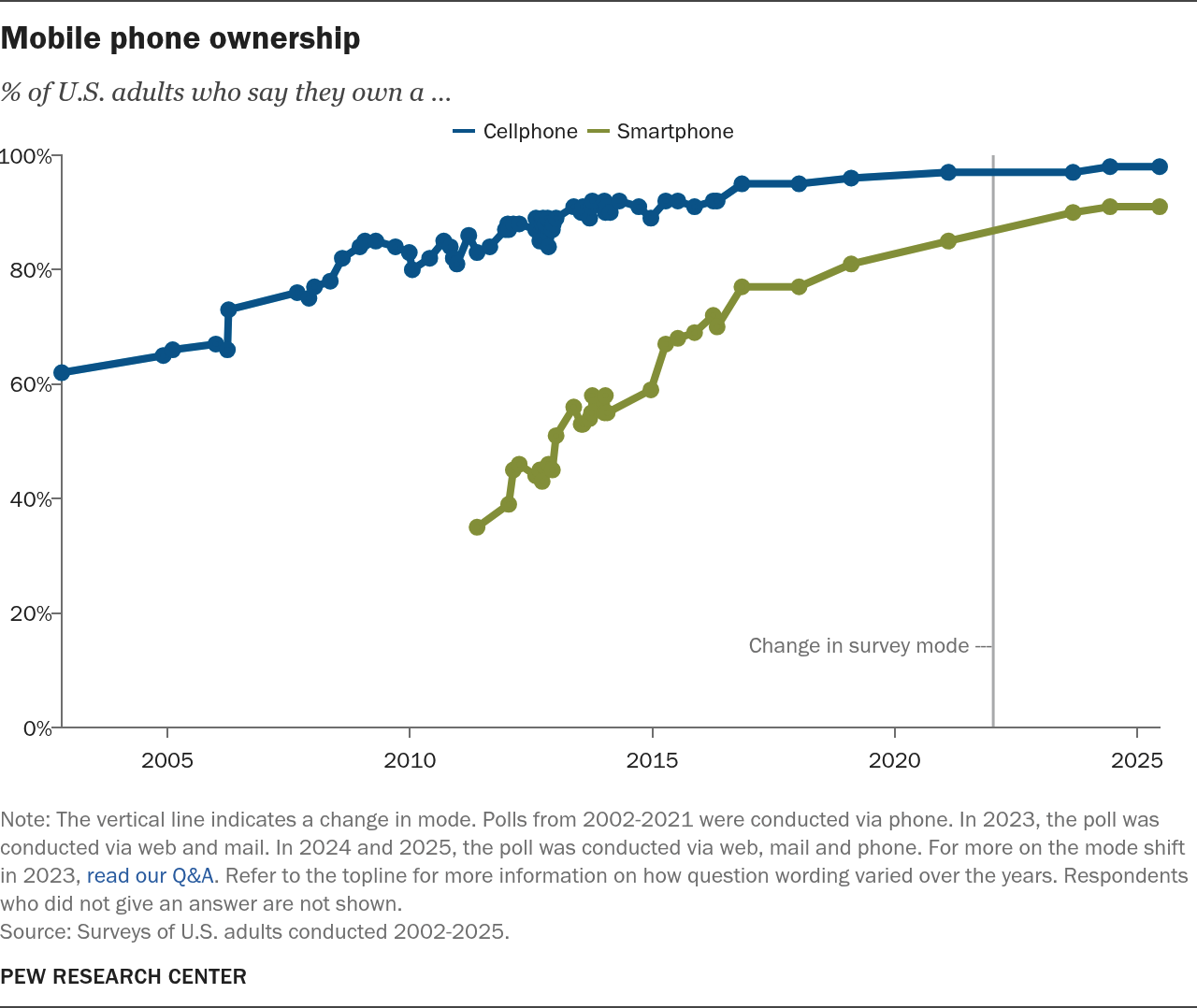
The vast majority of Americans – 98% – now own a cellphone of some kind. About nine-in-ten (91%) own a smartphone, up from just 35% in the Center’s first survey of smartphone ownership conducted in 2011.
Mobile phone ownership
% of U.S. adults who say they own a …
Note: The vertical line indicates a change in mode. Polls from 2002-2021 were conducted via phone. In 2023, the poll was conducted via web and mail. In 2024 and 2025, the poll was conducted via web, mail and phone. For more on the mode shift in 2023, read our Q&A. Refer to the topline for more information on how question wording varied over the years. Respondents who did not give an answer are not shown.
Source: Surveys of U.S. adults conducted 2002-2025.
Note: The vertical line indicates a change in mode. Polls from 2002-2021 were conducted via phone. In 2023, the poll was conducted via web and mail. In 2024 and 2025, the poll was conducted via web, mail and phone. For more on the mode shift in 2023, read our Q&A. Refer to the topline for more information on how question wording varied over the years. Respondents who did not give an answer are not shown.
Source: Surveys of U.S. adults conducted 2002-2025.
PEW RESEARCH CENTER
Who owns cellphones and smartphones?
Substantial majorities of Americans across a wide range of demographic groups are cellphone owners. The same is true for smartphone ownership – though some differences do emerge, particularly by age, household income and education.
Note: Respondents who did not give an answer are not shown. Source: Survey of U.S. adults conducted Feb. 5-June 18, 2025.
Men
Women
Cellphone
97
98
Smartphone
90
91
Cellphone, but not a smartphone
7
7
Note: Respondents who did not give an answer are not shown. Source: Survey of U.S. adults conducted Feb. 5-June 18, 2025.
White
Black
Hispanic
Asian*
Cellphone
98
98
98
98
Smartphone
91
85
93
96
Cellphone, but not a smartphone
7
12
5
3
* Estimates for Asian adults are representative of English speakers only. Note: White, Black and Asian adults include those who report being only one race and are not Hispanic. Hispanics are of any race. Respondents who did not give an answer are not shown. Source: Survey of U.S. adults conducted Feb. 5-June 18, 2025.
Less than $30,000
$30,000- $69,999
$70,000- $99,999
$100,000+
Cellphone
95
98
99
99
Smartphone
82
89
96
97
Cellphone, but not a smartphone
13
9
3
2
Note: Respondents who did not give an answer are not shown. Source: Source: Survey of U.S. adults conducted Feb. 5-June 18, 2025.
High school or less
Some college
College graduate
Cellphone
97
98
99
Smartphone
84
93
96
Cellphone, but not a smartphone
13
5
2
Note: Respondents who did not give an answer are not shown. Source: Survey of U.S. adults conducted Feb. 5-June 18, 2025.
Urban
Suburban
Rural
Cellphone
97
99
97
Smartphone
91
93
87
Cellphone, but not a smartphone
7
5
9
Note: Respondents who did not give an answer are not shown. Source: Survey of U.S. adults conducted Feb. 5-June 18, 2025.
Rep/Lean Rep
Dem/Lean Dem
Cellphone
98
98
Smartphone
91
92
Cellphone, but not a smartphone
6
6
Note: Respondents who did not give an answer are not shown. Source: Source: Survey of U.S. adults conducted Feb. 5-June 18, 2025.
Smartphone dependency over time
Today, 16% of U.S. adults are “smartphone-only” internet users – meaning they own a smartphone but do not subscribe to a home broadband service.
Smartphone dependency
% of U.S. adults who say they do not use broadband at home but own a smartphone
Note: The vertical line indicates a change in mode. Polls from 2013-2021 were conducted via phone. In 2023, the poll was conducted via web and mail. In 2024 and 2025, the poll was conducted via web, mail and phone. For more on the mode shift in 2023, read our Q&A. Refer to the topline for more information on how question wording varied over the years. Respondents who did not give an answer are not shown.
Source: Surveys of U.S. adults conducted 2013-2025. Data for each year is based on a pooled analysis of all surveys containing broadband and smartphone questions fielded during that year.
PEW RESEARCH CENTER
Share this chart
Smartphone dependency
% of U.S. adults who say they do not use broadband at home but own a smartphone
Note: The vertical line indicates a change in mode. Polls from 2013-2021 were conducted via phone. In 2023, the poll was conducted via web and mail. In 2024 and 2025, the poll was conducted via web, mail and phone. For more on the mode shift in 2023, read our Q&A. Refer to the topline for more information on how question wording varied over the years. Respondents who did not give an answer are not shown.
Source: Surveys of U.S. adults conducted 2013-2025. Data for each year is based on a pooled analysis of all surveys containing broadband and smartphone questions fielded during that year.
PEW RESEARCH CENTER
Who is smartphone dependent?
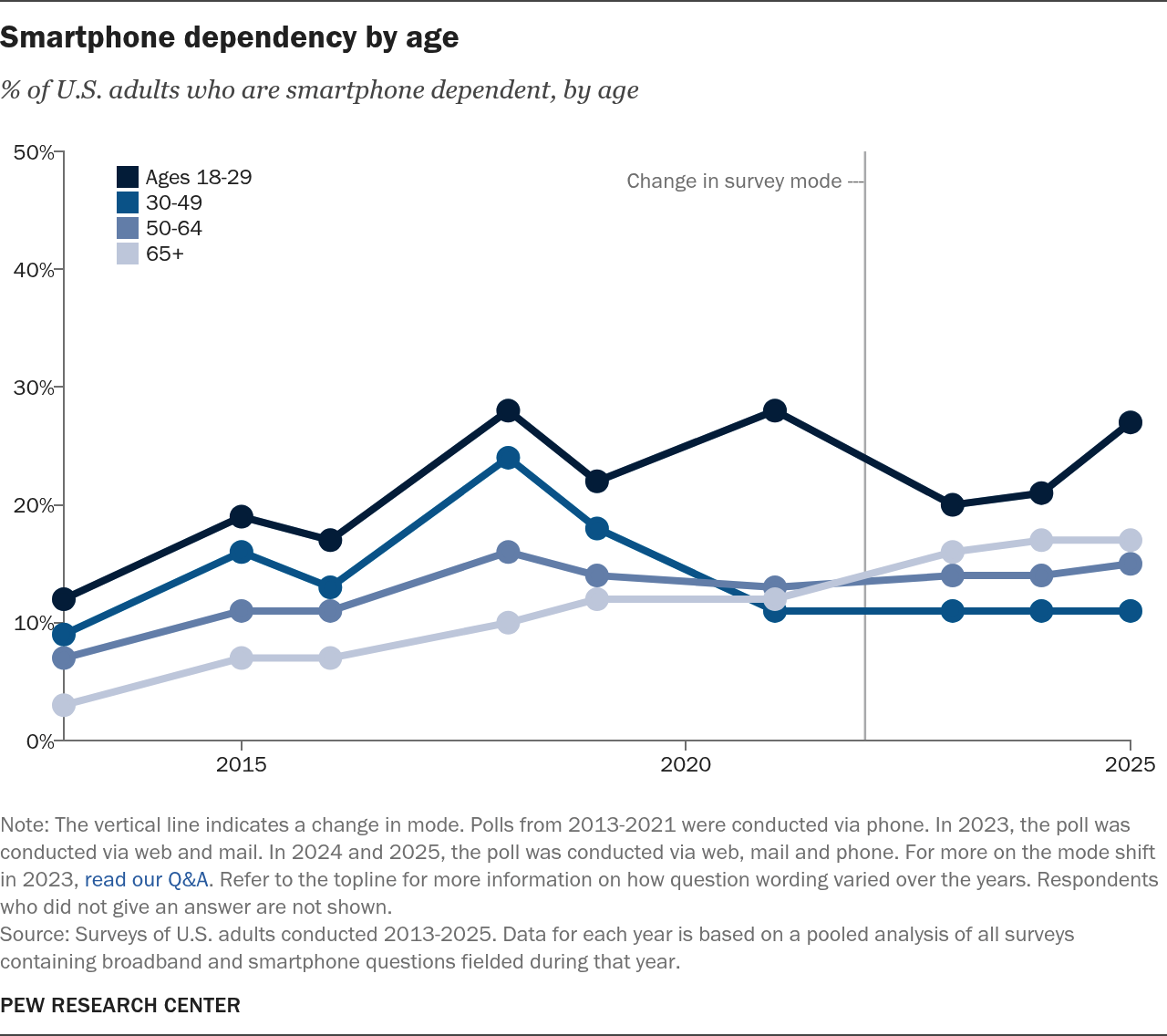
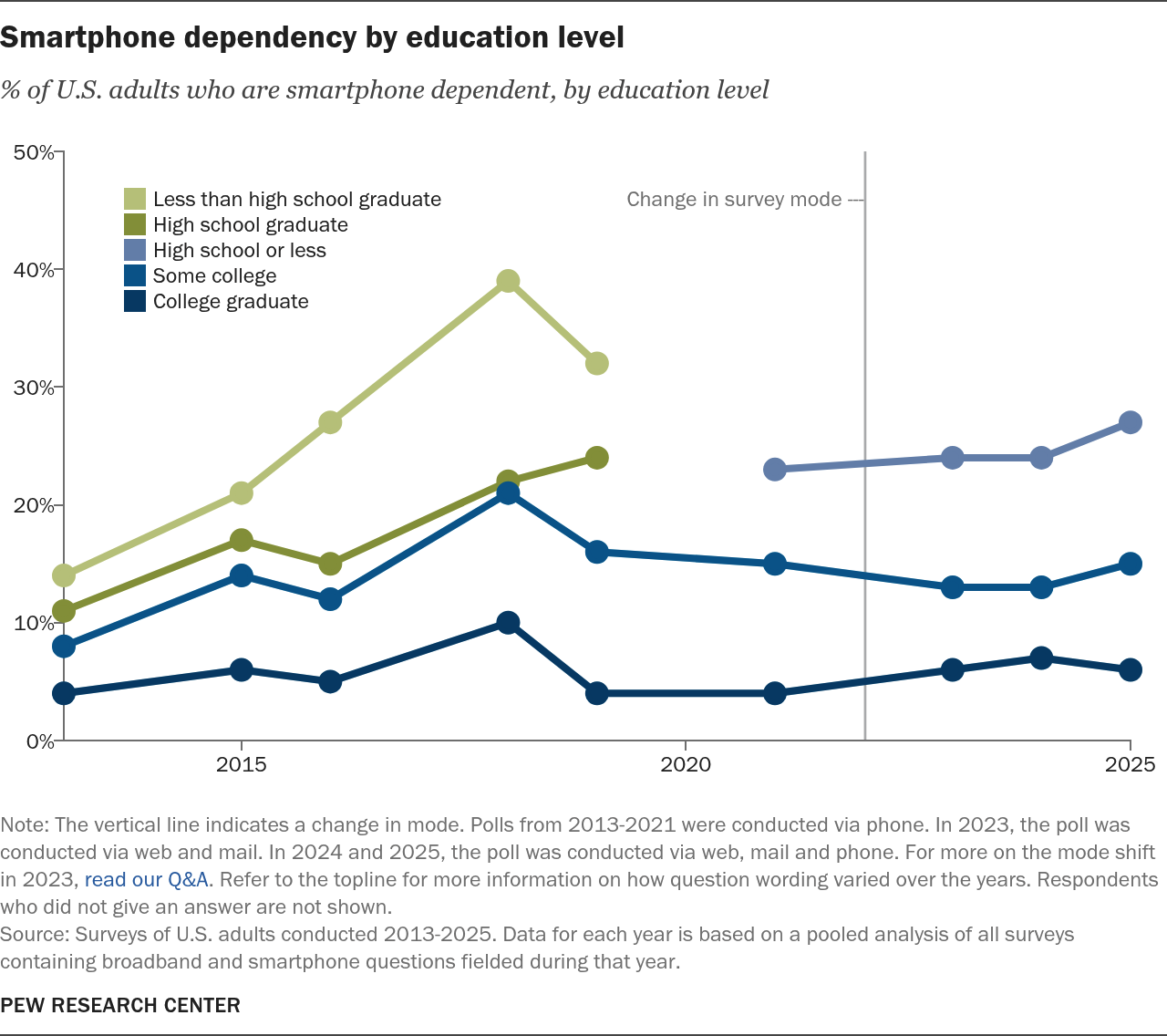
Reliance on smartphones for online access is especially common among Americans with lower household incomes and those with less formal education.
% of U.S. adults who are smartphone dependent, by age
Note: The vertical line indicates a change in mode. Polls from 2013-2021 were conducted via phone. In 2023, the poll was conducted via web and mail. In 2024 and 2025, the poll was conducted via web, mail and phone. For more on the mode shift in 2023, read our Q&A. Refer to the topline for more information on how question wording varied over the years. Respondents who did not give an answer are not shown.
Source: Surveys of U.S. adults conducted 2013-2025. Data for each year is based on a pooled analysis of all surveys containing broadband and smartphone questions fielded during that year.
PEW RESEARCH CENTER
Share this chart
Smartphone dependency by age
% of U.S. adults who are smartphone dependent, by age
Note: The vertical line indicates a change in mode. Polls from 2013-2021 were conducted via phone. In 2023, the poll was conducted via web and mail. In 2024 and 2025, the poll was conducted via web, mail and phone. For more on the mode shift in 2023, read our Q&A. Refer to the topline for more information on how question wording varied over the years. Respondents who did not give an answer are not shown.
Source: Surveys of U.S. adults conducted 2013-2025. Data for each year is based on a pooled analysis of all surveys containing broadband and smartphone questions fielded during that year.
PEW RESEARCH CENTER
Smartphone dependency by race and ethnicity
% of U.S. adults who are smartphone dependent, by race and ethnicity
* Estimates for Asian adults are representative of English speakers only. Note: The vertical line indicates a change in mode. Polls from 2013-2021 were conducted via phone. In 2023, the poll was conducted via web and mail. In 2024 and 2025, the poll was conducted via web, mail and phone. For more on the mode shift in 2023, read our Q&A. Refer to the topline for more information on how question wording varied over the years. White, Black and Asian adults include those who report being only one race and are not Hispanic. Hispanic adults are of any race. Respondents who did not give an answer are not shown.
Source: Surveys of U.S. adults conducted 2013-2025. Data for each year is based on a pooled analysis of all surveys containing broadband and smartphone questions fielded during that year.
PEW RESEARCH CENTER
Share this chart
Smartphone dependency by race and ethnicity
% of U.S. adults who are smartphone dependent, by race and ethnicity
* Estimates for Asian adults are representative of English speakers only. Note: The vertical line indicates a change in mode. Polls from 2013-2021 were conducted via phone. In 2023, the poll was conducted via web and mail. In 2024 and 2025, the poll was conducted via web, mail and phone. For more on the mode shift in 2023, read our Q&A. Refer to the topline for more information on how question wording varied over the years. White, Black and Asian adults include those who report being only one race and are not Hispanic. Hispanic adults are of any race. Respondents who did not give an answer are not shown.
Source: Surveys of U.S. adults conducted 2013-2025. Data for each year is based on a pooled analysis of all surveys containing broadband and smartphone questions fielded during that year.
PEW RESEARCH CENTER
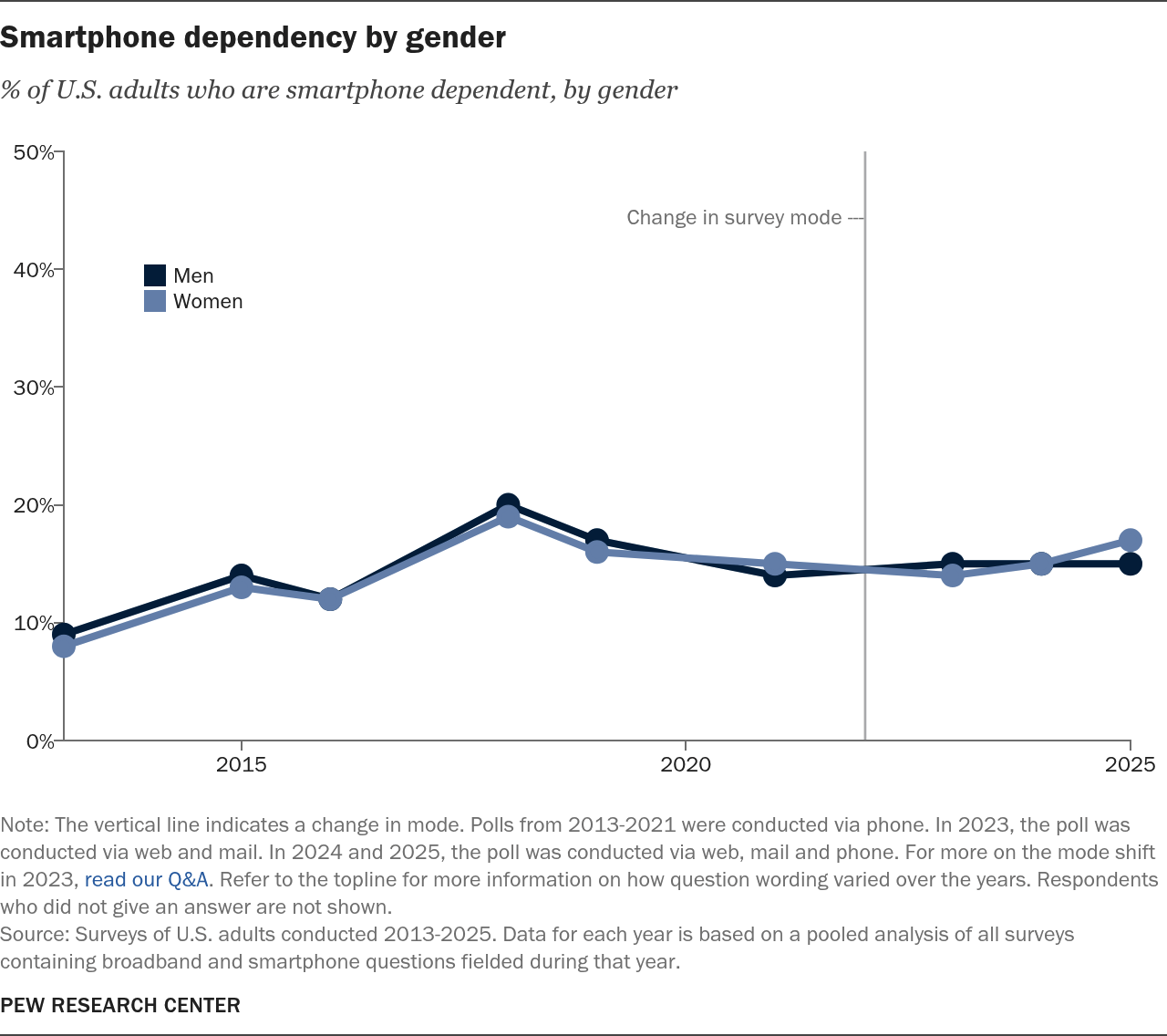
Smartphone dependency by gender
% of U.S. adults who are smartphone dependent, by gender
Note: The vertical line indicates a change in mode. Polls from 2013-2021 were conducted via phone. In 2023, the poll was conducted via web and mail. In 2024 and 2025, the poll was conducted via web, mail and phone. For more on the mode shift in 2023, read our Q&A. Refer to the topline for more information on how question wording varied over the years. Respondents who did not give an answer are not shown.
Source: Surveys of U.S. adults conducted 2013-2025. Data for each year is based on a pooled analysis of all surveys containing broadband and smartphone questions fielded during that year.
PEW RESEARCH CENTER
Share this chart
Smartphone dependency by gender
% of U.S. adults who are smartphone dependent, by gender
Note: The vertical line indicates a change in mode. Polls from 2013-2021 were conducted via phone. In 2023, the poll was conducted via web and mail. In 2024 and 2025, the poll was conducted via web, mail and phone. For more on the mode shift in 2023, read our Q&A. Refer to the topline for more information on how question wording varied over the years. Respondents who did not give an answer are not shown.
Source: Surveys of U.S. adults conducted 2013-2025. Data for each year is based on a pooled analysis of all surveys containing broadband and smartphone questions fielded during that year.
PEW RESEARCH CENTER
Smartphone dependency by income
% of U.S. adults who are smartphone dependent, by annual household income
Note: The vertical line indicates a change in mode. Polls from 2013-2021 were conducted via phone. In 2023, the poll was conducted via web and mail. In 2024 and 2025, the poll was conducted via web, mail and phone. For more on the mode shift in 2023, read our Q&A. Refer to the topline for more information on how question wording varied over the years. Respondents who did not give an answer are not shown.
Source: Surveys of U.S. adults conducted 2013-2025. Data for each year is based on a pooled analysis of all surveys containing broadband and smartphone questions fielded during that year.
PEW RESEARCH CENTER
Share this chart
Smartphone dependency by income
% of U.S. adults who are smartphone dependent, by annual household income
Note: The vertical line indicates a change in mode. Polls from 2013-2021 were conducted via phone. In 2023, the poll was conducted via web and mail. In 2024 and 2025, the poll was conducted via web, mail and phone. For more on the mode shift in 2023, read our Q&A. Refer to the topline for more information on how question wording varied over the years. Respondents who did not give an answer are not shown.
Source: Surveys of U.S. adults conducted 2013-2025. Data for each year is based on a pooled analysis of all surveys containing broadband and smartphone questions fielded during that year.
PEW RESEARCH CENTER
Smartphone dependency by education level
% of U.S. adults who are smartphone dependent, by education level
Note: The vertical line indicates a change in mode. Polls from 2013-2021 were conducted via phone. In 2023, the poll was conducted via web and mail. In 2024 and 2025, the poll was conducted via web, mail and phone. For more on the mode shift in 2023, read our Q&A. Refer to the topline for more information on how question wording varied over the years. Respondents who did not give an answer are not shown.
Source: Surveys of U.S. adults conducted 2013-2025. Data for each year is based on a pooled analysis of all surveys containing broadband and smartphone questions fielded during that year.
PEW RESEARCH CENTER
Share this chart
Smartphone dependency by education level
% of U.S. adults who are smartphone dependent, by education level
Note: The vertical line indicates a change in mode. Polls from 2013-2021 were conducted via phone. In 2023, the poll was conducted via web and mail. In 2024 and 2025, the poll was conducted via web, mail and phone. For more on the mode shift in 2023, read our Q&A. Refer to the topline for more information on how question wording varied over the years. Respondents who did not give an answer are not shown.
Source: Surveys of U.S. adults conducted 2013-2025. Data for each year is based on a pooled analysis of all surveys containing broadband and smartphone questions fielded during that year.
PEW RESEARCH CENTER
Smartphone dependency by community type
% of U.S. adults who are smartphone dependent, by community type
Note: The vertical line indicates a change in mode. Polls from 2013-2021 were conducted via phone. In 2023, the poll was conducted via web and mail. In 2024 and 2025, the poll was conducted via web, mail and phone. For more on the mode shift in 2023, read our Q&A. Refer to the topline for more information on how question wording varied over the years. Respondents who did not give an answer are not shown.
Source: Surveys of U.S. adults conducted 2013-2025. Data for each year is based on a pooled analysis of all surveys containing broadband and smartphone questions fielded during that year.
PEW RESEARCH CENTER
Share this chart
Smartphone dependency by community type
% of U.S. adults who are smartphone dependent, by community type
Note: The vertical line indicates a change in mode. Polls from 2013-2021 were conducted via phone. In 2023, the poll was conducted via web and mail. In 2024 and 2025, the poll was conducted via web, mail and phone. For more on the mode shift in 2023, read our Q&A. Refer to the topline for more information on how question wording varied over the years. Respondents who did not give an answer are not shown.
Source: Surveys of U.S. adults conducted 2013-2025. Data for each year is based on a pooled analysis of all surveys containing broadband and smartphone questions fielded during that year.