Israelis, Palestinians and Americans have very different views of whether the United States and Israel made a good choice in attacking Iran.
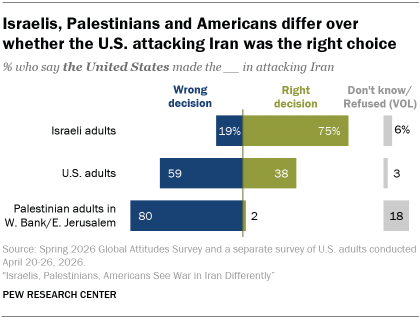
Three-quarters of Israelis say the U.S. made the right decision in attacking Iran, while eight-in-ten Palestinians in the West Bank and East Jerusalem say it was the wrong decision.
As of late April 2026, Americans are more divided, though a majority say that going to war was wrong. Americans’ views on this question held steady between late March and late April, even while the share of U.S. adults who said the military action was not going well ticked up.
The war began on Feb. 28 when U.S. and Israeli airstrikes killed Ayatollah Ali Khamenei, Iran’s supreme leader. Iran responded with missile and drone attacks on Israel and Persian Gulf states. Palestinian areas also came under Iranian fire. After more than five weeks of fighting, a ceasefire went into effect on April 7.
This report comparing the views of Americans, Israelis and Palestinians is based on several recent Pew Research Center surveys:
- In Israel, 1,001 Israelis (including 399 Arab Israelis) were surveyed from April 5 to May 6.
- In the West Bank and East Jerusalem, 1,038 Palestinians were surveyed from March 30 to April 28. We were not able to survey Gazans in 2026.
- In the U.S., we conducted two surveys in late March, before the ceasefire, and another from April 20 to 26.
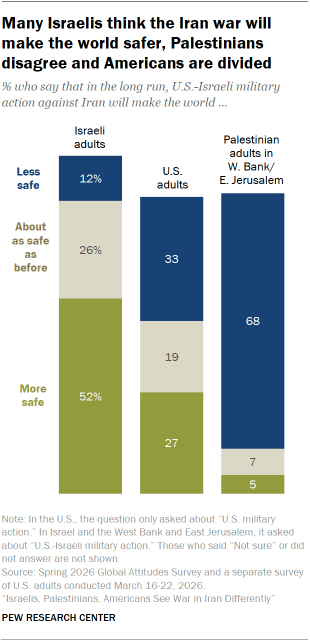
Thinking about the potential outcomes of the war, Israelis broadly anticipate a safer world, a safer Israel and an Iran that is less likely to develop a nuclear weapon. While they are less optimistic about how the Iranian people will fare, more Israelis think the war will leave the Iranian people better off (34%) than worse off (26%) – though many are unsure or anticipate little change.
Palestinians in the West Bank and East Jerusalem mostly expect the war to make things worse. Majorities of Palestinians think the war will make them, Palestine and the world less safe. And more Palestinians say the war will increase Iran’s likelihood of developing a nuclear weapon than decrease it – though large shares are unsure.
By comparison, Americans have mixed assessments about the war’s long-term effects. For example, 33% say the U.S. military action will make the world less safe, and 27% say it will make the world safer (19% say it will make no difference, and an identical share are not sure). But about twice as many Americans think the war will make the U.S. less safe as think it will make their country more safe.
Americans are about evenly split on whether the war will make Iran’s development of a nuclear weapon more likely, less likely or about as likely as it was before. And Americans are more likely to think the Iranian people will be worse off than better off. Republicans and Democrats also have very different views of the war.
Israelis, Palestinians and Americans also disagree about whether the major actors in the war – the U.S., Israel and Iran – are doing enough to avoid civilian casualties. To read more, refer to “Israelis, Palestinians and Americans disagree on which countries in Iran war are doing enough to protect civilians.”
How Israelis view the war
Most Israelis say that both the U.S. and Israel made the right decision in attacking Iran. However, opinion differs across ethnic and political groups.
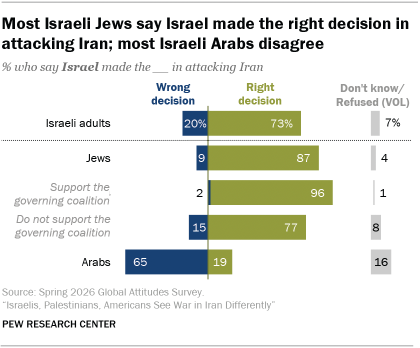
Israeli Jews are much more likely than Israeli Arabs to say Israel made the right decision in attacking Iran (87% vs. 19%).
There are also political divisions among Israeli Jews. The vast majority of Jews who support Prime Minister Benajmin Netanyahu’s governing coalition say Israel made the right decision (96%), while fewer – but still a majority – of Jews who don’t support the governing coalition take the same view (77%).
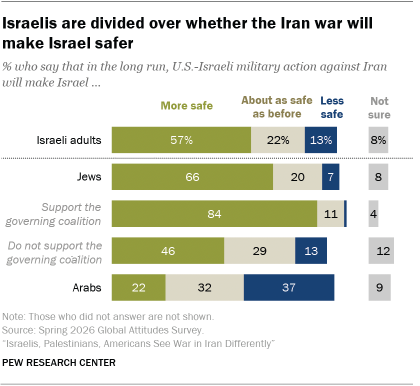
Beliefs about the war’s consequences also differ by ethnicity and governing coalition support. Most Israeli Jews think the military action against Iran will make Israel safer (66%), while a minority of Israeli Arabs agree (22%).
And Israeli Jews who support Netanyahu’s governing coalition are much more likely than those who don’t to think the war will make Israel safer (84% vs. 46%).
For more about views of how the war will affect individuals’ personal safety, as well as who has access to shelter, read “Amid Iran conflict, how do Israelis and Palestinians feel about their safety?”
The same divisions show up in opinions about the war’s effect on Iran’s ability to build a nuclear weapon.
- 58% of Israeli Jews think the war will make Iran less likely to develop nuclear weapons; 26% of Israeli Arabs agree.
- 71% of Jews who support Israel’s governing party think an Iranian nuclear bomb will be less likely, while 43% of Jews who don’t support the governing party say the same.
Large shares of both Arab and Jewish Israelis are unsure about the war’s likely impact on the Iranian people. But Israeli Jews are much more likely than Israeli Arabs to think military action will make the Iranian people better off in the long run (40% vs. 13%). And Israeli Jews who support the governing coalition are about twice as likely as nonsupporters to think it will bring long-term benefits to Iranians (52% vs. 27%). (Refer to the Appendix for detailed tables by ethnicity and political support on these questions.)
How Palestinians in the West Bank and East Jerusalem view the war
Large majorities of Palestinians in the West Bank and East Jerusalem say the U.S. and Israel made the wrong decision in attacking Iran. (We were unable to survey Palestinians in Gaza.)
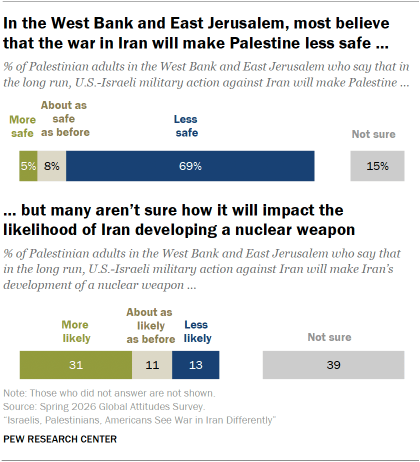
Around seven-in-ten Palestinians also anticipate that the war will make them, Palestine and the world less safe.
Views are slightly more mixed on the war’s impact on Iran’s nuclear capabilities. By roughly two-to-one, Palestinians think the military action against Iran will make Iran’s development of nuclear weapons more, not less, likely (31% vs. 13%), though a 39% plurality say they are unsure.
Although about a third of Palestinians are unsure how the war will impact the Iranian people in the long run, many more think Iranians will be worse off than think they will be better off (46% vs. 9%).
Views on these issues are fairly similar across age groups and education levels.
How Americans view the war
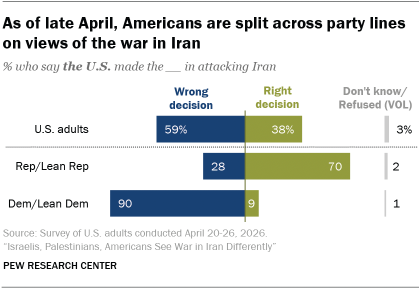
Around six-in-ten Americans say the U.S. made the wrong decision in using military force against Iran, while 38% say it was the right decision. In the U.S., we have asked this question twice, and views did not change between mid-March and late April.
On balance, Americans tend to have negative evaluations of the war. They believe it will make the U.S. less safe, not more (40% vs. 22%) and, by a narrower margin, also make the world less safe rather than safer (33% vs. 27%).
Views vary drastically by party. Republicans and independents who lean toward the Republican Party generally think the U.S. made the right decision in attacking Iran (70%), while Democrats and Democratic-leaning independents overwhelmingly say it was the wrong decision (90%).
In March, a narrow majority of Republicans thought the war would make the world safer (55%), with 10% saying it would make the world less safe, 19% saying the world would be about the same and 15% saying they were unsure. Democratic opinion was almost exactly the reverse, with 54% of Democrats saying the war would make the world less safe.
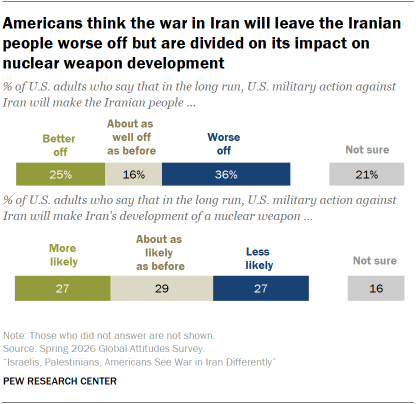
Americans are divided on how U.S. military action will affect Iran. Nearly half of Republicans think the war makes Iran less likely to develop a nuclear weapon, while many Democrats think an Iranian nuclear bomb is now more likely or about as likely as before the war. Democrats are also much more likely than Republicans to think that the war will make the Iranian people worse off, rather than better off, in the long run.
On many of these questions, there also tend to be statistically significant differences between younger and older Americans – and especially between younger and older Republicans.