Why Do Some Americans Leave Their Religion While Others Stay?
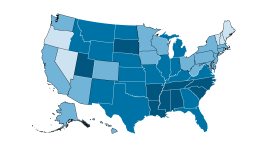
Many U.S. adults (35%) have moved on from the religion of their youth. Yet most Americans have not, including a majority – 56% – who still identify with their childhood religion.
All
Publications
Overview About six-in-ten Americans (62%) have heard about the proposed federal rule that would require employers, including most religiously affiliated institutions, to cover birth control as part of their health care benefits. Among those aware of the issue, opinion is closely divided over whether these institutions should be given an exemption to the rule if […]
Romney’s win included overwhelming support from Mormons and strong support from Catholic voters. He also won among white born-again/evangelical Protestants, though his support from that group continues to be somewhat more tepid than among non-evangelicals.
In his commanding win in the Florida Republican primary, Mitt Romney received strong support from Catholics and from voters who do not describe themselves as white born-again/evangelical Christians. Among both white evangelicals and Protestant voters, Romney ran about even with Newt Gingrich.
In his South Carolina Republican primary win, Newt Gingrich received strong support from born-again/evangelical Christians and from voters who said that it is important to them that a candidate shares their religious beliefs.
Polling conducted Jan. 11-16 shows that Mitt Romney maintains a substantial lead nationally in the race for the GOP nomination and finds few differences in the candidate preferences of some major religious groups.
Many religious “nones,” which include atheists and agnostics, in 22 countries hold religious or spiritual beliefs, such as in an afterlife or something beyond the natural world.
Nearly half of U.S. adults are connected to Catholicism. Read about going to Mass, Communion, confession and more.
After years of decline, the U.S. Christian share now shows signs of leveling off. The new Religious Landscape Study explores trends in identity, beliefs and practices.
The Global Religious Futures (GRF) project is jointly funded by The Pew Charitable Trusts and The John Templeton Foundation. Here are some big-picture findings from the GRF, together with context from other Pew Research Center studies.