As part of a survey about aging and caregiving in the U.S., we asked Americans how they feel about certain measures that might help people who are providing care for an aging family member.
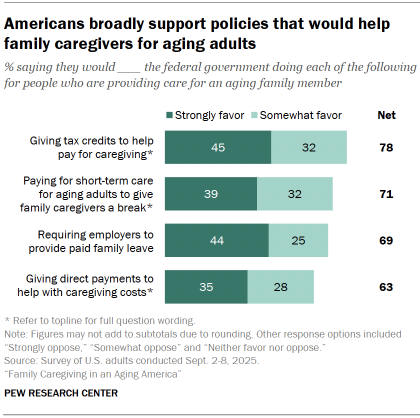
Most U.S. adults say they would favor the federal government:
- Giving tax credits to help pay for caregiving (78%)
- Paying for short-term care for aging adults to give family caregivers a break (71%)
- Requiring employers to provide paid family leave (69%)
- Giving direct payments to help with caregiving costs (63%)
Fewer than half say they would strongly favor each of these measures.
These findings are based on a survey conducted Sept. 2-8, 2025, among 8,750 U.S. adults. For more about the experiences of Americans caring for an aging parent or for an aging spouse or partner, read key findings from the full study.
Views by party
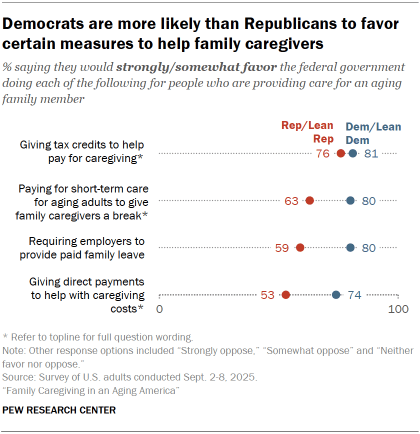
More than half of Democrats and Republicans favor each of these policy steps. But there are differences of at least 17 percentage points on:
- Paying for short-term care for aging adults to give family caregivers a break (80% of Democrats vs. 63% of Republicans)
- Requiring employers to provide paid family leave (80% vs. 59%)
- Giving direct payments to help with caregiving costs (74% vs. 53% )
These figures include independents who lean to either party.