
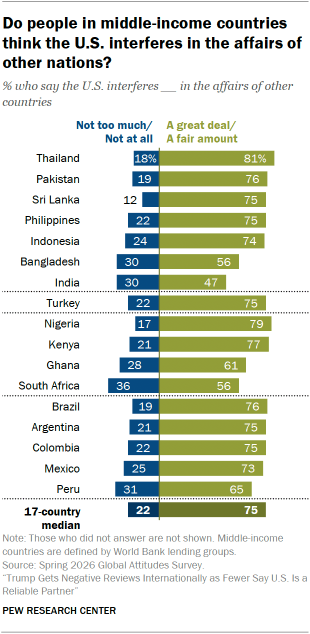
Majorities in 16 of 17 middle-income nations (as defined by World Bank lending groups) surveyed say the United States interferes in the affairs of other countries a great deal or a fair amount.
These findings come from a new Pew Research Center survey of 42,151 adults in 36 countries, conducted Feb. 8-May 13, 2026. They are part of a larger report focused on views of the U.S. and its president.
In 12 nations, roughly three-quarters of adults or more say the U.S. interferes in the affairs of other countries.
Thai adults are especially likely to say the U.S. interferes (81% hold this view). India is the only nation where this is a minority opinion. Still, Indians are more likely to say the U.S. interferes than to say it does not (47% vs. 30%; another 23% did not answer the question).
Views by age and gender
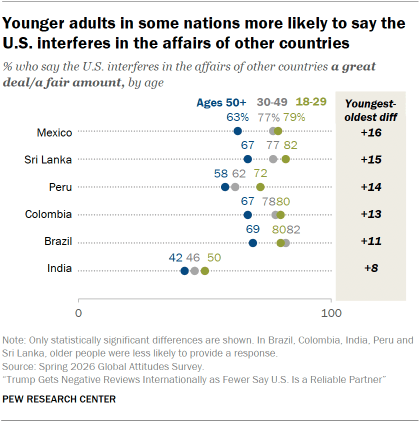
In several countries, including four of the five middle-income Latin American countries surveyed, younger adults (ages 18 to 34) are more likely than those ages 50 and older to say the U.S. interferes with other countries. For example, 79% of young people in Mexico say the U.S. interferes, compared with 63% of those ages 50 and older. (Older adults are also less likely to provide a response in many of these places.)
Men are more likely than women to say the U.S. interferes with other countries in 13 of these 17 middle-income countries. For example, 66% of men in Ghana say the U.S. interferes in the affairs of other countries, while 56% of women say the same. (Women are also less likely to provide a response in most of these places. In Ghana, women are twice as likely than men to not respond to the question.)
How do Americans’ opinions compare?
A large majority of Americans (83%) also say the U.S. interferes in the affairs of other countries. Democrats and Democratic-leaning independents are more likely than Republicans and Republican leaners to hold this view, but majorities in both parties agree that the U.S. interferes at least a fair amount.
Of the four questions our survey asked about the United States’ role in the world (interference in countries’ affairs, contributions to global peace and stability, accounting for international interests and reliability as a parter) this is the only one on which majorities of partisans are aligned.
Related: Most Americans Now Say U.S. Foreign Policy Ignores the Interests of Other Countries


