

The religiousness of U.S. adults is strongly linked with how much religion they had in their lives as kids. So we wondered: How are parents today raising their children – the next generation of adults – when it comes to religion?
In our May 2025 survey, we asked parents how often their children attend religious services, how often they talk with their kids about religion, how religious their household is, and whether their children have the same religion they do. We found that:
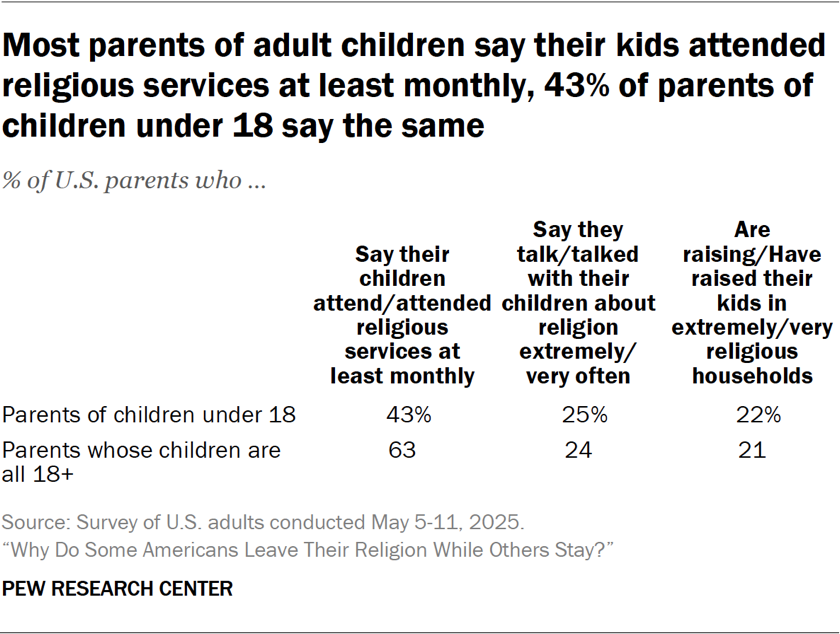
- 43% of parents say their children attend religious services at least monthly.
- 25% say they talk with their children about religion extremely or very often; an additional 31% say they do this somewhat often.
- 22% say they are raising their children in extremely or very religious households; 34% say their children are being raised in a somewhat religious household.
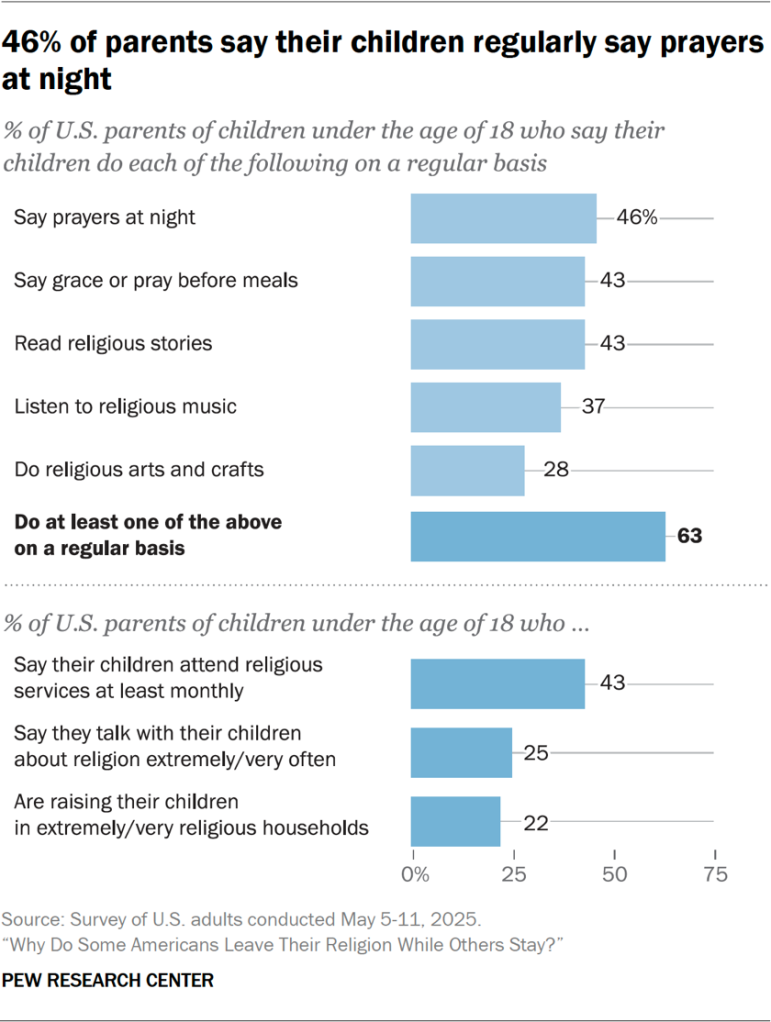
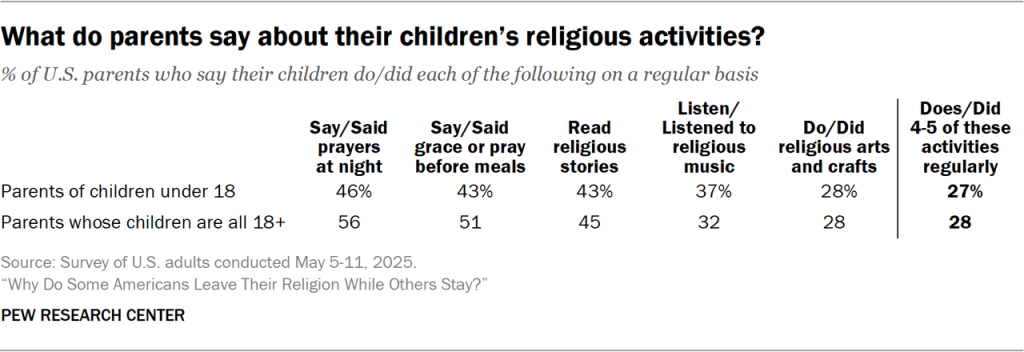
The survey also asked parents about various religious activities their children might do on a regular basis, such as saying prayers at night, saying grace or praying before meals, reading religious stories, listening to religious music, or doing religious arts and crafts. Overall, 63% of parents say their children do at least one of those five activities on a regular basis.
Read on to explore the following:
- Comparing how Protestant, Catholic and religiously unaffiliated parents are raising their children
- Which adult plays the biggest role in how children learn about religion?
- Comparing current parents of minors with parents of grown children, religiously
- How many parents have the same religion as their children?
Comparing how Protestant, Catholic and religiously unaffiliated parents are raising their children
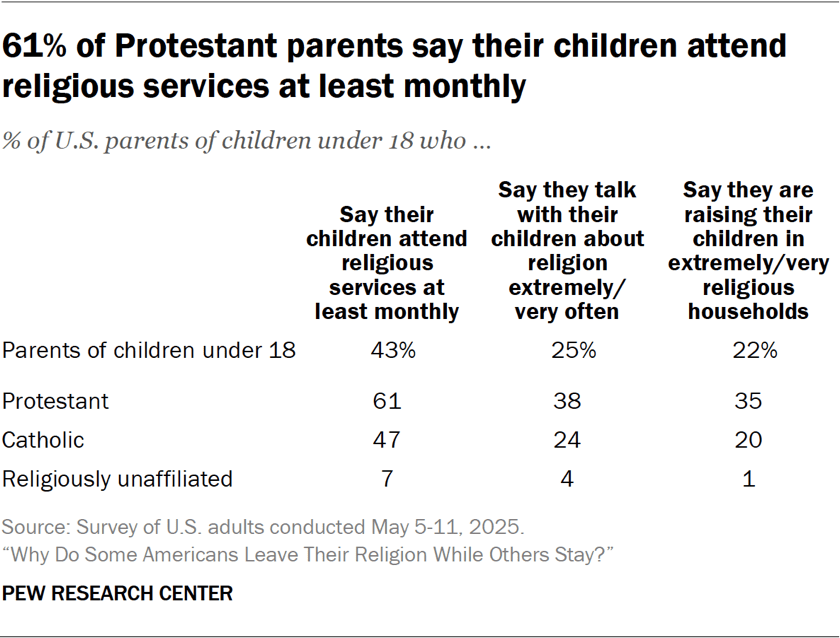
Overall, 43% of parents of children under 18 say their kids attend religious services at least monthly. One-quarter say they talk with their children about religion extremely or very often, and 22% say they are raising their children in extremely or very religious households.
Protestant parents are more likely than Catholic parents to say their children attend religious services at least monthly (61% vs. 47%). A higher share of Protestants (38%) than Catholics (24%) also report that they often talk with their kids about religion, and more Protestant parents than Catholic ones describe their households as extremely or very religious (35% vs. 20%). Religiously unaffiliated parents are far less likely to report these things.
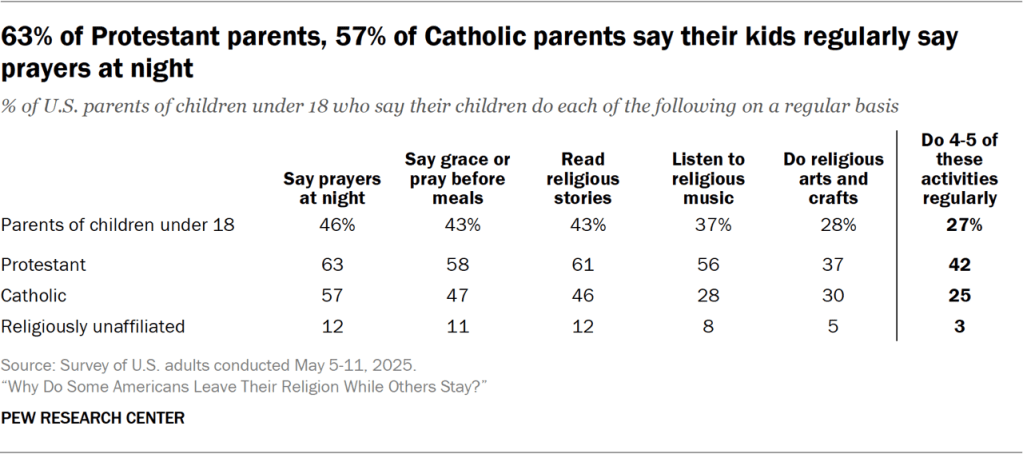
Many U.S. parents say their children regularly participate in various religious activities, such as saying prayers at night (46%), saying grace before meals (43%), reading religious stories (43%), listening to religious music (37%), or doing religious arts and crafts (28%).
Overall, 27% of parents say their children take part in at least four of these activities on a regular basis. This includes 42% of Protestant parents who report that their children do at least four of these activities regularly, as do 25% of Catholic parents. Far fewer religiously unaffiliated parents say the same about their children (3%).
Which adult plays the biggest role in how children learn about religion?
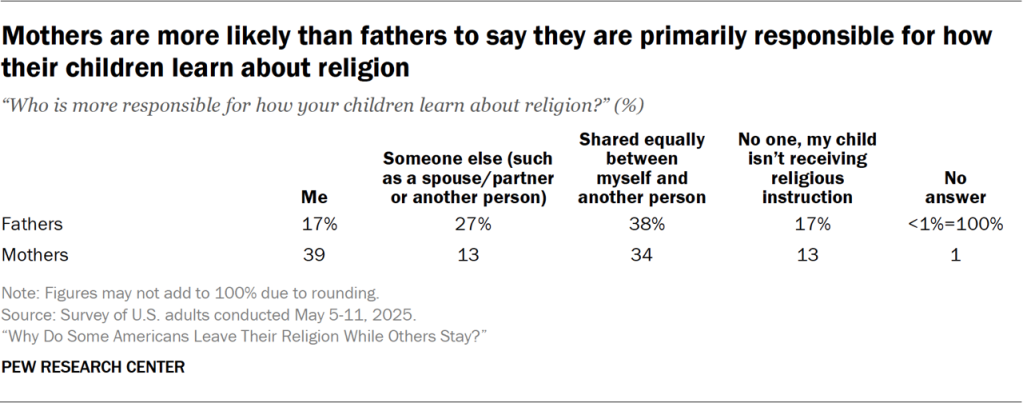
The survey also asked parents, “Who is more responsible for how your children learn about religion?” The options included “Me,” “My spouse or partner,” “Another person,” “It is shared equally between myself and another person,” or “No one – my children don’t receive religious instruction.”
The data shows that mothers are more likely than fathers to say they are taking the lead role in their children’s religious upbringing (39% vs. 17%). Fathers are more likely than mothers to say someone else (such as a spouse or partner) is taking the lead on this front.
Many mothers and fathers say their children’s religious upbringing is being shared equally between themselves and someone else or that their children aren’t receiving religious instruction.
Comparing current parents of minors with parents of grown children, religiously
The May 2025 survey asked these same questions to parents of grown (now adult) children, asking what their children did when they were growing up.8
In some ways, the survey indicates that today’s parents of children under 18 are raising their children as religiously as parents of grown children did. For example, parents of minors and parents of adult children are about equally likely to say they talk(ed) with their kids about religion extremely or very often, and also to say they are raising (or raised) their children in an extremely or very religious household.
However, parents of grown children are more likely than today’s parents of children under 18 to say their children attend(ed) religious services at least monthly (63% vs. 43%). Likewise, parents of adult children are more likely to report that their children regularly said prayers at night or grace or prayers before meals than current parents are to say the same.
Parents in both categories are about equally likely to say their children read religious stories or do/did religious arts and crafts.
And when it comes to listening to religious music, parents of children under 18 are slightly more likely than parents of adult children to say their children regularly listen(ed) to it.
How many parents have the same religion as their children?
Most parents say that they and their children have the same religion. Among parents of children under 18 years old, 81% say this.
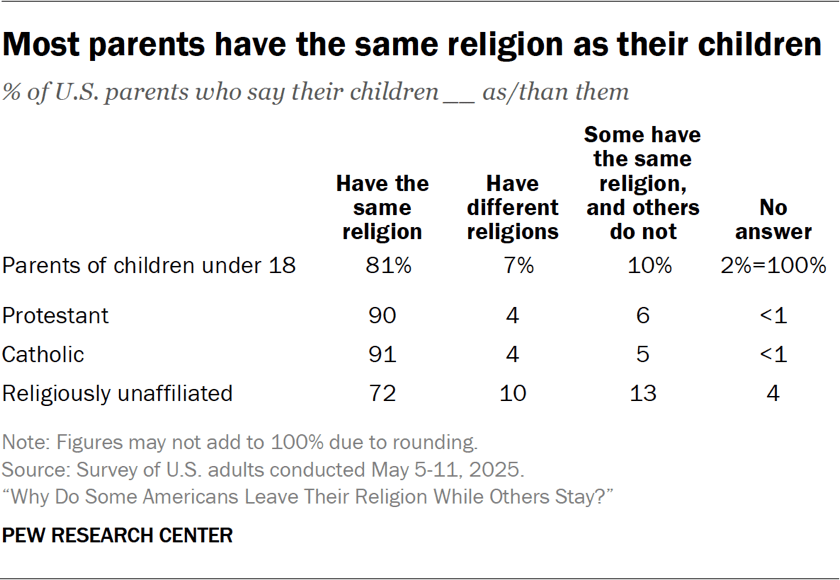
Fewer parents of adult children (64%) say their children have the same religion that they do.


