Few Americans support Trump’s proposed takeover of Greenland
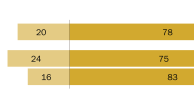
By a more than two-to-one margin, Americans oppose President Donald Trump’s proposal to take over Greenland from Danish control.
Numbers, Facts and Trends Shaping Your World
Read our research on:

By a more than two-to-one margin, Americans oppose President Donald Trump’s proposal to take over Greenland from Danish control.
Wide majorities of Republicans and Democrats alike view both the positive and negative aspects of the nation’s history as important to focus on.
Democrats and Democratic leaners are more likely than Republicans and GOP leaners to say they want more parties (46% vs. 29%).
Overall, 53% of Americans say it is extremely or very important for the U.S. to take an active role in world affairs.
Overall, 50% of adults disapprove of the Trump administration’s approach to immigration, including 36% who strongly disapprove.
Most Americans (66%) say the federal government has a responsibility to make sure all Americans have health care coverage.
Here’s a look back at 2025 through 12 of our most striking research findings.
Frustration is common across the political spectrum regardless of which party holds the presidency.
While trust in government has been low for decades, the current measure is one of the lowest in the nearly seven decades since the question was first asked by the National Election Study, and it is lower than it was last year (22%).
Most Americans (78%) say elected officials should avoid using heated or aggressive language because it could encourage some people to take violent action.