Counting Race: How the Census Measures Identity and What Americans Think About It
How the U.S. government measures race has changed substantially since censuses began in 1790. Today, Americans differ on whether the government should ask about race.
Numbers, Facts and Trends Shaping Your World
Read our research on:

How the U.S. government measures race has changed substantially since censuses began in 1790. Today, Americans differ on whether the government should ask about race.
Racial categories, which have been on every U.S. census, have changed from decade to decade, reflecting the politics and science of the times.
In the United States, 12% of married couples with at least one spouse in their 30s or 40s have two incomes and no kids.
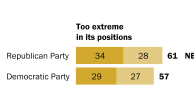
Democrats’ frustration with their own party is up sharply, as many say it hasn’t pushed back hard enough against Trump and the GOP. In contrast, 40% of Republicans say they are frustrated with their party.
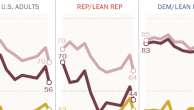
Overall, 56% of U.S. adults now say they have a lot of or some trust in the information they get from national news organizations – down 11 percentage points since March 2025.
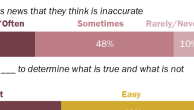
Those who report often encountering inaccurate news are more likely than those who rarely or never do to say it’s hard to know what is true (59% vs. 31%).
Data centers accounted for 4% of total U.S. electricity use in 2024. Their energy demand is expected to more than double by 2030.
Just over half of Americans see left-wing (53%) and right-wing (52%) extremism as major problems.