
25 Years After 9/11,
a Portrait of Muslim Americans
The terrorist attacks of Sept. 11, 2001, have had a lasting impact on Muslims in the United States. Muslim Americans shared in the nation’s grief and fear that day, and in the months and years that followed, they carried the additional burden of being singled out for suspicion.
Twenty-five years later, some Americans still see Islam and Muslims through the lens of 9/11. Yet Muslims are a growing, vibrant part of America’s religious tapestry, one that has become more politically visible in recent years.
Related: 9/11 memories remain vivid in the U.S. 25 years later
Public perceptions about Islam and Muslims
In a Pew Research Center survey this spring, 43% of U.S. adults said Muslims are less patriotic than other Americans, and 42% said Muslim Americans are having a negative impact on the country.
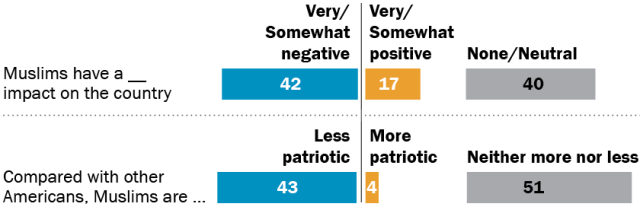
| Very/Somewhat negative | Very/Somewhat positive | None/Neutral | |
|---|---|---|---|
| Muslims have a __ impact on the country | 42 | 17 | 40 |
| Less patriotic | More patriotic | Neither more nor less | |
| Compared with other Americans, Muslims are … | 43 | 4 | 51 |
When asked to explain those views in their own words, some survey respondents referred explicitly to the events of 2001 with answers such as “Due to 9/11,” “Remember the twin towers?” and “Fear of another 911 terrorist attack.”
By some measures, public attitudes toward Islam have become more negative than they were immediately after the 9/11 attacks. In March 2002, just six months after the al-Qaida attacks, 25% of U.S. adults said the Islamic religion is more likely than other religions to encourage violence. In 11 subsequent polls, that figure has never been lower than 38%, and in the past decade it has hovered between 45% and 52%. Early this year, about half of U.S. adults surveyed (51%) said Islam encourages violence more than other religions do.
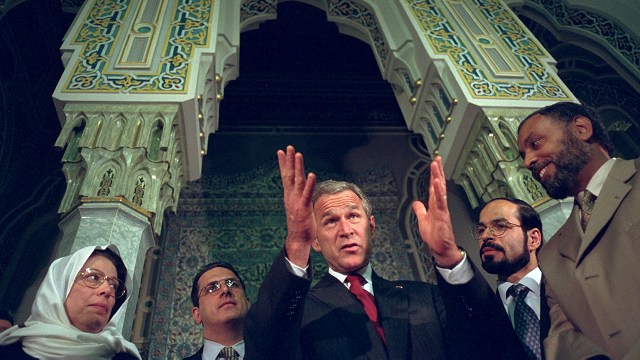
Views on Islam have also become more politically polarized. In this year’s poll, Republicans and independents who lean toward the GOP were far more likely than Democrats and Democratic leaners to say Islam encourages violence (76% vs. 29%). In the immediate aftermath of 9/11, the partisan gap was much smaller (32% vs. 23%), perhaps reflecting a messaging campaign by then-President George W. Bush, who called Islam a religion of peace.
| Date | Total | Dem/Lean Dem | Rep/Lean Rep | Group |
|---|---|---|---|---|
| Jan 2026 | 51 | 29 | 76 | 1 |
| Oct 2022 | 45 | 29 | 65 | 1 |
| Aug 2021 | 50 | 32 | 72 | 1 |
| Jul 2020 | 45 | 25 | 68 | 1 |
| Sep 2019 | 48 | 28 | 72 | 1 |
| Apr 2016 | 52 | 34 | 75 | 1 |
| Dec 2015 | 46 | 30 | 67 | 2 |
| May 2013 | 42 | 30 | 59 | 2 |
| Aug 2009 | 38 | 32 | 49 | 2 |
| Aug 2007 | 45 | 38 | 58 | 2 |
| Jul 2004 | 46 | 42 | 56 | 2 |
| Mar 2002 | 25 | 23 | 32 | 2 |
The FBI’s annual tally of hate crimes against Muslims spiked in 2001, rising to 481 that year, up from 28 in 2000. Since then, it has fluctuated widely, from a low of 95 in 2021 to a high of 307 in 2016. But it has never returned to pre-9/11 levels.
| Year | Incidents |
|---|---|
| 1999 | 32 |
| 2000 | 28 |
| 2001 | 481 |
| 2002 | 155 |
| 2003 | 149 |
| 2004 | 156 |
| 2005 | 128 |
| 2006 | 156 |
| 2007 | 115 |
| 2008 | 105 |
| 2009 | 107 |
| 2010 | 160 |
| 2011 | 157 |
| 2012 | 130 |
| 2013 | 135 |
| 2014 | 154 |
| 2015 | 257 |
| 2016 | 307 |
| 2017 | 273 |
| 2018 | 188 |
| 2019 | 176 |
| 2020 | 110 |
| 2021 | 95 |
| 2022 | 158 |
| 2023 | 236 |
| 2024 | 228 |
| 2025 | 205 |
The experiences of Muslim Americans
Pew Research Center has conducted three in-depth studies of U.S. Muslims – in 2007, 2011 and 2017 – and has found some consistent patterns. Many Muslim Americans say they have personally experienced discrimination, and they express frustrations with media coverage of Muslims. But they also say they have received support from some friends and neighbors.
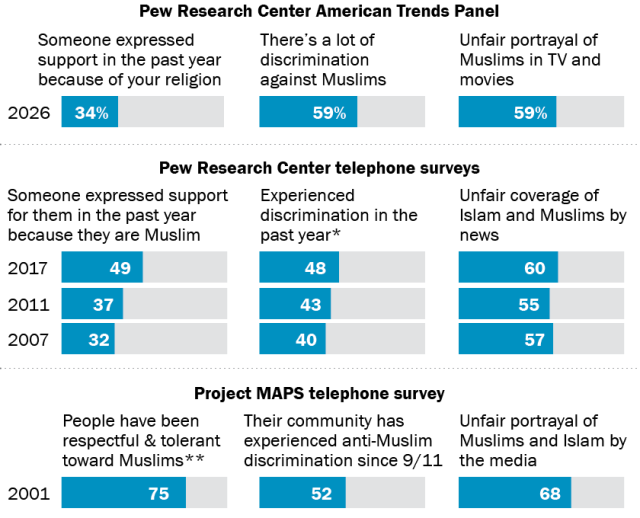
** Includes people who said either that “Americans have been respectful and tolerant of Muslims” or that “Americans have been respectful and tolerant of Muslims, but American society overall is disrespectful and intolerant of Muslims.”
Note: Refer to topline for full question wording for the 2026 questions.
| Someone expressed support in the past year because of your religion | There’s a lot of discrimination against Muslims | Unfair portrayal of Muslims in TV and movies | |
|---|---|---|---|
| 2026 | 34 | 59 | 59 |
| Someone expressed support for them in the past year because they are Muslim | Experienced discrimination in the past year* | Unfair coverage of Islam and Muslims by news | |
| 2017 | 49 | 48 | 60 |
| 2011 | 37 | 43 | 55 |
| 2007 | 32 | 40 | 57 |
| People have been respectful & tolerant toward Muslims** | Their community has experienced anti-Muslim discrimination since 9/11 | Unfair portrayal of Muslims and Islam by the media | |
| 2001 | 75 | 52 | 68 |
** Includes people who said either that “Americans have been respectful and tolerant of Muslims” or that “Americans have been respectful and tolerant of Muslims, but American society overall is disrespectful and intolerant of Muslims.”
Note: Refer to topline for full question wording for the 2026 questions.
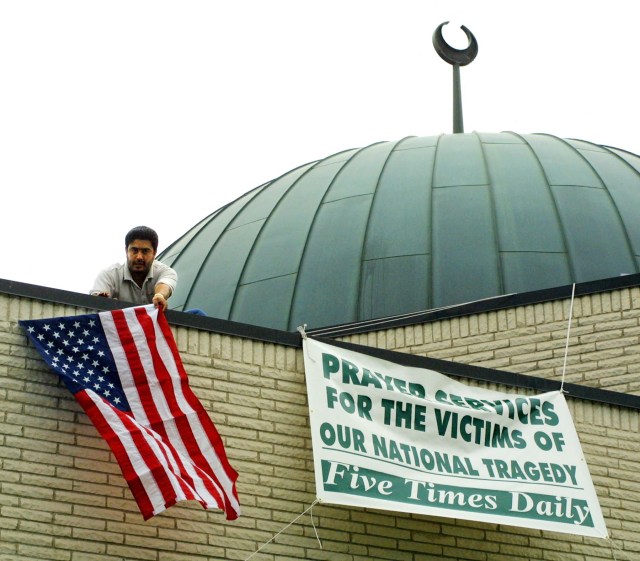
Both acceptance and discrimination were visible even in the immediate aftermath of the attacks. In late 2001, more than half (52%) of Muslims surveyed said their community had experienced anti-Muslim discrimination since the attacks, and 68% said media portrayals of Muslims and Islam were unfair. At the same time, 75% said Americans had been respectful and tolerant of Muslims. The poll was conducted by Zogby International on behalf of Project MAPS and The Pew Charitable Trusts.
To a certain degree, the same pattern exists today. As of May 2026, most Muslims say there is “a lot” of discrimination against Muslims in the U.S. and that media portrayals of Muslims are often unfair. Still, 34% of U.S. Muslims say that someone has expressed support for them in the past year because they are Muslim.
Differing perspectives
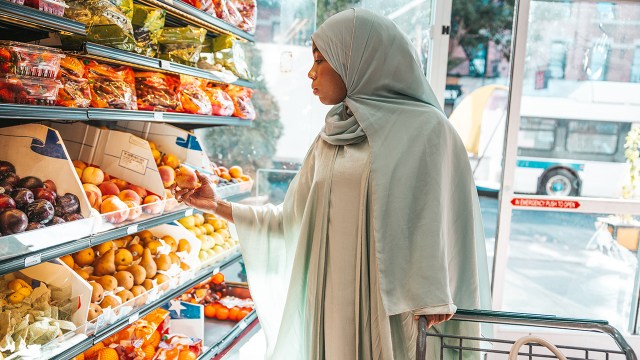
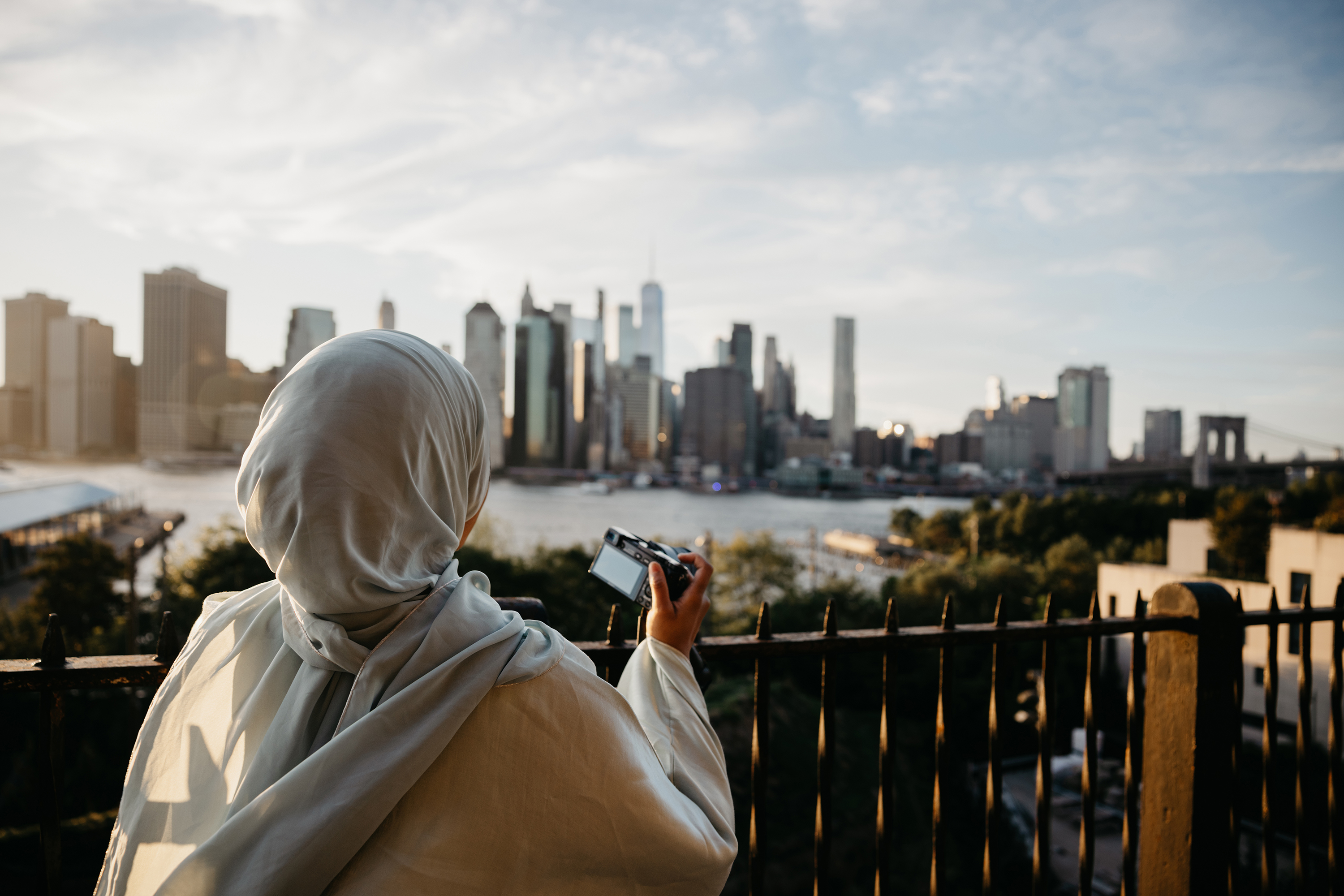
Not all Muslims’ experiences are alike. For example, younger Muslims tend to be less likely than older ones to say the American people are generally friendly toward Muslim Americans.
Our 2017 survey also found that Muslims born in the U.S. were significantly less likely than Muslim immigrants to say the American people are generally friendly toward Muslim Americans. U.S.-born Muslims are more likely than immigrants to say they experienced at least one of five types of discrimination in the previous year.
| Ages 18-40 | 41+ | |
|---|---|---|
| They experienced discrimination in the past year | 53 | 40 |
| American people are generally friendly to Muslims | 50 | 63 |
| U.S. born | Foreign born | |
| Coverage of Islam and Muslims by news is unfair | 74 | 49 |
| They experienced discrimination in the past year | 61 | 39 |
| American people are generally friendly to Muslims | 30 | 73 |
Past surveys have also found that Americans who were visibly identifiable as Muslims (including women wearing headscarves) were especially likely to say they had faced discrimination.
What explains these differences? One theory that emerged from our 2017 study is that younger Muslims and those born in the U.S. are more impatient for social change – and perhaps also more confident in their ability to effect it.
Here’s how one interviewee, a U.S.-born Muslim named Yasmin, described these differing outlooks: “I think the older generation of immigrants … are definitely more quiet on these issues … versus me, I’ve been here, I was born here, I’m here to change it and to make it better.”
Growing numbers and political visibility
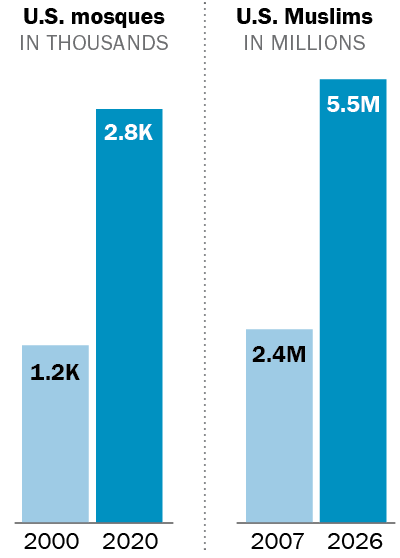
The number of Muslims in the United States has risen substantially in recent decades. There are about 5.5 million Muslims of all ages in the country today, up from 2.4 million in 2007, the first time we estimated the size of this population.
| 2000 | 2020 | |
|---|---|---|
| U.S. mosques | 1,200 | 2,800 |
| 2007 | 2026 | |
| U.S. Muslims | 2,400,000 | 5,500,000 |
In the wake of 9/11, controversies erupted around the country over plans to build more mosques and Muslim community centers. Nevertheless, the number of U.S. mosques has steadily risen from roughly 1,200 in 2000 to nearly 2,800 in 2020, according to data collected by the Faith Communities Today project, a multi-faith coalition affiliated with the Hartford Institute for Religion Research.
While Muslims have a growing presence in some parts of the country, political appeals to anti-Muslim sentiment are prominent in some circles. In March of this year, Rep. Chip Roy of Texas, co-founder of the Sharia-Free America Caucus, posted “No more Muslims…” on X. In August, Rep. Nancy Mace of South Carolina posted, “Every single Muslim holding public office in America is a trojan horse, and a threat to both national security and our republic.”
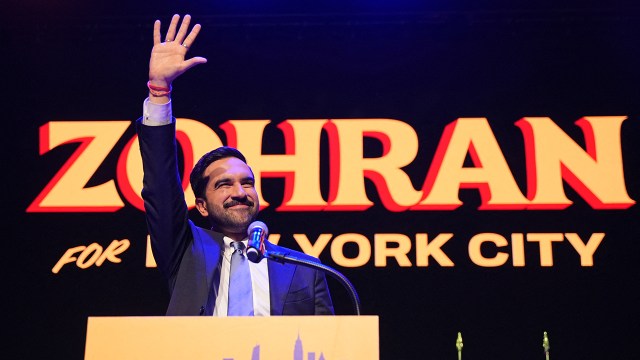
Yet Muslim candidates have won nominations in both parties. Dr. Mehmet Oz’s 2022 victory in the Republican primary in Pennsylvania made him the first Muslim nominated by a major party for a Senate seat, despite his eventual loss in the general election. Voters in Michigan’s Democratic primary recently selected Abdul El-Sayed as their nominee for U.S. Senate in 2026. There are now four Muslim members of Congress, with a fifth about to join, compared with zero in 2001. And in New York, where the twin towers fell on 9/11, Zohran Mamdani was inaugurated this year as the city’s first Muslim mayor.
(Feature photo: Leo Patrizi via Getty Images)
Acknowledgments
Pew Research Center is a subsidiary of The Pew Charitable Trusts, its primary funder. This essay includes research that was made possible with support from the Trusts, the John Templeton Foundation, Templeton Religion Trust, the Arthur Vining Davis Foundations and the El-Hibri Foundation.
The analysis was conducted by Besheer Mohamed, principal researcher, who also wrote this essay. The estimates of the size of the U.S. Muslim population were generated by Jeffrey S. Passel, senior demographer, and checked by Stephanie Kramer, senior researcher. Bill Webster, senior information graphics designer, created the graphics. Beshay Sakla, associate digital producer, produced the report for the web. It was edited by Alan Cooperman, director of religion research, and Jeff Diamant, senior writer/editor. The essay was checked by Becka Alper, senior researcher. The copy editor was David Kent, senior editorial specialist.
In addition, the Center is grateful to Ihsan Bagby, Professor Emeritus at the University of Kentucky, for his assistance with analyzing the mosque census data, and Dennis Gilbert, Professor Emeritus at Hamilton College, for sharing his 2002 survey of U.S. Muslims.