Religious Groups Differ Widely in Their 2026 Midterm Preferences
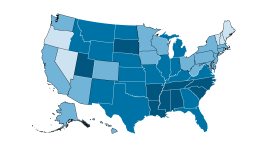
White evangelical Protestants and White Catholics favor Republicans in the midterms, while other religious groups split or lean Democratic.
Numbers, Facts and Trends Shaping Your World
Read our research on:

White evangelical Protestants and White Catholics favor Republicans in the midterms, while other religious groups split or lean Democratic.

Sent weekly on Wednesday
All
Publications
A third of the 198 countries studied had a high or very high level of social hostilities involving religion in 2012. About three-in-ten countries had a high or very high level of government restrictions on religion, roughly the same as in 2011.
Even as publics in many of the surveyed Muslim-majority countries express a clear preference for women to dress conservatively, many also say women should be able to decide for themselves what to wear.
More than half of Russians say Islamic extremist groups are a major threat to their country.
While 60% of Americans believe in human evolution, a third reject the idea. Beliefs about evolution differ strongly by religious group and also vary by party affiliation, gender, age and education.
Six-in-ten Americans say that “humans and other living things have evolved over time,” while a third reject the idea of evolution, saying that “humans and other living things have existed in their present form since the beginning of time.”
Nine-in-ten Americans say they celebrate Christmas, and three-quarters say they believe in the virgin birth of Jesus. But only about half see Christmas mostly as a religious holiday, while one-third view it as more of a cultural holiday.
Across 25 countries, Americans are the most likely to see the morality and ethics of people in their country as somewhat or very bad.
Singapore is the world’s most religiously diverse country overall as of 2020, while Yemen is the least diverse. But the U.S. ranks first among nations with very large populations, followed by Nigeria and Russia.
The Christian share of the population, after years of decline, has been relatively stable since 2019. And the religiously unaffiliated population, after rising rapidly for decades, has leveled off – at least temporarily.
The Global Religious Futures (GRF) project is jointly funded by The Pew Charitable Trusts and The John Templeton Foundation. Here are some big-picture findings from the GRF, together with context from other Pew Research Center studies.