Religious Diversity Around the World
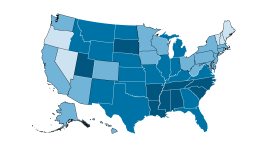
Singapore is the world’s most religiously diverse country overall as of 2020, while Yemen is the least diverse. But the U.S. ranks first among nations with very large populations, followed by Nigeria and Russia.
All
Publications
A new Pew Forum report on the size, distribution and growth of the global Muslim population finds that the world’s Muslim population is expected to increase by about 35% in the next 20 years, but it is expected to grow at a slower pace in the next two decades than it did in the previous two decades.
The political overhaul of the U.S. Congress after the 2010 elections appears to have had little effect on the religious composition of the legislative body, which is similar to the religious makeup of the previous Congress and of the nation, according to an analysis by the Pew Forum.
Extremist groups Hamas and Hezbollah continue to receive mixed ratings from Muslim publics. However, opinions of al Qaeda and its leader, Osama bin Laden, are consistently negative; only in Nigeria do Muslims offer views that are, on balance, positive toward al Qaeda and bin Laden.
Many religious “nones,” which include atheists and agnostics, in 22 countries hold religious or spiritual beliefs, such as in an afterlife or something beyond the natural world.
Nearly half of U.S. adults are connected to Catholicism. Read about going to Mass, Communion, confession and more.
After years of decline, the U.S. Christian share now shows signs of leveling off. The new Religious Landscape Study explores trends in identity, beliefs and practices.
The Global Religious Futures (GRF) project is jointly funded by The Pew Charitable Trusts and The John Templeton Foundation. Here are some big-picture findings from the GRF, together with context from other Pew Research Center studies.