Religious Groups Differ Widely in Their 2026 Midterm Preferences
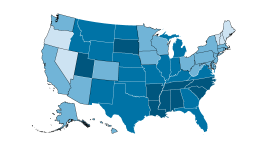
White evangelical Protestants and White Catholics favor Republicans in the midterms, while other religious groups split or lean Democratic.
Numbers, Facts and Trends Shaping Your World
Read our research on:

White evangelical Protestants and White Catholics favor Republicans in the midterms, while other religious groups split or lean Democratic.

Sent weekly on Wednesday
All
Publications
Muslim and Western publics continue to largely agree that relations between them are poor, and disagree about who is at fault – Muslims largely blame Westerners, while those in the West generally blame Muslims. However, in both Western and predominantly Muslim nations, there is a shared concern about the threat posed by Islamic extremism.
By Carroll Doherty, Associate Director, Pew Research Center. Special to the New York Times. For more debate on Mormon candidates in the 2012 election click here. Overall, being a Mormon is hardly an asset for presidential candidates, but it is not a deal-breaker for most Americans. A quarter of Americans say they would be less […]
Washington,D.C. — In a new surveyby the Pew Research Center’s Forum on Religion & Public Life, most evangelicalProtestant leaders who live in the Global South (58%) say that evangelicalChristians are gaining influence on life in their countries. By contrast, most leaders who live in the Global North (66%)say that, in the societies in which they […]
America’s image among Pakistanis remains poor, and most disapprove of the U.S. raid that killed bin Laden. Extremist groups also remain unpopular, although support for using the Pakistani military against extremists has waned. Most name India as the top threat to Pakistan. Overall, the public mood in Pakistan is grim – 92% are dissatisfied with the country’s direction.
Egyptians of all ages, from all walks of life, and parts of the country continue to celebrate the dramatic political changes their nation has undergone. Overwhelmingly, they say it is good that former president Hosni Mubarak is gone. Nearly two-in-three are satisfied with the way things are going in Egypt, and most are optimistic about their country’s future.
Whenever churches or religious organizations find themselves involved in civil litigation, courts first must determine whether the First Amendment’s religion clauses bestow a unique legal status on religious organizations that puts some of their decisions and actions beyond the reach of civil laws.
In an ongoing series of occasional reports, “Religion and the Courts: The Pillars of Church-State Law,” the Pew Forum on Religion & Public Life explores the complex, fluid relationship between government and religion. Among the issues to be examined are religion in public schools, displays of religious symbols on public property, conflicts concerning the free […]
Across 25 countries, Americans are the most likely to see the morality and ethics of people in their country as somewhat or very bad.
Singapore is the world’s most religiously diverse country overall as of 2020, while Yemen is the least diverse. But the U.S. ranks first among nations with very large populations, followed by Nigeria and Russia.
The Christian share of the population, after years of decline, has been relatively stable since 2019. And the religiously unaffiliated population, after rising rapidly for decades, has leveled off – at least temporarily.
The Global Religious Futures (GRF) project is jointly funded by The Pew Charitable Trusts and The John Templeton Foundation. Here are some big-picture findings from the GRF, together with context from other Pew Research Center studies.