Why Do Some Americans Leave Their Religion While Others Stay?
Many U.S. adults (35%) have moved on from the religion of their youth. Yet most Americans have not, including a majority – 56% – who still identify with their childhood religion.
All
Publications
This study focuses on the religious affiliation of international migrants, examining patterns of migration among seven major groups: Christians, Muslims, Hindus, Buddhists, Jews, adherents of other religions and the religiously unaffiliated.
Exit polls from Super Tuesday primaries show that Mitt Romney continues to struggle among evangelicals, and Rick Santorum is yet to win among Catholics in any state where exit polling was conducted.
Data from exit or entrance polling in the seven states where it has been conducted for GOP primaries and caucuses show that Mitt Romney’s fortunes among white born-again/evangelical voters have fluctuated from state to state. He has received less support from evangelicals than from non-evangelicals in every contest for which data are available.
Pope Benedict XVI will travel to Latin America March 23-28 for a much-anticipated visit to Mexico and Cuba. An infographic based on data from a 2011 demographic study by the Pew Research Center’s Forum on Religion & Public Life explores information on Catholics in Latin America, with a particular focus on the Catholic population in Mexico and Cuba.
Mitt Romney won the Arizona primary by a large margin and secured a narrow victory in the Michigan primary. In both states, his support among born-again/evangelical voters was weaker than among non-evangelicals, continuing the pattern from previous primaries and caucuses in other states.
Recent comments by presidential candidate Rick Santorum have brought renewed attention to the role of religion in politics. In both 2010 and 2008, narrow majorities said that churches and other houses of worship should keep out of political matters rather than express their views on social and political questions, according to polls by the Pew […]
The biggest religion stories of 2011 involved tensions over Islam and questions about faith in presidential politics, especially Mormonism, according to an annual review of religion in the news.
A new Pew Research Center poll finds that Rick Santorum and Mitt Romney are now virtually tied in the race for the Republican presidential nomination. Santorum’s improving fortunes in the GOP race have been buoyed by a surge in support among white evangelicals, who now express a clear preference for Santorum over Romney and Newt Gingrich.
Many religious “nones,” which include atheists and agnostics, in 22 countries hold religious or spiritual beliefs, such as in an afterlife or something beyond the natural world.
Nearly half of U.S. adults are connected to Catholicism. Read about going to Mass, Communion, confession and more.
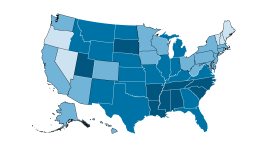
After years of decline, the U.S. Christian share now shows signs of leveling off. The new Religious Landscape Study explores trends in identity, beliefs and practices.
The Global Religious Futures (GRF) project is jointly funded by The Pew Charitable Trusts and The John Templeton Foundation. Here are some big-picture findings from the GRF, together with context from other Pew Research Center studies.