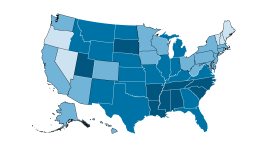
In 25-Country Survey, Americans Especially Likely To View Fellow Citizens as Morally Bad
The U.S. is the only place we surveyed where more adults describe the morality and ethics of others living in the country as bad (53%) than as good (47%).
All
Publications
Remarks of Andrew Kohut to the Senate Foreign Relations Committee Hearing
Washington, D.C. On July 7, 2006, the Pew Global Attitudes Project released an international survey focusing on Muslim and Western perceptions of each other and on the Muslim experience in Europe. The poll surveyed more than 14,000 people in 13 nations: India, Egypt, Indonesia, Jordan, Nigeria, Pakistan, Russia, Turkey, the United States, Britain, France, Germany […]
Few Signs of Backlash From Western Europeans
After a year marked by riots over cartoon portrayals of Muhammad, a major terrorist attack in London, and continuing wars in Iraq and Afghanistan, most Muslims and Westerners see relations between them as generally bad.
America’s global image has again slipped and support for the war on terrorism has declined even among close U.S. allies like Japan. The war in Iraq is a continuing drag on opinions of the United States, not only in predominantly Muslim countries but in Europe and Asia as well. And despite growing concern over Iran’s nuclear ambitions, the U.S. presence in Iraq is cited at least as often as Iran – and in many countries much more often – as a danger to world peace.
Americans’ views of religion’s role in society have grown more positive in recent years. But many feel their religious beliefs conflict with the mainstream.
Many religious “nones,” which include atheists and agnostics, in 22 countries hold religious or spiritual beliefs, such as in an afterlife or something beyond the natural world.
After years of decline, the U.S. Christian share now shows signs of leveling off. The new Religious Landscape Study explores trends in identity, beliefs and practices.
The Global Religious Futures (GRF) project is jointly funded by The Pew Charitable Trusts and The John Templeton Foundation. Here are some big-picture findings from the GRF, together with context from other Pew Research Center studies.