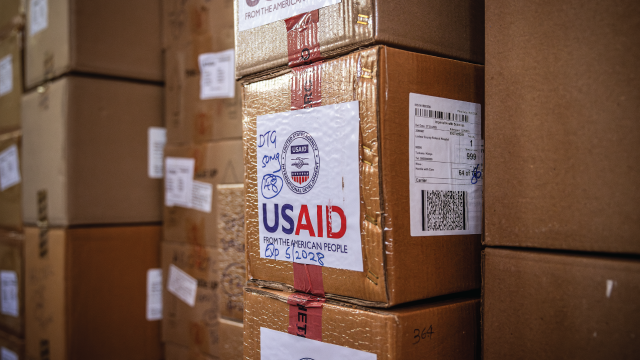
It’s been one year since the United States Agency for International Development (USAID) officially shut down. That move was part of a broader goal of the Trump administration to drastically cut U.S. foreign aid spending. Around the world, many people are unsure what impact the cuts will have on their nation, according to a new Pew Research Center survey in 16 non-U.S. countries.

| Country | Mostly negative impact | No impact | Mostly positive impact | 0 | Not sure |
|---|---|---|---|---|---|
| Ghana | 50 | 15 | 24 | 6 | 10 |
| Sri Lanka | 46 | 6 | 11 | 32 | 36 |
| Bangladesh | 40 | 22 | 20 | 13 | 17 |
| Nigeria | 35 | 16 | 30 | 14 | 18 |
| Colombia | 33 | 7 | 10 | 45 | 48 |
| Pakistan | 32 | 35 | 21 | 7 | 10 |
| Kenya | 32 | 9 | 17 | 37 | 42 |
| Mexico | 31 | 8 | 7 | 49 | 54 |
| South Africa | 30 | 15 | 13 | 37 | 41 |
| Brazil | 30 | 10 | 8 | 47 | 52 |
| Turkey | 26 | 37 | 6 | 26 | 30 |
| Argentina | 26 | 12 | 10 | 47 | 51 |
| Thailand | 25 | 17 | 6 | 47 | 51 |
| Peru | 22 | 11 | 22 | 40 | 43 |
| Indonesia | 21 | 18 | 13 | 43 | 48 |
| India | 20 | 24 | 16 | 35 | 36 |
The countries we surveyed are middle-income nations that collectively went from receiving more than $5 billion in aid in fiscal year 2024 to just over $500 million in fiscal 2026. Each country has seen aid from the U.S. cut by more than 75% since fiscal 2024. (Federal fiscal years start Oct. 1 and end Sept. 30.) For more on how U.S. foreign aid has changed in recent years, read “U.S. foreign aid is plunging in second Trump administration.”
Uncertainty about the impact of this change is especially common in the Latin American countries we surveyed. U.S. aid to the region varied: Argentina and Brazil received the smallest amount of aid of the surveyed countries before USAID shut down, while Colombia received some of the most.
People often said they are not sure what impact the decrease in aid will have in India, Indonesia, Kenya, South Africa and Thailand as well.
But, when people do give an opinion, they tend to think the U.S. ending most humanitarian aid programs will have a mostly negative impact on their country.
What do Americans think about foreign aid?
Americans supported giving some kinds of foreign aid more than others in a 2025 survey. For example, 83% said the U.S. should give foreign aid for the purpose of providing medicine and medical supplies to developing countries, while 34% said aid should support art and cultural activities in other countries.
In a 2023 survey, a third of Americans said U.S. foreign aid mostly benefits developing countries. Another 37% said it both benefits and harms these countries.
In Ghana, Sri Lanka and Bangladesh, four-in-ten or more say the cuts will have a mostly negative impact. That’s at least double the shares who view the change as positive.
People are also much more likely to say the cuts will have a negative than positive impact in Argentina, Brazil, Colombia, Kenya, Mexico, South Africa and Thailand.
In Pakistan and Turkey, relatively high shares say the cuts to humanitarian aid will not have much of an impact on their country. Roughly a third or more hold this view in both countries. Pakistan and Turkey are among the surveyed countries with more modest cuts to humanitarian aid from the U.S. in terms of total dollars, though they still lost 96% and 92%, respectively, between fiscal 2024 and 2026.
In a few countries, including Peru and Nigeria, the shares who say the impact will be positive and negative are similar. Peruvians are equally split (22% each).
In Nigeria, 35% say the impact will be negative, similar to the 30% who say it will be positive. Notably, Christians in Nigeria are more likely than Muslims to say the cuts will have a negative impact (39% vs. 30%). Muslims are more likely to say they will have no impact.
Related: Trump Gets Negative Reviews Internationally as Fewer Say U.S. Is a Reliable Partner