Religious Groups Differ Widely in Their 2026 Midterm Preferences
White evangelical Protestants and White Catholics favor Republicans in the midterms, while other religious groups split or lean Democratic.
Numbers, Facts and Trends Shaping Your World
Read our research on:

White evangelical Protestants and White Catholics favor Republicans in the midterms, while other religious groups split or lean Democratic.

Sent weekly on Wednesday
All
Publications
The U.S. Conference of Catholic Bishops will meet in Baltimore for their annual Fall General Assembly on Nov. 12-15. Seven-in-ten Catholics say they are very (24%) or somewhat satisfied (46%) with the leadership of the American bishops, according to a Pew Research Center Survey.
Obama’s margin of victory in the 2012 popular vote was smaller than in 2008. But the religious contours of the electorate were similar to recent elections – traditionally Republican groups such as white evangelicals and weekly churchgoers strongly backed Romney, while traditionally Democratic groups such as black Protestants, Hispanic Catholics, Jews and the religiously unaffiliated backed Obama by large margins.
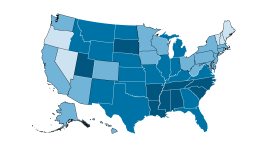
This interactive graphic summarizes the voting preferences of major religious groups, drawing on data from the latest survey by the Pew Research Center for the People & the Press among registered voters reached on landlines and cell phones.
Latinos are divided by religion in their preferences in the upcoming presidential election. Three-quarters of Latino Catholics and eight-in-ten religiously unaffiliated Latinos support President Barack Obama’s re-election.
A recent survey finds Latino Catholic voters strongly favor Obama, while Latino evangelical Protestants are more closely divided in their support for Obama and Romney. The survey also finds rising support for same-sex marriage among Latinos.
Catholics are often identified as a major “swing” voting group in American politics. A new analysis shows that the only group of Catholics that has been divided in recent elections is white Catholics who identify as political moderates.
The number of Americans who do not identify with any religion continues to grow at a rapid pace. One-fifth of the U.S. public – and a third of adults under 30 – are religiously unaffiliated today, the highest percentages ever in Pew Research Center polling.
In a July 2012 Pew Research Center survey, two-thirds of American adults say churches and other houses of worship should not come out in favor of one candidate over another during political elections.
During every election cycle, many churches and other religious groups find themselves wondering what role, if any, they can play in the political process. “Preaching Politics From the Pulpit” explains the IRS limits on political activity by nonprofit, tax-exempt organizations. An accompanying graphic shows that Americans continue to be wary of church involvement in partisan politics.
Across 25 countries, Americans are the most likely to see the morality and ethics of people in their country as somewhat or very bad.
Singapore is the world’s most religiously diverse country overall as of 2020, while Yemen is the least diverse. But the U.S. ranks first among nations with very large populations, followed by Nigeria and Russia.
The Christian share of the population, after years of decline, has been relatively stable since 2019. And the religiously unaffiliated population, after rising rapidly for decades, has leveled off – at least temporarily.
The Global Religious Futures (GRF) project is jointly funded by The Pew Charitable Trusts and The John Templeton Foundation. Here are some big-picture findings from the GRF, together with context from other Pew Research Center studies.