Religious Diversity Around the World
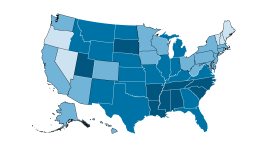
Singapore is the world’s most religiously diverse country overall as of 2020, while Yemen is the least diverse. But the U.S. ranks first among nations with very large populations, followed by Nigeria and Russia.
All
Publications
A new analysis looks at beliefs and behaviors that cut across many religious denominations – important traits that unite people of different faiths, or that divide those of the same religious affiliation.
Six-in-ten religious “nones” in the U.S. say the questioning of religious teachings is a very important reason for their lack of affiliation. The second-most-common reason is opposition to the positions taken by churches on social and political issues.
In recent years, the percentage of U.S. adults who say they regularly attend religious services has been declining, while the share of Americans who attend only a few times a year, seldom or never has been growing. A new Pew Research Center survey finds that the main reason people regularly go to church, synagogue, mosque […]
Question 1: Measuring religious identity How does Pew Research Center measure the religious identity of survey respondents and the religious composition of the U.S.? Answer: Generally, we rely on respondents’ self-identification. A key question we ask in many surveys is: “What is your present religion, if any? Are you Protestant, Roman Catholic, Mormon, Orthodox such […]
Many religious “nones,” which include atheists and agnostics, in 22 countries hold religious or spiritual beliefs, such as in an afterlife or something beyond the natural world.
Nearly half of U.S. adults are connected to Catholicism. Read about going to Mass, Communion, confession and more.
After years of decline, the U.S. Christian share now shows signs of leveling off. The new Religious Landscape Study explores trends in identity, beliefs and practices.
The Global Religious Futures (GRF) project is jointly funded by The Pew Charitable Trusts and The John Templeton Foundation. Here are some big-picture findings from the GRF, together with context from other Pew Research Center studies.