Americans who primarily get news through social media are least likely to follow COVID-19 coverage, most likely to report seeing made-up news
More than half of these social media news consumers say they have encountered made-up news about COVID-19.
All
Publications
More than half of these social media news consumers say they have encountered made-up news about COVID-19.
Concern is highest among people who follow political news most closely, older adults and those who display more knowledge about politics in general.
Photos that exclusively show men make up the majority of photos that show people; representational differences persist across topics
A majority of rural Americans say local news media mostly cover an area other than the one where they live.
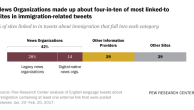
An analysis of 9.7 million tweets reveals that news organizations played the largest role in which content was linked to in discussions about immigration compared with other information providers.
A global median of 75% want their news media to be unbiased when covering political issues, yet many say the news media do a poor job of reporting on political issues fairly.
Where do Americans go to stay informed about science topics? Here are some key takeaways about Americans’ science news habits today.
Overall, 36% of Americans get science news at least a few times a week and three-in-ten actively seek it. Most get science news from general news outlets, but more see specialty sources as being accurate.