Religious Diversity Around the World
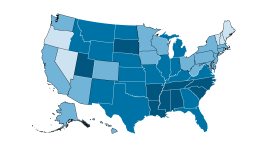
Singapore is the world’s most religiously diverse country overall as of 2020, while Yemen is the least diverse. But the U.S. ranks first among nations with very large populations, followed by Nigeria and Russia.
All
Publications
2003 Year-end Report
Introduction and Summary Opposition to gay marriage has increased since the summer and a narrow majority of Americans also oppose allowing gays and lesbians to enter legal agreements that fall short of marriage. Moreover, despite the overall rise in tolerance toward gays since the 1980s, many Americans remain highly critical of homosexuals and religious […]
9:00 a.m.-2:15 p.m. Washington, D.C. Welcome & Project Overview Scaling Up Pluralism and Democracy Download transcript Political Transitions and Contests Download transcript Bahman Baktiari, University of Maine Democratization and Repression in post-Khomeini Iran Jenny B. White, Boston University The End of Islamism? Turkey’s New Muslim Politics Augustus Richard Norton, Boston University Egypt: Democratic Capital Lost […]
Introduction and Summary Religion is a critical factor these days in the public’s thinking about contentious policy issues and political matters. An increasing number of Americans have come to view Islam as a religion that encourages violence while a declining number say Islam has a lot in common with their own religion. The public remains […]
Many religious “nones,” which include atheists and agnostics, in 22 countries hold religious or spiritual beliefs, such as in an afterlife or something beyond the natural world.
Nearly half of U.S. adults are connected to Catholicism. Read about going to Mass, Communion, confession and more.
After years of decline, the U.S. Christian share now shows signs of leveling off. The new Religious Landscape Study explores trends in identity, beliefs and practices.
The Global Religious Futures (GRF) project is jointly funded by The Pew Charitable Trusts and The John Templeton Foundation. Here are some big-picture findings from the GRF, together with context from other Pew Research Center studies.