Religious Groups Differ Widely in Their 2026 Midterm Preferences
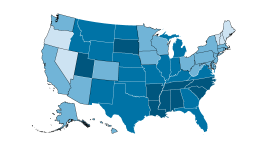
White evangelical Protestants and White Catholics favor Republicans in the midterms, while other religious groups split or lean Democratic.
Numbers, Facts and Trends Shaping Your World
Read our research on:

White evangelical Protestants and White Catholics favor Republicans in the midterms, while other religious groups split or lean Democratic.

Sent weekly on Wednesday
All
Publications
Los Angeles, California Panel E.J. Dionne, The Brookings Institution Melissa Rogers, Baptist Joint Committee on Public Affairs Cal Thomas, syndicated columnist Jim Wallis, Sojourner’s Magazine Steve Waldman, Beliefnet E.J. DIONNE, JR. Thank you all for coming. For me, this is a great reunion. An old and very dear friend of mine who teaches at USC, […]
The religious profile of Republicans and independents who lean to the Republican Party suggests that Senator John McCain’s attack on certain Christian Right leaders may cloud his chances to succeed in Southern states, as well as certain Midwestern and Western states where white evangelicals(1) make up the largest religious bloc of voters. This group comprises […]
Introduction and Summary Religion is a strong and growing force in the way Americans think about politics. It has a bearing on political affiliation, political values, policy attitudes and candidate choice. Its increasing influence on political opinion and behavior rivals factors such as race, region, age, social class and gender. More specifically, religion has a […]
Across 25 countries, Americans are the most likely to see the morality and ethics of people in their country as somewhat or very bad.
Singapore is the world’s most religiously diverse country overall as of 2020, while Yemen is the least diverse. But the U.S. ranks first among nations with very large populations, followed by Nigeria and Russia.
The Christian share of the population, after years of decline, has been relatively stable since 2019. And the religiously unaffiliated population, after rising rapidly for decades, has leveled off – at least temporarily.
The Global Religious Futures (GRF) project is jointly funded by The Pew Charitable Trusts and The John Templeton Foundation. Here are some big-picture findings from the GRF, together with context from other Pew Research Center studies.