Religious Diversity Around the World
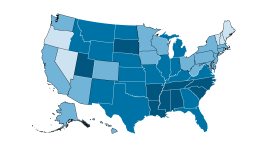
Singapore is the world’s most religiously diverse country overall as of 2020, while Yemen is the least diverse. But the U.S. ranks first among nations with very large populations, followed by Nigeria and Russia.
All
Publications
Overview Some Americans are having a change of heart about mixing religion and politics. A new survey finds a narrow majority of the public saying that churches and other houses of worship should keep out of political matters and not express their views on day-to-day social and political matters. For a decade, majorities of Americans […]
Some Americans are having a change of heart about mixing religion and politics. A new survey finds a narrow majority of the public saying that churches and other houses of worship should keep out of political matters and not express their views on day-to-day social and political matters. For a decade, majorities of Americans had […]
The United States is one of the most religiously diverse countries in the world. Indeed, with adherents from all of the world’s major religions, the United States is truly a nation of religious minorities. Although Protestantism remains the dominant strain of Christianity in the United States, the Protestant tradition is divided into dozens of major […]
Given the increased discussion of faith and values in the 2008 presidential campaign, it is perhaps fitting that candidates John McCain and Barack Obama are scheduled to make their first joint appearance of the general election season at an event moderated by Pastor Rick Warren at his 22,000-member Saddleback Church in Lake Forest, Calif., on […]
In the 2008 presidential campaign, both Democrats and Republicans have frequently spoken about the concept of faith and, in many cases, their own religious beliefs. To discuss the role of religious voters in the primaries and the potential impact of religion on the general election, the Pew Forum on Religion & Public Life turned to […]
A 2005 Pew Research survey found that approximately three-in-five Chinese express a personal belief in the possible existence of one or more supernatural phenomena, religious figures or supernatural beings that are often associated with Confucianism and popular forms of Chinese folk religion.
In June 2008, a church-state watchdog organization and several other groups filed a lawsuit in Florida seeking to remove from the state’s November ballot two proposed amendments to the Florida Constitution. The proposed amendments, if passed, would eliminate legal obstacles that currently prevent Florida from funding religious schools. One of the proposed amendments would permit […]
Republican presidential candidate John McCain has a smaller lead among white evangelical Protestants than Republican George W. Bush had at a similar point in the 2004 campaign, even though Democratic presidential candidate Barack Obama has made few inroads into this key constituency. Those who are unaffiliated with a particular religion, on the other hand, are […]
Many religious “nones,” which include atheists and agnostics, in 22 countries hold religious or spiritual beliefs, such as in an afterlife or something beyond the natural world.
Nearly half of U.S. adults are connected to Catholicism. Read about going to Mass, Communion, confession and more.
After years of decline, the U.S. Christian share now shows signs of leveling off. The new Religious Landscape Study explores trends in identity, beliefs and practices.
The Global Religious Futures (GRF) project is jointly funded by The Pew Charitable Trusts and The John Templeton Foundation. Here are some big-picture findings from the GRF, together with context from other Pew Research Center studies.