
Most older adults who live at home want to age in place, but they aren’t entirely confident they’ll get to
Upper-income older adults are the most likely to say they’d prefer to move to assisted living.
Numbers, Facts and Trends Shaping Your World
Read our research on:

Research Associate
Luona Lin is a research associate focusing on social and demographic research at Pew Research Center.
Upper-income older adults are the most likely to say they’d prefer to move to assisted living.
A broad majority of U.S. adults (76%) say they would want to live until they’re at least 80. That includes 29% who would like to reach 100.
From how well they think they’re aging to how they rate their physical and mental health and financial security, older adults with upper incomes are doing better than those with middle or lower incomes.
Workers younger than 50 and workers with a bachelor’s degree or more education are among the most likely to use AI in their job.
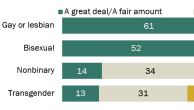
How lesbian, gay, bisexual, transgender and queer adults view Obergefell’s impact on social acceptance for LGBTQ people, 10 years after the Supreme Court decision legalizing same-sex marriage.
About half of Americans (48%) say they have emergency or rainy day funds that would cover their expenses for three months.
Among blue-collar workers, 43% say they feel extremely or very satisfied with their jobs; by comparison, 53% of other workers express this level of satisfaction.
American workers have mixed feelings about how AI technologies, like ChatGPT, will affect jobs in the future.
U.S. workers feel their jobs are secure and few are seeking a job change. But only half are highly satisfied with their job overall.
High school teachers are more likely than elementary and middle school teachers to hold negative views about AI tools in education.
Notifications