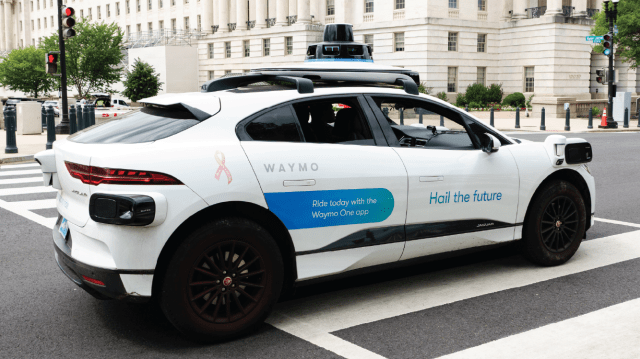
A Waymo autonomous vehicle is driven in Washington, D.C., on June 8, 2026. (Kevin Carter/Getty Images)
Driverless cars are showing up on some American roads, but riding in one remains a rare experience. Just 5% of U.S. adults say they’ve taken a ride in a driverless car, while more than nine-in-ten say they have never done this, according to a Pew Research Center survey conducted in February 2026.
5% of Americans say they have taken a ride in a driverless car
% of U.S. adults who say __ ever ride in a driverless car
Note: Those who said “Not sure” or did not answer are not shown.
Source: Survey of U.S. adults conducted Feb. 17-23, 2026.
PEW RESEARCH CENTER
Share this chart
5% of Americans say they have taken a ride in a driverless car
% of U.S. adults who say __ ever ride in a driverless car
We surveyed 5,119 U.S. adults from Feb. 17 to 23, 2026. Everyone who took part in this survey is a member of the Center’s American Trends Panel. The survey represents the views of the full U.S. adult population.
Regardless of whether they’ve ridden in one before, we also asked Americans if they would be comfortable riding in a driverless car. Most Americans (71%) say they would be not too or not at all comfortable with this, including 43% who say they’d be not at all comfortable.
Relatively few (7%) would be extremely or very comfortable riding in a driverless car. Another 16% would be somewhat comfortable.
Most U.S. adults say they would be uncomfortable riding in a driverless car
% of U.S. adults who say they would be __ riding in a driverless car
Note: Those who said “Not sure” or did not answer are not shown.
Source: Survey of U.S. adults conducted Feb. 17-23, 2026.
PEW RESEARCH CENTER
Share this chart
Most U.S. adults say they would be uncomfortable riding in a driverless car
% of U.S. adults who say they would be __ riding in a driverless car
Americans’ discomfort and lack of experience with these cars span demographic groups. Across age ranges, household income levels and geographic regions, few U.S. adults have ridden in a driverless car or would feel comfortable doing so.
However, people who have ridden in a driverless car feel more comfortable doing so than people who have never ridden in one. Four-in-ten adults who have traveled in a driverless car say they would be extremely or very comfortable riding in one, compared with 5% of those who have not ridden in one.
Concerns about driverless cars are not new. Our 2021 survey found that Americans were more likely to think the widespread use of driverless cars would be bad rather than good for society.