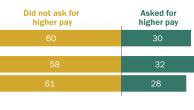
When negotiating starting salaries, most U.S. women and men don’t ask for higher pay
Most U.S. workers say they did not ask for higher pay the last time they were hired for a job, according to a new Pew Research Center survey.
Numbers, Facts and Trends Shaping Your World
Most U.S. workers say they did not ask for higher pay the last time they were hired for a job, according to a new Pew Research Center survey.
Around a third of U.S. school districts mention the importance of diversity, equity and inclusion in their mission statements. But these references are far more common in parts of the country won by Joe Biden in 2020 than in areas won by Donald Trump.
About a third of workers with jobs that can be done remotely are working from home all the time, according to a new Pew Research Center survey.
Most workers are highly satisfied with their relationship with their co-workers and manager, but relatively few feel the same about their pay or opportunities for promotion.
14% of parents say their neighborhood is only a fair or poor place to raise kids; these parents also have greater worry for their kids’ well-being.
The difference between the earnings of men and women has barely closed in the United States in the past two decades. This gap persists even as women today are more likely than men to have graduated from college, suggesting other factors are at play such as parenthood and other family needs.
About a third of U.S. parents with children under 18 say it’s extremely or very important to them that their kids share their religious beliefs.
Mental health concerns top the list of worries for parents, followed by concerns about their children being bullied. The vast majority of parents say being a parent is enjoyable and rewarding all or most of the time, but substantial shares also find it tiring and stressful.
How are U.S. parents raising their children these days, and how does their approach compare with the way their own parents raised them?
A quarter of U.S. parents of K-12 students say racism or racial inequality comes up in conversation with their children very or fairly often.