Why Do Some Americans Leave Their Religion While Others Stay?
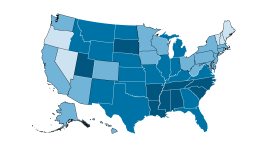
Many U.S. adults (35%) have moved on from the religion of their youth. Yet most Americans have not, including a majority – 56% – who still identify with their childhood religion.
All
Publications
Question 1: Measuring religious identity How does Pew Research Center measure the religious identity of survey respondents and the religious composition of the U.S.? Answer: Generally, we rely on respondents’ self-identification. A key question we ask in many surveys is: “What is your present religion, if any? Are you Protestant, Roman Catholic, Mormon, Orthodox such […]
Restrictions on religion increased in 2016 for the second straight year. Nationalist parties and organizations played an increasing role in harassment of religious minorities, especially in Europe.
Según varias mediciones, los adultos jóvenes tienden a ser menos religiosos que sus mayores. Lo contrario se da en raras ocasiones. En Estados Unidos, los grupos religiosos vienen envejeciendo desde hace décadas, y los adultos jóvenes ahora son mucho menos propensos que sus mayores a identificarse con una religión o participar en diversas prácticas religiosas. […]
Young adults tend to be less religious than their elders by several measures; the opposite is rarely true. This pattern holds true across many countries that have different religious, economic and social profiles.
Many religious “nones,” which include atheists and agnostics, in 22 countries hold religious or spiritual beliefs, such as in an afterlife or something beyond the natural world.
Nearly half of U.S. adults are connected to Catholicism. Read about going to Mass, Communion, confession and more.
After years of decline, the U.S. Christian share now shows signs of leveling off. The new Religious Landscape Study explores trends in identity, beliefs and practices.
The Global Religious Futures (GRF) project is jointly funded by The Pew Charitable Trusts and The John Templeton Foundation. Here are some big-picture findings from the GRF, together with context from other Pew Research Center studies.