Religious Diversity Around the World
Singapore is the world’s most religiously diverse country overall as of 2020, while Yemen is the least diverse. But the U.S. ranks first among nations with very large populations, followed by Nigeria and Russia.
Singapore is the world’s most religiously diverse country overall as of 2020, while Yemen is the least diverse. But the U.S. ranks first among nations with very large populations, followed by Nigeria and Russia.

Sent weekly on Wednesday
All
Publications
While only 4% of Chinese adults formally identify as Buddhists, formal affiliation doesn’t reflect the full extent of Buddhist belief and practice.
Majorities of Buddhists in these countries also say it is appropriate for non-Buddhist tourists to participate in Buddhist practices.
Large numbers of Americans in many different religious groups express concern about fewer people getting married.
Most people in all six South and Southeast Asian countries surveyed say they believe in God or unseen beings.
In Thailand, Cambodia and Sri Lanka, more than 90% of Buddhists see strong links between their religion and country. In the neighboring countries of Malaysia and Indonesia, nearly all Muslims say being Muslim is important to being truly part of their nation.
Some 17% of U.S. adults regularly attend religious services in person and watch them online or on TV.
Despite the Chinese Communist Party’s ban on religion, some 6% of party members formally identify with a religion.
Based on formal religious identity, China is the least religious country in the world – with just 10% of Chinese adults self-identifying with a religion.
Only one-in-ten Chinese adults formally identify with a religion, but surveys indicate that religion plays a much bigger role in China when the definition is widened to include questions on spirituality, customs and traditional beliefs.
46% of Americans report that they’ve been visited by a dead family member in a dream, while 31% report having been visited by dead relatives in some other form.
Many religious “nones,” which include atheists and agnostics, in 22 countries hold religious or spiritual beliefs, such as in an afterlife or something beyond the natural world.
Nearly half of U.S. adults are connected to Catholicism. Read about going to Mass, Communion, confession and more.
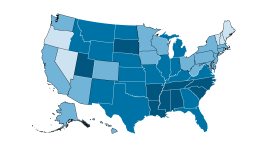
After years of decline, the U.S. Christian share now shows signs of leveling off. The new Religious Landscape Study explores trends in identity, beliefs and practices.
The Global Religious Futures (GRF) project is jointly funded by The Pew Charitable Trusts and The John Templeton Foundation. Here are some big-picture findings from the GRF, together with context from other Pew Research Center studies.