
As war in Ukraine continues, Americans’ concerns about it have lessened
Americans express less concern than in the spring about Ukraine being defeated by Russia and about the war expanding into other countries.
Numbers, Facts and Trends Shaping Your World
Research Associate
Andrew Daniller is a research associate at Pew Research Center, where he studies public opinion on U.S. politics and policy, including political polarization, trust in government and elections, and a wide range of policy areas. He regularly presents to outside groups on these topics and discusses findings with the news media. Before joining the Center, Andrew was a post-doctoral fellow at the University of Pennsylvania, where his research focused on how news media affect views of elections and campaigns.
Americans express less concern than in the spring about Ukraine being defeated by Russia and about the war expanding into other countries.
Americans’ ratings of the Supreme Court are now as negative as – and more politically polarized than – at any point in more than three decades of polling. And nearly two-thirds of Democrats (64%) now say the Supreme Court has too much power, almost three times the share who said this in August 2020 (23%).
While the economy remains the dominant issue in this fall’s midterm elections, the issue of abortion has increased markedly in importance. More voters continue to view their midterm vote as an expression of opposition to Joe Biden than support for him. But across both parties, more voters now say Biden is not much of a factor in their vote.
32% of Republicans say they like a political leader who has no previous government experience, compared with just 10% of Democrats.
Increasingly, Republicans and Democrats view not just the opposing party but also the people in that party in a negative light. Growing shares in each party now describe those in the other party as more closed-minded, dishonest, immoral and unintelligent than other Americans. Nearly half of younger adults say they “wish there were more parties to choose from.”
Today, 54% of U.S. adults say they have a favorable opinion of the Supreme Court, while 44% have an unfavorable view. And 84% say justices should not bring their political views into decisions.
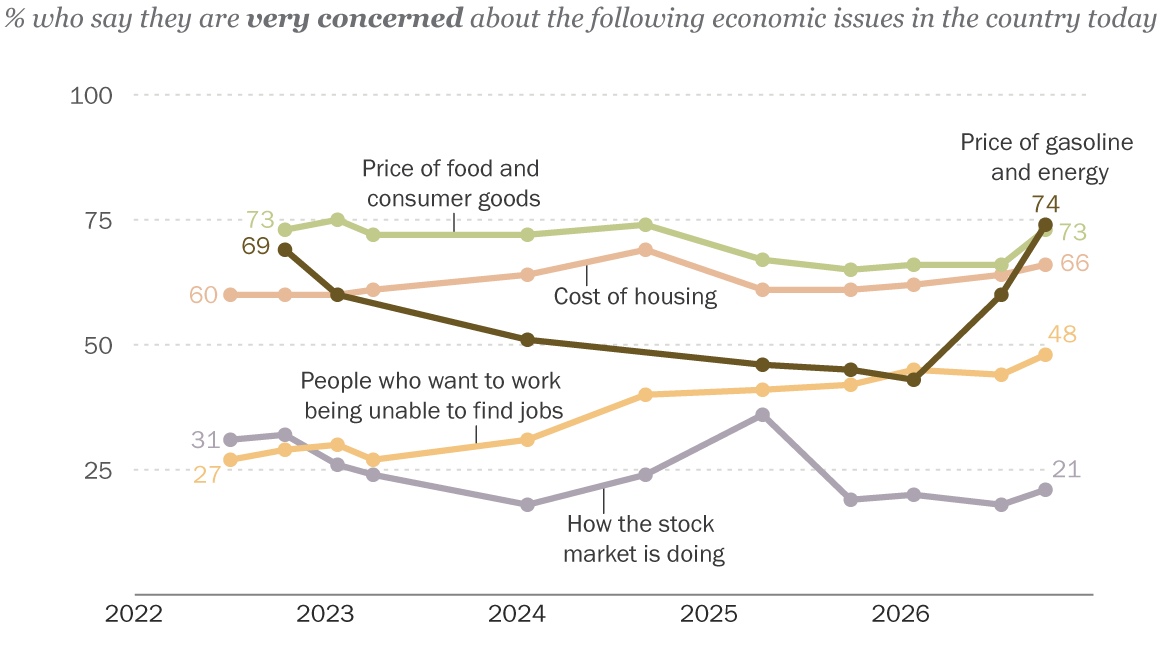
Americans’ views of the economy remain negative; most say prices have gotten worse while job availability has improved.
Nearly six-in-ten U.S. adults (59%) see a great deal of difference between the two major political parties, up from 55% just two years ago.
There is a wide partisan split on the fairness of the House committee’s probe.
Americans show more support than opposition for two infrastructure bills; majorities favor raising taxes on large businesses and high-income households.
Notifications