Half of the world’s population lives in just seven countries. But some of the world’s religious groups are even more concentrated than that.
For many years, demographers at Pew Research Center have been studying the characteristics of religious groups, including Buddhists, Christians, Hindus, Jews, Muslims, and the religiously unaffiliated (sometimes called “nones”).
While Christians and Muslims are more widely distributed around the world, the majority of the other groups’ populations reside in three or fewer nations, according to estimates from our latest report on the global religious landscape. All figures in this analysis are based on 2020 data.
Hindus
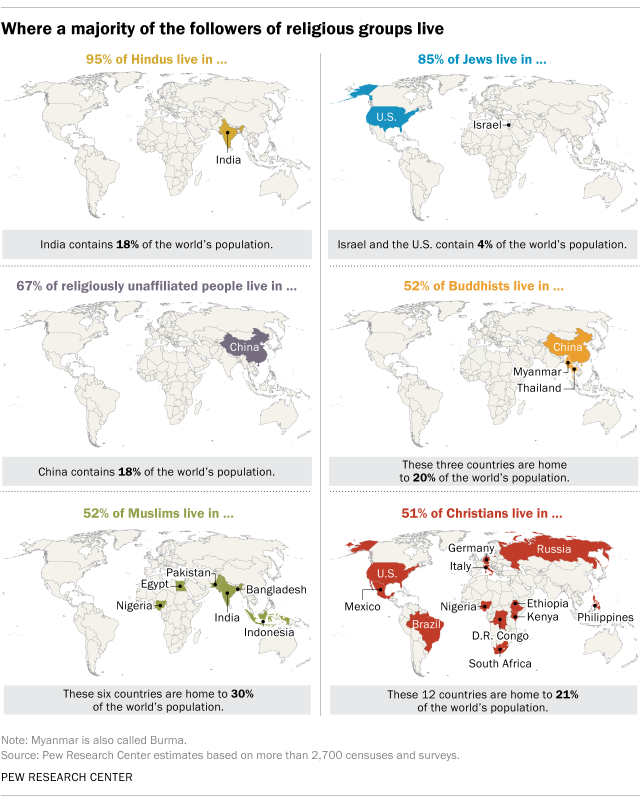
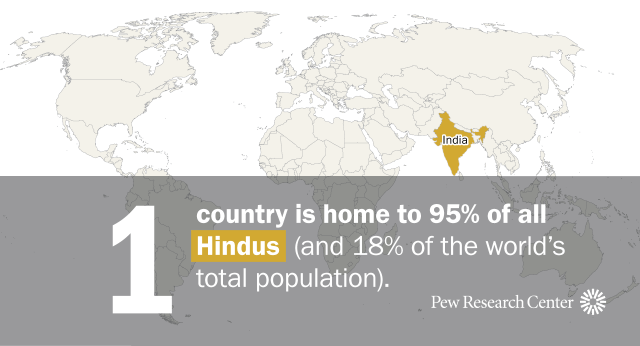
No religion we analyze is more heavily concentrated in one country than Hinduism, which has remained close to its geographic origins. More than nine-in-ten of the world’s 1.2 billion Hindus (95%) live in India, which is home to 18% of the world’s overall population.
The religiously unaffiliated
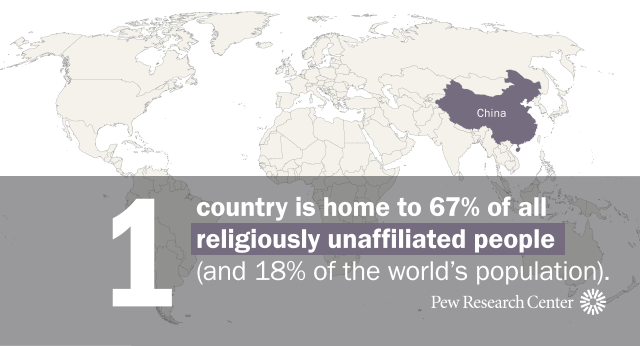
While there continues to be much attention paid to the growth of the religiously unaffiliated population in Europe and North America, two-thirds of the world’s 1.9 billion religious “nones” (67%) live in one Asian country: China. This country accounts for 18% of the overall global population.
Jews
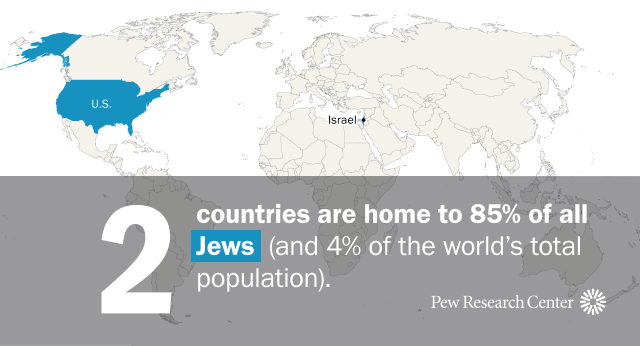
Nearly half of the world’s 15 million Jews (46%) live in Israel, while around four-in-ten (39%) live in the United States. While 85% of all Jews live in these two countries, together they account for only 4% of the world’s people.
Buddhists
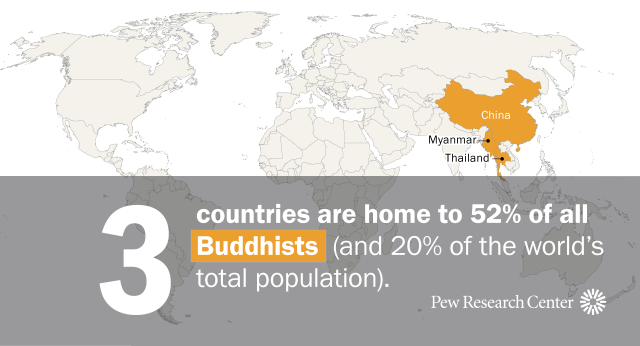
A majority of the world’s Buddhists are concentrated in three Asian countries: Thailand, China and Myanmar (also called Burma). Together, they are home to 52% of all Buddhists and 20% of the world’s overall population.
Muslims
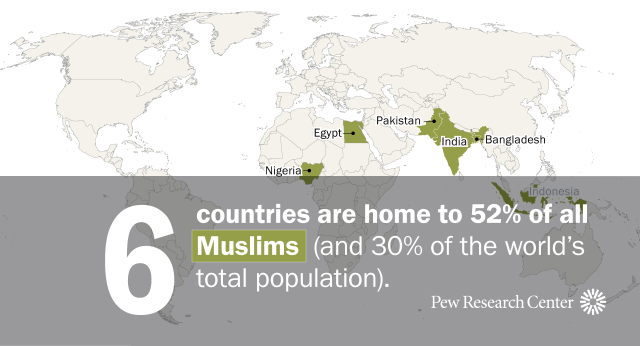
Many people may associate Islam with the Middle East and North Africa, but only 20% of the world’s Muslims live there. In fact, Egypt is the only country in the region that ranks among the six largest Muslim populations. Indonesia, Pakistan, India, Bangladesh and Nigeria all have larger Muslim populations than Egypt.
The six nations with the largest Muslim population together account for 52% of the world’s 2 billion Muslims, yet these countries comprise only 30% of the world’s population.
Christians
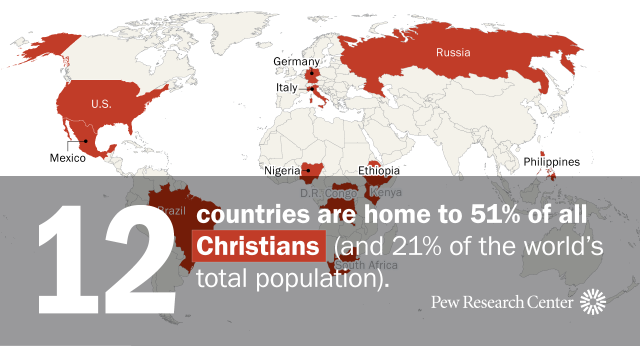
Compared with the other religious groups analyzed, Christians are the most spread out around the world. It takes a minimum of 12 countries to total 51% of the world’s 2.3 billion Christians. These 12 countries (the U.S., Brazil, Mexico, the Philippines, Russia, Nigeria, the Democratic Republic of the Congo, Ethiopia, South Africa, Italy, Germany and Kenya) make up 21% of the world’s overall population.