Americans’ Complicated Relationship With News
Most say being informed is essential for voting. Yet views differ on the importance of following news – and many say they’re worn out by it.
Numbers, Facts and Trends Shaping Your World
Read our research on:

Most say being informed is essential for voting. Yet views differ on the importance of following news – and many say they’re worn out by it.
Young adults under 30 are getting more news on social media, shaping how information spreads and giving us a possible glimpse into the future of news.
Here’s a look back at 2025 through 12 of our most striking research findings.
In 2016, 51% of U.S. adults said they followed the news all or most of the time, but that share fell to 36% in 2025.
U.S. adults under 30 follow news less closely than any other age group. And they’re more likely to get (and trust) news from social media.
Among TV news consumers, 57% say that their news mostly comes from cable, satellite or broadcast television. 34% say it mostly comes from streaming services.
A majority of Americans who prefer to watch the news (62%) say they prefer to get it from TV, rather than another platform.
About one-in-five U.S. adults say they regularly get news from news influencers on social media, and this is especially common among younger adults.
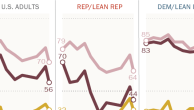
Overall, 56% of U.S. adults now say they have a lot of or some trust in the information they get from national news organizations – down 11 percentage points since March 2025.
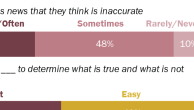
Those who report often encountering inaccurate news are more likely than those who rarely or never do to say it’s hard to know what is true (59% vs. 31%).