Where most people trust others and where they don’t around the world
Trust tends to be higher in the high-income countries surveyed than in the middle-income ones.
Numbers, Facts and Trends Shaping Your World
Read our research on:

Trust tends to be higher in the high-income countries surveyed than in the middle-income ones.
Most adults across 25 countries are aware of AI, and people are generally more concerned than excited about its effects on daily life.
In nearly all the countries we surveyed, supporters of the governing party view their economy more positively than nonsupporters.
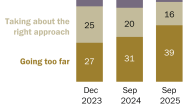
About six-in-ten now say they have an unfavorable view of the Israeli government, with a rising share saying Israel is “going too far.”
Majorities in 20 of 25 countries surveyed say their political system needs major changes or complete reform, but many lack confidence this can happen effectively.
People in many countries see at least one party favorably – but in 15 countries, no party we asked about gets positive ratings from a majority of adults.
This year, only 16% of Israelis have a favorable view of the UN – the lowest level in surveys going back to 2007.
Religion in a country tends to decline in three transitional stages that unfold across generations, a new paper using Center data proposes.
People in 12 of 24 nations surveyed tend to say the U.S. is their top ally. But it’s also widely seen as a top threat, as are Russia and China.
Explore how adults in the U.S. and 35 other countries compare religiously and spiritually when it comes to affiliation, prayer, afterlife beliefs and more.