About 5% of young adults in the U.S. say their gender is different from their sex assigned at birth
1.6% of U.S. adults are transgender or nonbinary. Also, a rising share of Americans say they know someone who is transgender.
Numbers, Facts and Trends Shaping Your World
Read our research on:

1.6% of U.S. adults are transgender or nonbinary. Also, a rising share of Americans say they know someone who is transgender.
A new Pew Research Center survey finds that 1.6% of U.S. adults are transgender or nonbinary – that is, their gender is different from the sex they were assigned at birth.
In 2019 women in the United States earned 82% of what men earned, according to a Pew Research Center analysis of median annual earnings of full-time, year-round workers. The gender wage gap varies by age and metropolitan area, and in most places, has narrowed since 2000. See how women’s wages compare with men’s in your metro area.
Most Americans value having family close by, while 55% say they live within an hour’s drive of at least some extended family members.
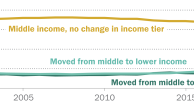
In the United States, the transience of economic status varies significantly across racial and ethnic groups and by level of education.
Here is what Center surveys show about American moms’ experiences juggling work and parenting responsibilities during the COVID-19 outbreak.
Most workers who say their jobs can mainly be done from home say they are fine with the amount of time they spend on video calls.
Most Americans who have heard about the law say it’s had a positive impact on gender equality in the United States (63%).
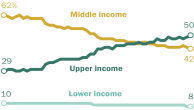
The share of adults who live in middle-class households fell from 61% in 1971 to 50% in 2021, according to a new analysis.
Nearly one-in-five middle-income families report receiving unemployment benefits in 2020.