Many religions are heavily concentrated in a few countries
Half of the world’s population lives in just seven countries. But some of the world’s religious groups are even more concentrated than that.
All
Publications
Half of the world’s population lives in just seven countries. But some of the world’s religious groups are even more concentrated than that.
If the U.S. had 100 people, 62 would be Christians, including 40 Protestants, 19 Catholics, two Latter-day Saints and two who identify with other Christian groups.
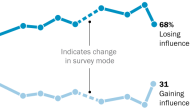
Americans’ views of religion’s role in society have grown more positive in recent years. But many feel their religious beliefs conflict with the mainstream.
U.S. Catholics are still getting to know Pope Leo XIV. But they like what they’ve seen so far, according to our recent survey.
Many religious “nones,” which include atheists and agnostics, in 22 countries hold religious or spiritual beliefs, such as in an afterlife or something beyond the natural world.
Religion in a country tends to decline in three transitional stages that unfold across generations, a new paper using Center data proposes.
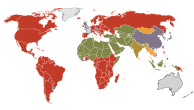
Countries that lost their Christian majorities all saw growing percentages of religiously unaffiliated people.
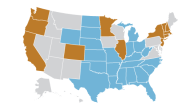
Around half of Muslim adults (53%) identify with or lean toward the Democratic Party, while 42% identity with or lean toward the Republican Party.
The share of people who retain their childhood religious identity in adulthood varies across religious categories.
Just over half of U.S. adults (52%) say they favor allowing public school teachers to lead their classes in prayers that refer to Jesus.