Where do Americans turn first for information about breaking news?
When a breaking news event happens, 36% of U.S. adults say they typically turn first to their preferred news organization to get more information.
All
Publications
When a breaking news event happens, 36% of U.S. adults say they typically turn first to their preferred news organization to get more information.
57% of U.S. adults say they have not too much (40%) or no confidence (17%) in journalists to act in the best interests of the public.
Most say being informed is essential for voting. Yet views differ on the importance of following news – and many say they’re worn out by it.
Young adults under 30 are getting more news on social media, shaping how information spreads and giving us a possible glimpse into the future of news.
U.S. adults under 30 follow news less closely than any other age group. And they’re more likely to get (and trust) news from social media.
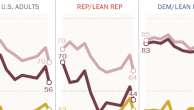
Overall, 56% of U.S. adults now say they have a lot of or some trust in the information they get from national news organizations – down 11 percentage points since March 2025.
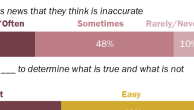
Those who report often encountering inaccurate news are more likely than those who rarely or never do to say it’s hard to know what is true (59% vs. 31%).
Fewer say they frequently get news about science and technology (32%), business and finance (32%), sports (27%) and entertainment (19%).
In general, Republicans and Republican leaners are much less likely than Democrats to trust the information they get from national news organizations.
U.S. adults largely value journalists’ role in society but see their influence declining – and they differ over what a journalist is.