Across the Globe, People Increasingly Say Social Media Is Harming Democracy
Most think social media leads to manipulation and division, but they also say it informs people and gives them a voice in politics.
Numbers, Facts and Trends Shaping Your World
Read our research on:

All
Publications
Most think social media leads to manipulation and division, but they also say it informs people and gives them a voice in politics.
Amid a mix of concern and excitement about AI, a 37-country survey finds pessimism about its potential impact on jobs and economic inequality.
Most adults across 25 countries are aware of AI, and people are generally more concerned than excited about its effects on daily life.
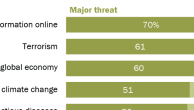
Seven-in-ten Americans view the spread of false information online as a major threat facing the nation in 2025.
Most think social media has made it easier to manipulate and divide people, but they also say it informs and raises awareness.
People in advanced and emerging economies have mixed feelings about social media’s impact on political life.
Many U.S. adults describe cyberattacks from other countries (71%) and the spread of misinformation online (70%) as major threats to the U.S.
International relations experts’ assessment of the current crises facing the world are often at odds with those of the U.S. general public.
Americans are now more likely to expect foreign election interference than they were in October 2018, when 67% expected it.
Most say cooperation with other countries is important in dealing with global threats, especially on the spread of infectious diseases.