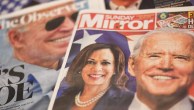

Links shared by prominent accounts on Twitter differ widely from those shared on alternative social media
Prominent accounts on Twitter are more likely than those on alternative social media sites to link to print publications, TV and wire services.
Numbers, Facts and Trends Shaping Your World
Read our research on:

Prominent accounts on Twitter are more likely than those on alternative social media sites to link to print publications, TV and wire services.
In recent years, several new options have emerged in the social media universe, many of which explicitly present themselves as alternatives to more established social media platforms. Free speech ideals and heated political themes prevail on these sites, which draw praise from their users and skepticism from other Americans.
73% of U.S. adult Twitter users include identifiable text in their profile, but 27% include no text apart from the display and username fields.
A minority of Twitter users produce a majority of tweets from U.S. adults, and the most active tweeters are less likely to view the tone or civility of discussions as a major problem on the site.
Republican lawmakers have produced three-quarters of recent congressional social media posts that mention places and people in Asia.
From 2016 through 2019, lawmaker mentions of Asian Americans on social media – either of the population at large or of smaller subgroups – followed a relatively predictable pattern.
In preelection tweets about the U.S., lawmakers abroad focused on how the election will affect bilateral ties and trade.
U.S. lawmakers have received roughly 2 million more love than anger reactions to posts in the first seven months of 2020.
236 members (45%) of the 116th Congress have mentioned “Black lives matter” on Facebook or Twitter dating back as far as Jan. 1, 2015.
Democratic lawmakers post more content on Twitter, while the median Republican member now averages more audience engagement than the median Democrat across platforms.
Notifications