
Buddhism’s Recent Decline in East Asia
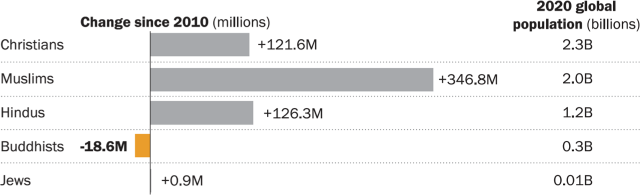
Buddhism is the only major religion in the world with a falling number of adherents, according to Pew Research Center estimates for 2010 and 2020. By contrast, other religions grew during that period.
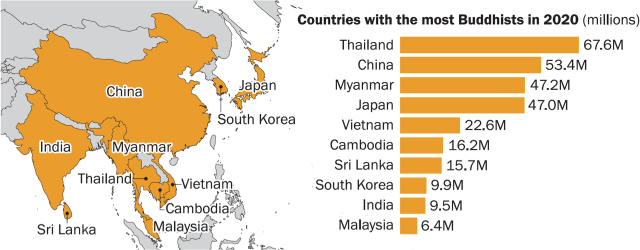
Most of the world’s Buddhists live in Asia, and more than 90% are in 10 countries.
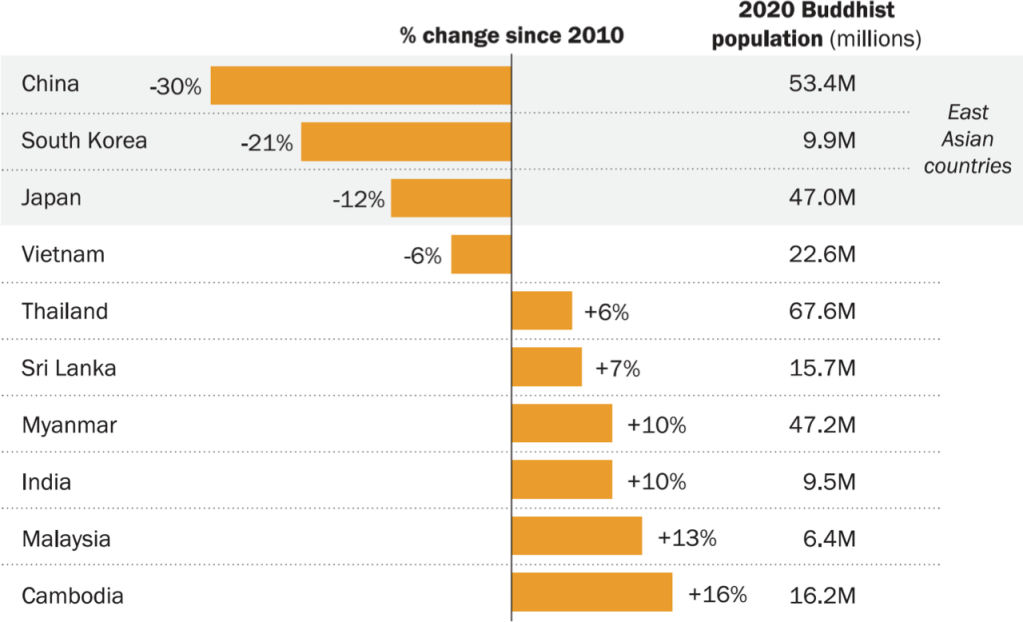
The decline of Buddhism is especially pronounced in East Asia, including China, South Korea and Japan.
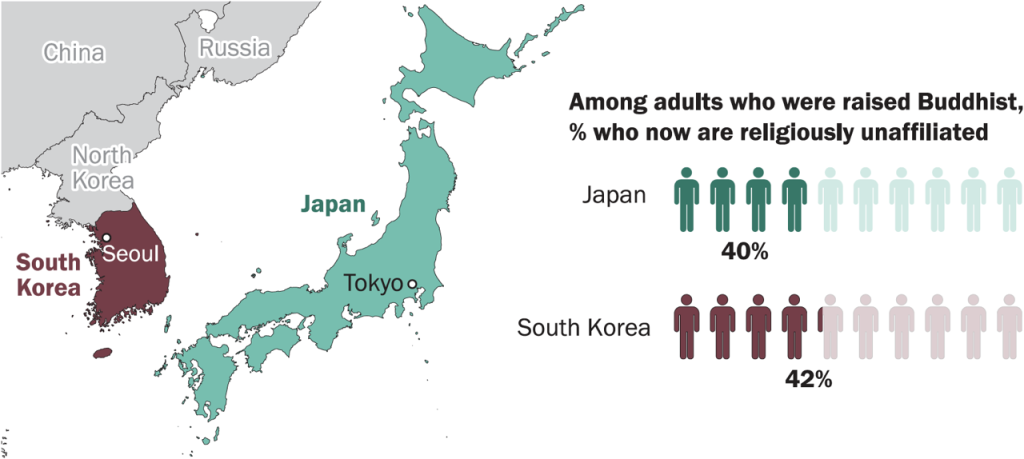
Across East Asia, many people who were raised as Buddhists no longer identify with Buddhism. Most of them are now religiously unaffiliated – identifying as atheist, agnostic or just “nothing in particular.”
In Japan, for example, 40% of adults who were brought up as Buddhists are religiously unaffiliated today, according to a Pew Research Center survey in 2024. In South Korea, that figure is 42%.
To understand how and why people are leaving Buddhism, Pew Research Center conducted interviews in Tokyo and Seoul with Japanese and Korean adults who grew up in Buddhist families.
We chose a mix of older and younger adults. Some grew up immersed in Buddhist beliefs and still engage with Buddhism – though less than their parents or grandparents did. Others recall having only loose connections to Buddhism in childhood and barely think about religion today.

Sunwoo Lee
College student
Seoul

Junichiro Tsujinaka
Bar owner
Tokyo
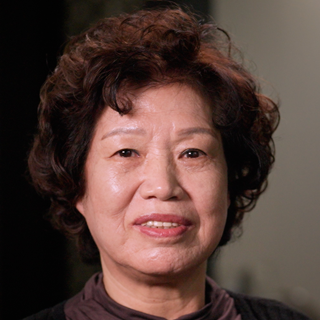
Jeongnam Oh
Retired shop owner
Seoul
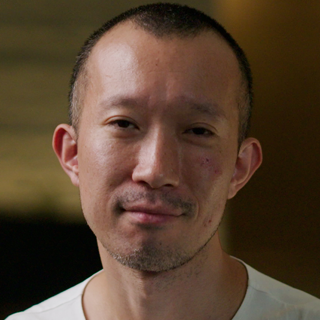
Atsushi Oda
Book editor
Tokyo
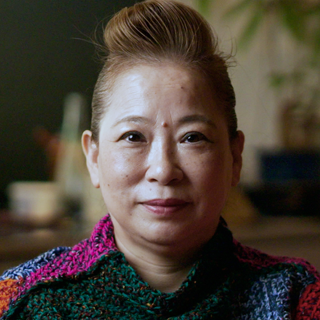
Chieko Nakajima
Restaurant owner
Tokyo
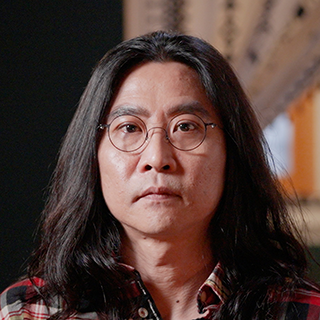
Rogeon Hong
Studio technician
Seoul
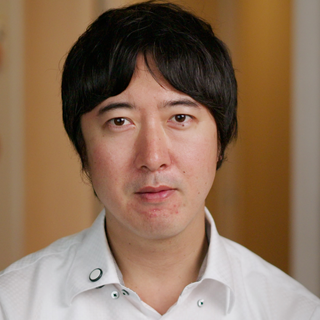
Masami Sato
TV reporter
Tokyo
These interviews were conducted in October 2024. The charts are based on data from Pew Research Center surveys and demographic studies, including our reports “Around the World, Many People Are Leaving Their Childhood Religions” and “Religion and Spirituality in East Asian Societies.”
Fading generationally
Sunwoo Lee, a college student living with her parents in a suburb of Seoul, says her grandparents are devout Buddhists, her parents less so. She does not see the point of religious practices. “I tend to believe in science more than anything spiritual, so I don’t believe in things that you can’t see,” Lee says.
Survey data shows that both in Japan and South Korea, young people are less likely than older adults to consider themselves Buddhist.

Indeed, our demographic estimates indicate that Buddhists make up shrinking shares of the population in both countries, while more and more people have no religious affiliation.

Often, religious disaffiliation is a gradual process of drifting away from one’s upbringing, rather than a clean break or a deliberate conversion. Some people leave the countryside or small towns and move to big cities, losing touch with family traditions along the way.
In Tokyo, Junichiro Tsujinaka, a bar owner, says his father, grandfather and great grandfather were fishermen on the northern island of Hokkaido who all volunteered at a Buddhist temple – making offerings, collecting donations, helping to keep up the shrine. As a young boy, Tsujinaka helped with those duties. But now he rarely engages with religion.
“I didn’t really develop those kinds of habits of praying,” he says. “Since my brother and I moved away from our hometown, we’ve left everything involving the temple and shrine responsibilities to our parents.”
No time for temples
Several other interviewees also said it was difficult to find time for spiritual or religious activities amid their busy careers, schoolwork and daily chores.
Unlike Judaism, Christianity and Islam, which place a lot of emphasis on regular prayer and worship service, in Buddhism it is not customary to go to a temple every week. Still, temple visits and participation in Buddhist festivals have long been a core of traditional life in East Asia.
Jeongnam Oh, a retired shop owner in Seoul, says that when she was growing up in a small town, she often participated in Buddhist ceremonies and festivals. But when raising her children, Oh ran up against the pressures of modern life.
“I don’t remember going to the temple with my kids,” Oh says. “The kids needed to stay focused on their studies, and I had a life of my own.… It was hard to make time together.”
Oh says she was raised in a Buddhist family, but today she does not identify as Buddhist.
Some sociologists have suggested that religious participation in East Asia is declining from one generation to the next. Our 2023 survey in Japan and South Korea shows that younger adults in these countries are much less likely than their elders to say they visit temples …

… or pray to Buddha.

Aside from formal practices like visiting temples and praying, there are many other cultural traditions in East Asia that involve Buddhist beliefs or deities. These, too, are losing relevance to young people, according to our interviews.
In Japan, many Buddhist households have a family altar, known as a butsudan. These small shrines typically are made of wood and contain representations of the Buddha or bodhisattvas, along with photos or tablets commemorating deceased relatives. Traditionally, family members performed daily rituals at these altars, such as burning incense, lighting candles and leaving offerings of food, water or fresh flowers.
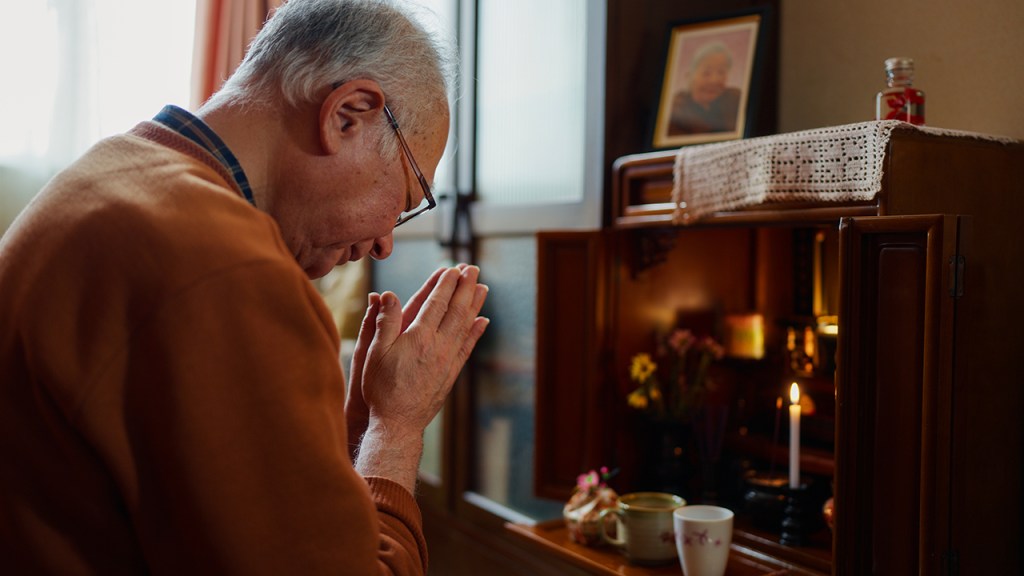
Atsushi Oda, a Japanese book editor, says that after his mother passed away, his father assumed the task of maintaining the butsudan. But Oda does not expect to take over this duty from his father.
“I imagine that I will probably change the altars a little in some way, making them different so they don’t require as much time to take care of,” Oda says.
Smaller families
A restaurant owner in Tokyo, Chieko Nakajima, notes that “nowadays, Japanese families are smaller and the number of children is decreasing.” When she was a child, religious customs and household traditions seemed to be passed down effortlessly, from generation to generation. That’s not the case anymore, she says.
“The family system is breaking down, so people don’t see their relatives anymore,” Nakajima says. “That’s why those unique family traditions, at least here in Tokyo, are quickly fading away.”
Negative views of religion
Several people we talked to expressed negative views about religion in general, which may have influenced their attitudes about Buddhism.
Rogeon Hong, a studio technician in Seoul, associates religion with superstition and shamanism. He says his father identifies as Buddhist but engages in shamanistic practices, such as carrying amulets for good luck.
“My dad … burns this bad-smelling incense that’s supposed to ward off evil energy, and he hangs up strange images and protective talismans,” Hong says. “There’s one [amulet] in my wallet that he placed there himself. I don’t think it’s very effective.”
Buddhist temples in South Korea sometimes house shamanic deities. Both traditions share some practices, such as venerating ancestors and performing rituals to ward off misfortune or bring blessings.
In Japan, people told us, the whole idea of religion has been tarnished by violence.
Masami Sato, a TV reporter in Tokyo, says one of his first impressions of religion was the Aum Shinrikyo group’s 1995 sarin gas attack on the Tokyo subway system. Aum Shinrikyo, now known as Aleph, is a new religious movement that incorporates elements of multiple religions, including Buddhism.
Continuing connections
There’s no doubt that as a religion, Buddhism’s hold on East Asian societies is sliding, particularly when looking at young people’s rates of Buddhist self-identification and participation in activities.
But several people we interviewed said that even though they no longer call themselves Buddhists, they still feel a cultural connection with Buddhism and are attracted to some of its teachings.
Sato, for example, says he’s begun to rethink the very negative view of religion he developed as a child. He still doesn’t believe in heaven, hell or karma. But now, as an adult, he’s intrigued by reincarnation, a central tenet of Buddhism. “It’s not that I believe in reincarnation because of some religion,” he says. “But more like, through my own internal dialogues, thinking, what happens to people when they die?”
In Tokyo, Tsujinaka sometimes visits a temple in his neighborhood because it helps him relax. When he comes across a Buddhist festival, he buys a few omamori – good luck charms often sold at Buddhist temples and Shinto shrines – as souvenirs for friends.
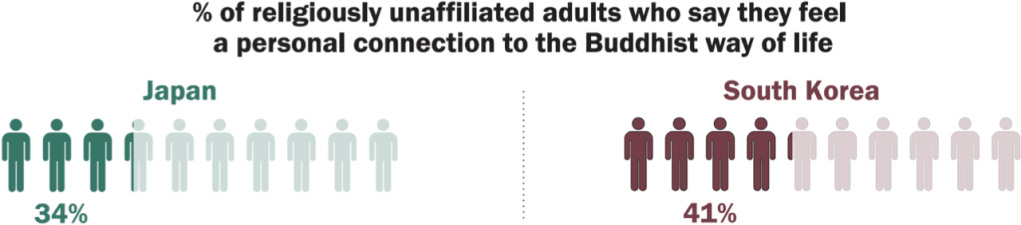
Pew Research Center surveys find that around a third of religiously unaffiliated people in Japan, and four-in-ten in South Korea, feel an affinity for Buddhist ways.
In Seoul, Oh says she continues to lean on her Buddhist beliefs for comfort. “I guess it’s what I grew up with, and it’s still there with me,” she says.
Acknowledgments
Pew Research Center is a subsidiary of The Pew Charitable Trusts, its primary funder. This essay was produced by the Center as part of the Pew-Templeton Global Religious Futures project, which analyzes religious change and its impact on societies around the world. Funding for this phase of the Global Religious Futures project came from The Pew Charitable Trusts and the John Templeton Foundation (grant 62287). This publication does not necessarily reflect the views of the John Templeton Foundation.
This essay was a collaborative effort by staff at Pew Research Center. It was written by Dalia Fahmy and Yunping Tong and edited by Alan Cooperman. Conrad Hackett provided valuable expertise and feedback. Bill Webster contributed to the design and created the graphics. The essay was produced by Justine Coleman and Shannon Greenwood. It was copy edited by David Kent and Rebecca Leppert. Isaac Lamoreaux and Jonathan Evans number-checked and fact-checked content. Kim Arias reviewed videos. Emma Kikuchi and Eugenie Park assisted with translations.
Communications and outreach support were provided by Hannah Taber and Talia Price.
In addition, the Center is grateful to Koki Shimizu, assistant professor of sociology at Doshisha University in Japan, who provided advice and linguistic support.
Videos and photographs were produced by Grace Creek Media and documentary film producer John Sorensen.
RECOMMENDED CITATION:
Fahmy, Dalia, Yunping Tong, Bill Webster and Justine Coleman. 2026. “Buddhism’s Recent Decline in East Asia.” Pew Research Center. doi: 10.58094/vkqh-h072.