Post-election blues? Democrats’ expectations for 2015 take a dive
Fewer Americans have high hopes for 2015 than they did for 2014, a change largely driven by greater pessimism among Democrats.
Numbers, Facts and Trends Shaping Your World
Read our research on:

All
Publications
Fewer Americans have high hopes for 2015 than they did for 2014, a change largely driven by greater pessimism among Democrats.
For the first time on record, more non-Mexicans than Mexicans were apprehended at U.S. borders in 2014 by the Customs and Border Patrol.
Pew Research’s annual Global Attitudes surveys starts by asking respondents how they would describe their day. A median of nearly two-thirds (65%) across 44 countries surveyed in spring 2014 responded that they were having a typical day.
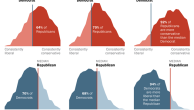
The Pew Research Center design staff picks the data visualizations we created in 2014 that they considered the most challenging and explains the approach to presenting our data.
An unusually active lame duck session enabled the 113th Congress to avoid its predecessor’s record for legislative unproductivity.
President Obama’s change in policy towards Cuba comes as the Cuban American population itself is changing—in its demographics, views of U.S.-Cuba policy, and its politics.
The rush to acquire local TV stations by media companies’ continued in 2014 and resulted in strong financial pay offs for them.
Just 46% of U.S. kids under 18 are living in a home with two married heterosexual parents in their first marriage, a marked change from 1960.
In 2014, Pew Research Center published more than 150 reports and some 600 blog posts. Here are 14 facts we found particularly striking, as they illustrate some major shifts in our politics, society, habits or families.
Beginning with the Arab Spring, high-profile protest movements erupted in several emerging and developing countries over the last few years. Millions have demonstrated, and activists have pioneered new forms of online engagement, but who really participates, and how?